
How to Write a Comparison Math Newsletter to PreK Parents
Comparison math is the foundation of every mathematical decision that involves size, quantity, or measurement. More, less, equal, taller, shorter, heavier, lighter: these are the relational concepts that children need to understand before they can reason about arithmetic, measurement, or data. Your comparison math newsletter can make this case to families and give them specific ways to build comparison reasoning at home.
What Comparison Math Builds in Pre-K Children
Start your comparison math newsletter by explaining what comparison thinking actually produces. When children can reliably determine which of two quantities is more, they are demonstrating number sense: an understanding that numbers have values that relate to each other. When they can use a third object to compare two things indirectly (this string is longer than the pencil, so the string is longer than the book too), they are doing transitivity reasoning, a logic skill. When they understand equality, that two groups can have the same number even when the objects look different, they are laying the groundwork for algebraic balance thinking.
Quantity Comparison: From Perception to Precision
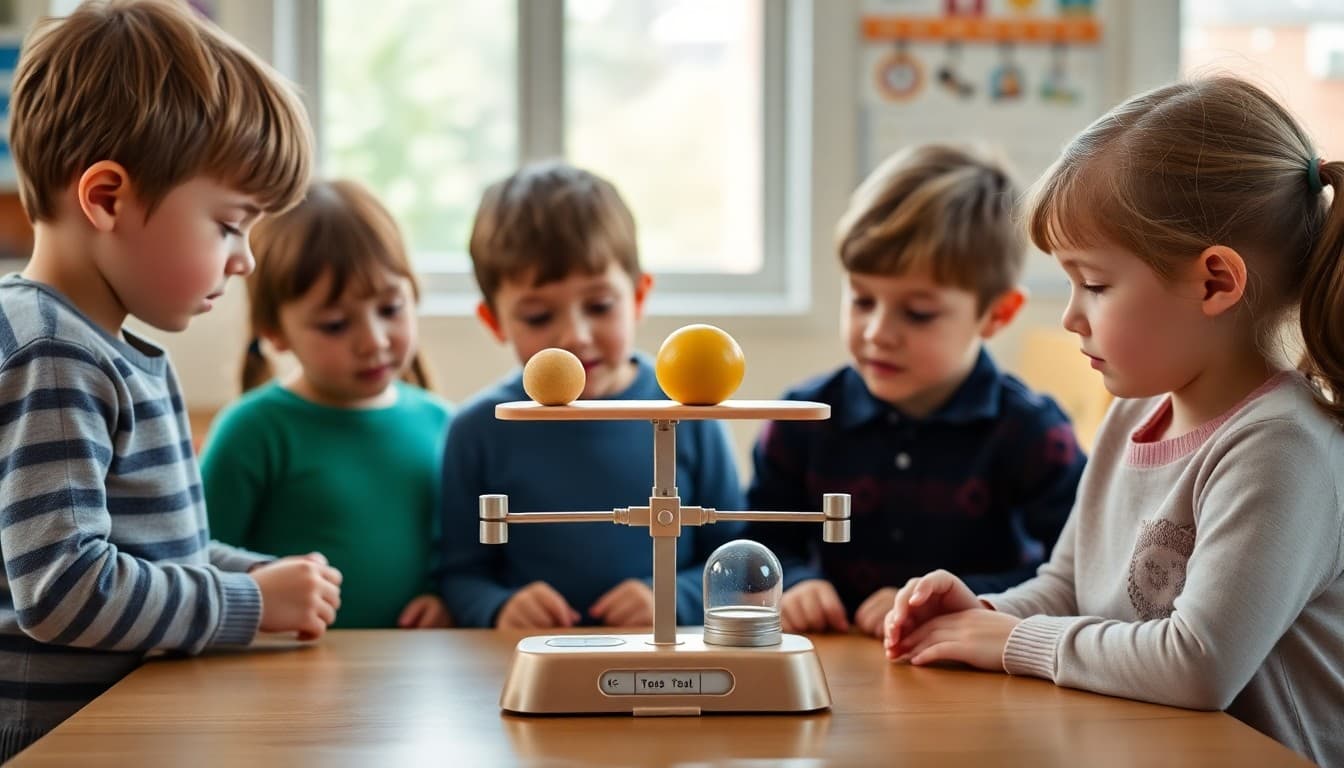
Young children start comparison by perceiving which pile looks bigger. This perceptual comparison is accurate for large differences (twenty vs three) but unreliable for close quantities (six vs seven). Part of your comparison math unit is moving children from perceptual estimation to counted comparison: actually counting both quantities and comparing the numbers. Your newsletter can describe this progression and the specific activities you are using: two-column comparison charts, comparison cards, and balance scale work. Families who understand that visual guessing and counting are both stages in a progression can support their child at the right level.
Comparison Language: More Than Just More and Less
Comparison vocabulary is a significant part of what you are building, and it is worth describing in your newsletter. More and fewer are quantity comparison words. Bigger and smaller are size comparison words. Taller and shorter, longer and shorter, heavier and lighter, closer and farther are specific measurement comparison words. Same and equal are equivalence words. Using these words precisely and consistently, in the classroom and at home, builds the precise mathematical vocabulary that children need for measurement, data, and algebra throughout school. Encourage families to use comparison language naturally in conversation rather than saving it for math time.
A Sample Newsletter Excerpt to Copy
“This week we used balance scales to compare the weights of different classroom objects. The conversations were fantastic: children predicted which would be heavier, then discovered they were wrong, then tried to figure out why. At home this week: try a comparison challenge at snack time. Put crackers in two small piles and ask: more or fewer? Same or different? If they say different, ask: how do you know? Can you prove it? The reasoning they use to answer that last question is mathematical thinking happening in real time.”
Equal: The Most Conceptually Demanding Comparison
Understanding equality is one of the most important conceptual developments in Pre-K math. Many children think a group spread out over a large area has more than a compact group, even when both have the same number of objects. This is Piagetian conservation thinking, and it develops gradually through Pre-K and kindergarten. Your newsletter can describe this with a specific example: if you arrange five objects in a line versus five objects in a pile, young children may say the line has more because it is longer. Working with this understanding rather than against it is how your classroom activities are designed, and families who know about this stage will not be surprised when their child makes this mistake.
Comparison in Everyday Family Life
One of the richest natural comparison math environments is daily family life. Snack time is full of more and fewer comparisons. Cooking involves constant measurement comparison. Getting dressed involves size comparisons. Loading a car or a bag involves spatial comparisons about what fits. The sibling fairness argument (“she got more than me!”) is genuine comparison math with high motivation. Your newsletter can validate these moments as math opportunities and give families language to use: “how do you know you have fewer? Let's count and see” is a simple intervention that converts a complaint into a math investigation.
From Comparison to Addition and Subtraction
Close your comparison math newsletter by connecting comparison to the arithmetic concepts that come next. Addition is about making a quantity bigger, which requires understanding what more means. Subtraction is about making a quantity smaller, which requires understanding what fewer means. Finding the difference between two quantities is the most direct application of comparison to arithmetic: if I have six and you have four, how many more do I have? That question requires comparison reasoning before it requires any arithmetic operation. Children who enter kindergarten with strong comparison skills have a significant head start on subtraction concepts.
Sending Your Comparison Math Newsletter With Daystage
Daystage makes it easy to send a comparison math update with a classroom photo, a brief explanation of the specific comparison concept being built, and one take-home activity for the evening. When families understand that the more-and-fewer conversations at snack time are real mathematical preparation, they have them more often and with more intentionality. That frequency of practice is what builds lasting comparison reasoning.
Get one newsletter idea every week.
Free. For teachers. No spam.
Frequently asked questions
What comparison math concepts do Pre-K children work on?
Pre-K comparison math covers quantity comparison (more, fewer, less, equal), size comparison (bigger, smaller, taller, shorter, heavier, lighter), and distance comparison (closer, farther, nearer). Children also work on direct comparison (which pile has more?) and indirect comparison using a third object (this rope is longer than that stick, so the rope is longer). The vocabulary is as important as the concept, and building precise comparison language is one of the primary goals.
How do young children typically develop comparison reasoning?
Young children often have intuitive comparison ability for large differences (a pile of 20 vs a pile of 3) long before they can compare close quantities accurately (6 vs 7). Perceptual comparison, judging by size or spread rather than by counting, is the starting point. Moving from perceptual comparison to counted comparison, actually counting to determine which is more, is a major development in Pre-K. Your newsletter can describe this progression so families understand that visual guessing and counting are both appropriate at different points.
What at-home activities build comparison math skills for Pre-K children?
Snack time comparisons (do you have more grapes or more crackers?) build quantity comparison with real motivation. Balance scales or seesaw play build weight comparison. Comparing heights against a door frame or wall build measurement comparison. Card games where you compare which number is larger (a simple war card game) build number comparison in a game context. Fairness arguments between siblings are also genuine comparison reasoning opportunities.
How do I explain the word 'fewer' vs 'less' to parents?
Fewer refers to countable objects (fewer apples, fewer blocks), while less refers to continuous quantities (less water, less sand). Most Pre-K instruction uses both terms, but fewer is technically the correct word for discrete countable objects. Your newsletter does not need to go deep on this distinction, but using both correctly and naturally models the distinction for children, which builds toward more precise mathematical language in later grades.
How does Daystage help teachers send comparison math newsletters to Pre-K families?
Daystage makes it easy to send a comparison math newsletter with a classroom photo of children using balance scales or sorting quantity cards, a brief explanation of the concept being built, and one take-home activity that uses comparison in an everyday context. Families receive it on their phones and can reinforce comparison reasoning that same evening at the dinner table.

Adi Ackerman
Author
Adi Ackerman is a former classroom teacher and curriculum writer with 8 years in K-8 schools. She writes about school communication, parent engagement, and what actually works in real classrooms.
More for Pre-K
Ready to send your first newsletter?
3 newsletters free. No credit card. First one ready in under 5 minutes.
Get started free