
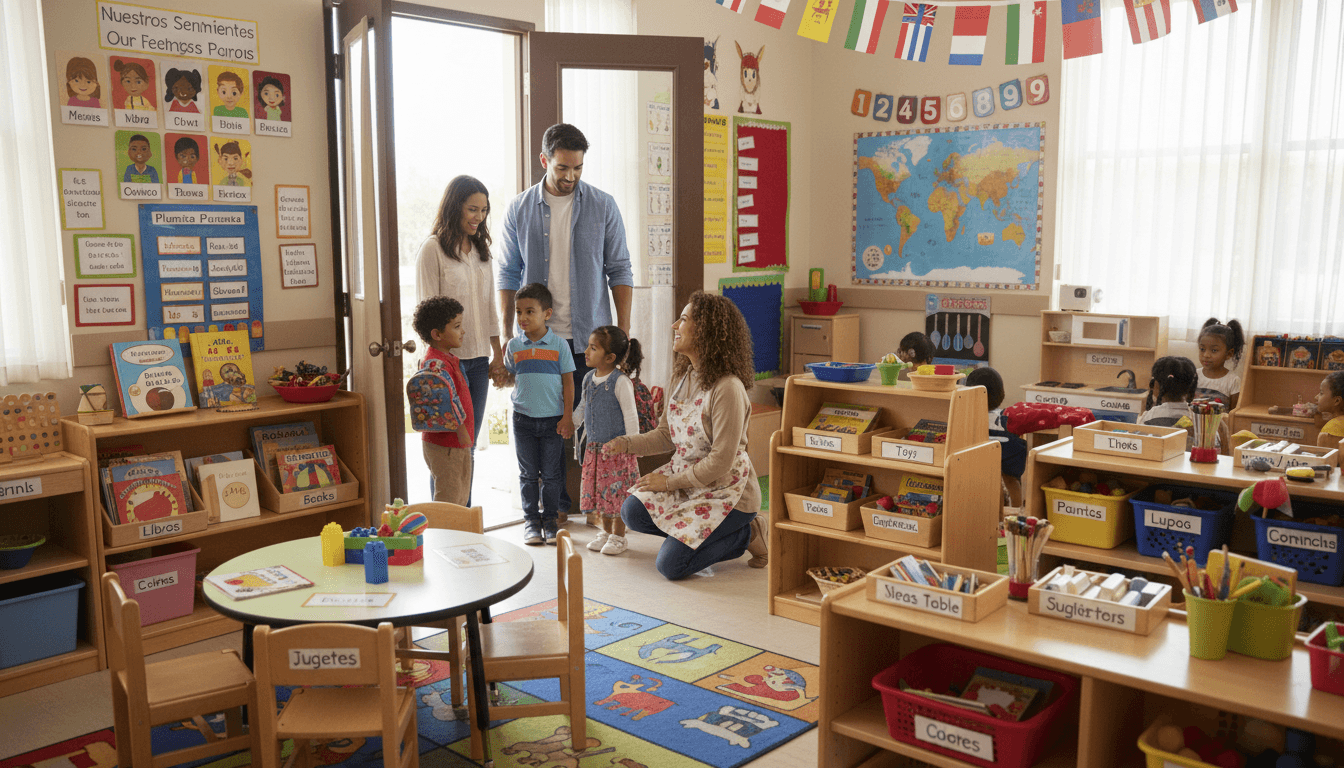
Preschool Social Skills Newsletter: Communicating Development to Families
Social skills in preschool are not a side effect of coming to school. They are a core part of what pre-K is actually for. Children who arrive at kindergarten able to manage their emotions, take turns, resolve small conflicts, and form friendships are significantly better positioned for academic learning than children who cannot.
But most families do not have a clear picture of what social development at ages three and four looks like, what is normal, what is a concern, and what they can do at home to support it. Your newsletter is the right place to fill that gap.
Start With What Normal Looks Like
The first thing most parents need to understand is the developmental timeline. Many families worry that their three-year-old is not playing with other children, when in fact parallel play (playing beside others rather than with them) is developmentally expected through most of the preschool years. Simple, reciprocal play between two children becomes more consistent around age four to five.
A newsletter that briefly maps the expected progression from solitary to parallel to cooperative play helps families interpret what they observe at pickup. It also gives them a framework for knowing when to be concerned versus when to trust the process.
What You Are Actually Teaching in Your Classroom
Parents whose children come home saying "nobody will play with me" or "Jake took my toy" are often not sure what their child's teacher is doing about social skills. Being specific in your newsletter about what you are actually practicing builds confidence and helps parents reinforce the same language at home.
Examples of concrete, jargon-free descriptions:
- Conflict resolution: "This week we have been working on asking instead of grabbing. When two children want the same toy, we practice saying 'Can I have a turn when you are done?' instead of just taking it."
- Joining play: "We have been teaching children how to ask to join a group that is already playing: walking up, watching first, then saying 'Can I play too?'"
- Identifying emotions: "We are using a feelings chart this month so children can point to how they feel when words are hard to find."
What Parents Can Do at Home
Social skills are not just practiced at school. The way families handle conflict, frustration, and turn-taking at home has a direct impact on the skills children bring to the classroom. Your newsletter can give parents specific, low-effort tools:
- Use the same language you use in class so children hear consistent messaging. "Use your words" means more when it comes from both teacher and parent.
- Name emotions out loud in daily situations: "You look frustrated that we have to leave the park. That makes sense." Emotional labeling from adults helps children build their own emotional vocabulary faster.
- Practice turn-taking in everyday routines: board games, building blocks, and taking turns choosing songs in the car all build the same muscle as sharing at school.
Addressing Friendship Worries Without Creating Panic
Some parents are genuinely worried about their child's social connections, and a newsletter can either deepen that worry or reframe it productively. The key is to be honest about what social development looks like without catastrophizing.
Children at preschool age do not typically form stable, named friendships. They form situational alliances based on who is near them, what they are playing, and who was kind to them yesterday. A child who does not come home talking about a best friend is not necessarily struggling socially. A child who seems distressed most days, who teachers observe being repeatedly excluded, or who is unable to enter group play at all is a different situation and warrants a private conversation rather than a newsletter mention.
Tone: Confident and Honest, Not Alarming
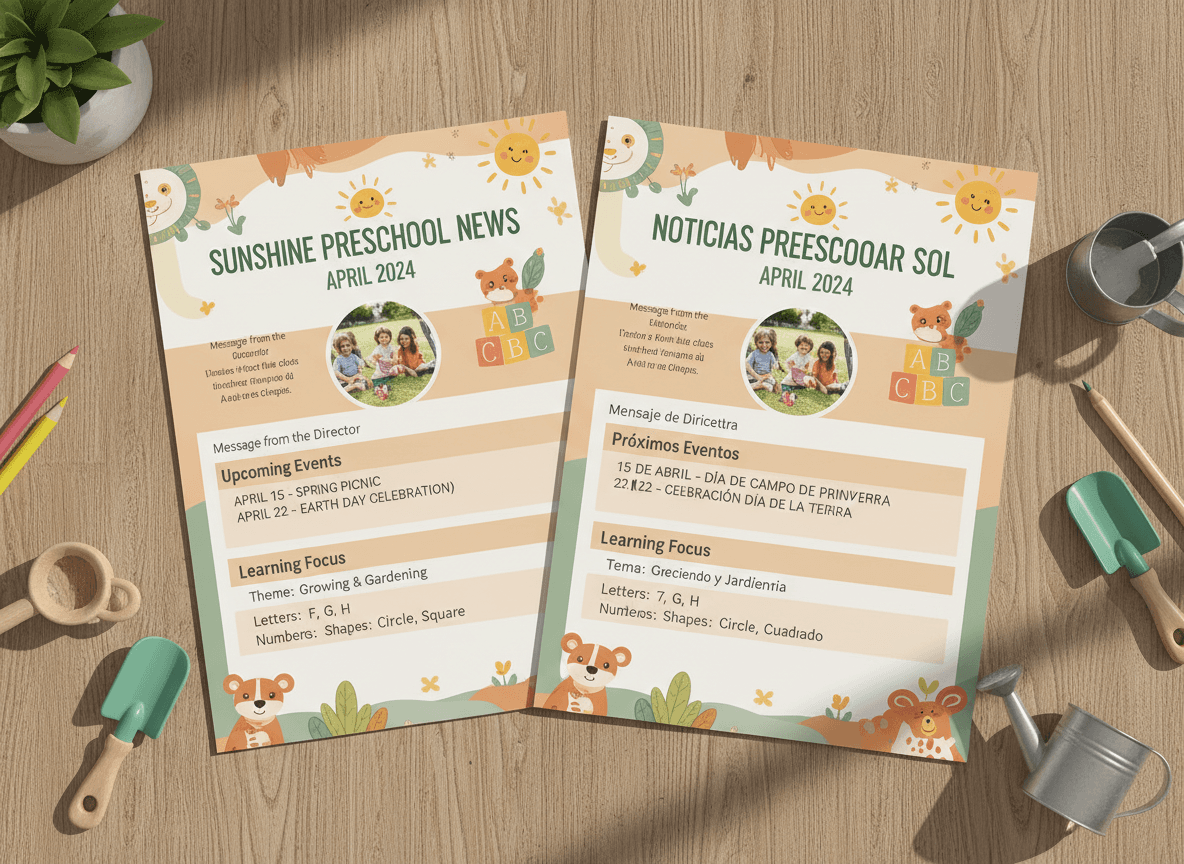
The goal of a social skills newsletter is not to make parents worry more than they already do. It is to give them a realistic picture of where children this age typically are, what you are doing about it, and what they can contribute at home. Daystage makes it straightforward to send a well-formatted newsletter with this kind of content directly to families, with enough structure that the message stays clear and readable on a phone screen.
Get one newsletter idea every week.
Free. For teachers. No spam.
Frequently asked questions
What social skills should a preschool newsletter address?
Cover the skills families actually see at home: sharing, turn-taking, handling disagreements with words, managing frustration, and making friends. These are the skills parents are watching for and the ones that generate the most questions about whether their child is developing normally.
How do you explain social-emotional learning to preschool parents without jargon?
Replace the term SEL with specific behaviors. Instead of writing about social-emotional learning, describe what children are actually practicing: learning to wait for their turn, figuring out how to join a game, using words instead of grabbing when they want something. Concrete language lands better than curriculum terminology.
How often should preschool teachers communicate about social development?
One focused update per month on social development is enough, as long as you connect it to what is actually happening in the classroom that week. Tying the social skills newsletter to current classroom themes or recent events makes it feel relevant rather than generic.
What do parents misunderstand about preschool social development?
Many parents expect parallel play to resolve itself quickly and worry when their child plays near others but not with them at age three. Parallel play is normal and developmentally expected through age four. Newsletters that explain this timeline prevent unnecessary worry and help parents recognize what progress actually looks like.
How can Daystage support social skills communication with families?
Daystage lets teachers build structured newsletters with distinct sections, so a social development update can be one section of a broader weekly newsletter rather than a separate document families have to track.

Adi Ackerman
Author
Adi Ackerman is a former classroom teacher and curriculum writer with 8 years in K-8 schools. She writes about school communication, parent engagement, and what actually works in real classrooms.
More for Pre-K
Preschool Substitute Teacher Newsletter: Preparing Families When the Regular Teacher Is Out
Pre-K · 5 min read
How to Explain Play-Based Learning to Parents in Your Preschool Newsletter
Pre-K · 7 min read
Preschool Block Play Newsletter: The Math and Science Happening in the Block Area
Pre-K · 5 min read
Ready to send your first newsletter?
3 newsletters free. No credit card. First one ready in under 5 minutes.
Get started free