
How to Explain Play-Based Learning to Parents in Your Preschool Newsletter
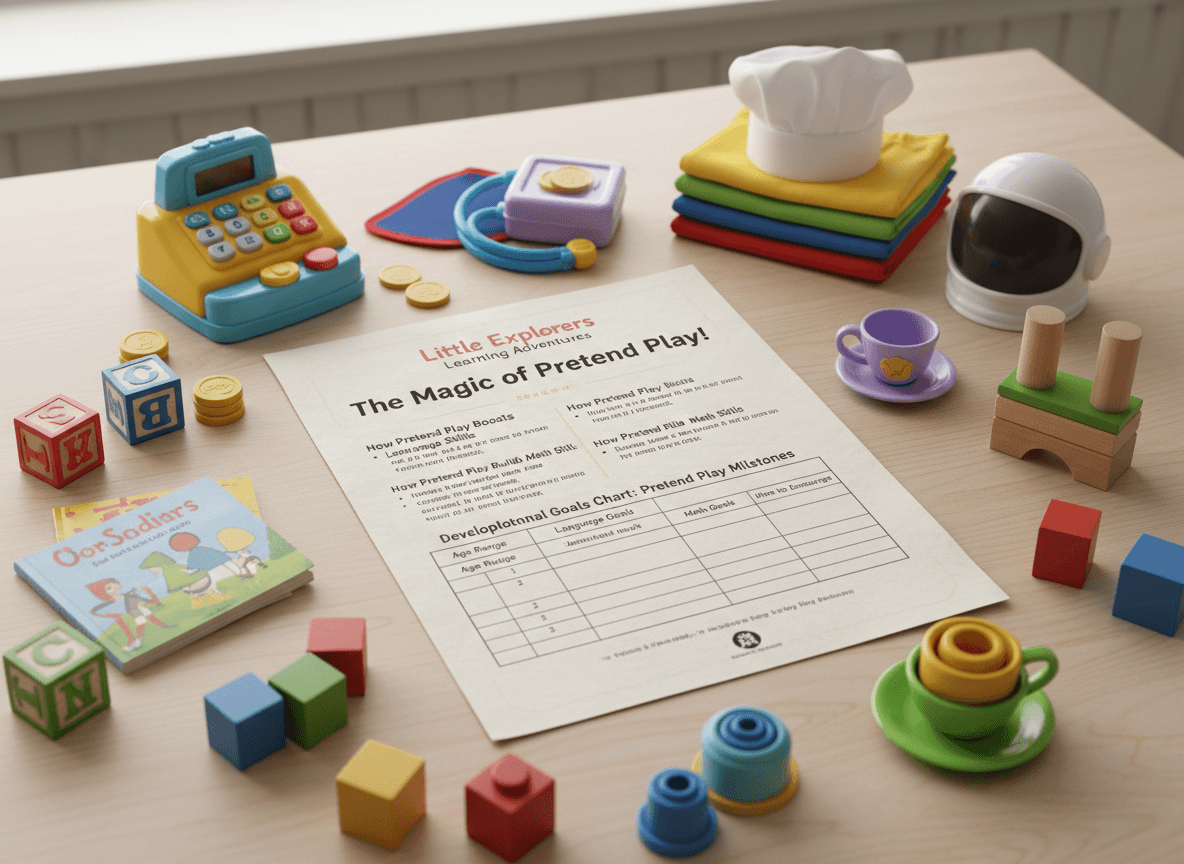
At some point in the school year, a preschool parent will ask some version of this question: "Are they actually learning anything, or just playing all day?" It usually comes in a friendly tone. But the question underneath it is real: is my child making progress, and how would I know?
Your newsletter is the best tool you have for answering that question before it is asked. When parents understand the connection between play and development, they stop treating the two as opposites. Here is how to make that case in language that lands with families, not just with educators.
Why Parents Question Play-Based Learning
Most of the parents in your classroom were educated in traditional classroom settings with worksheets, quiet seats, and visible output. They associate learning with products: a completed page, a letter traced correctly, a math problem solved. Play produces none of those artifacts, so to a parent scanning for evidence of learning, it can look like nothing is happening.
Add to that the pressure many families feel about kindergarten readiness, and you have parents who are worried about falling behind before their child has turned five. That worry is understandable. It is also something your newsletter can address directly.
The Formula: Name the Play, Name the Skill
The most effective approach in a newsletter is a two-step structure for every activity you describe. First, say what children are doing in concrete, observable terms. Then say what skill it builds and why that matters. This formula works because it meets parents where they are, giving them something they can picture, and then connects it to outcomes they care about.
Examples of the formula in action:
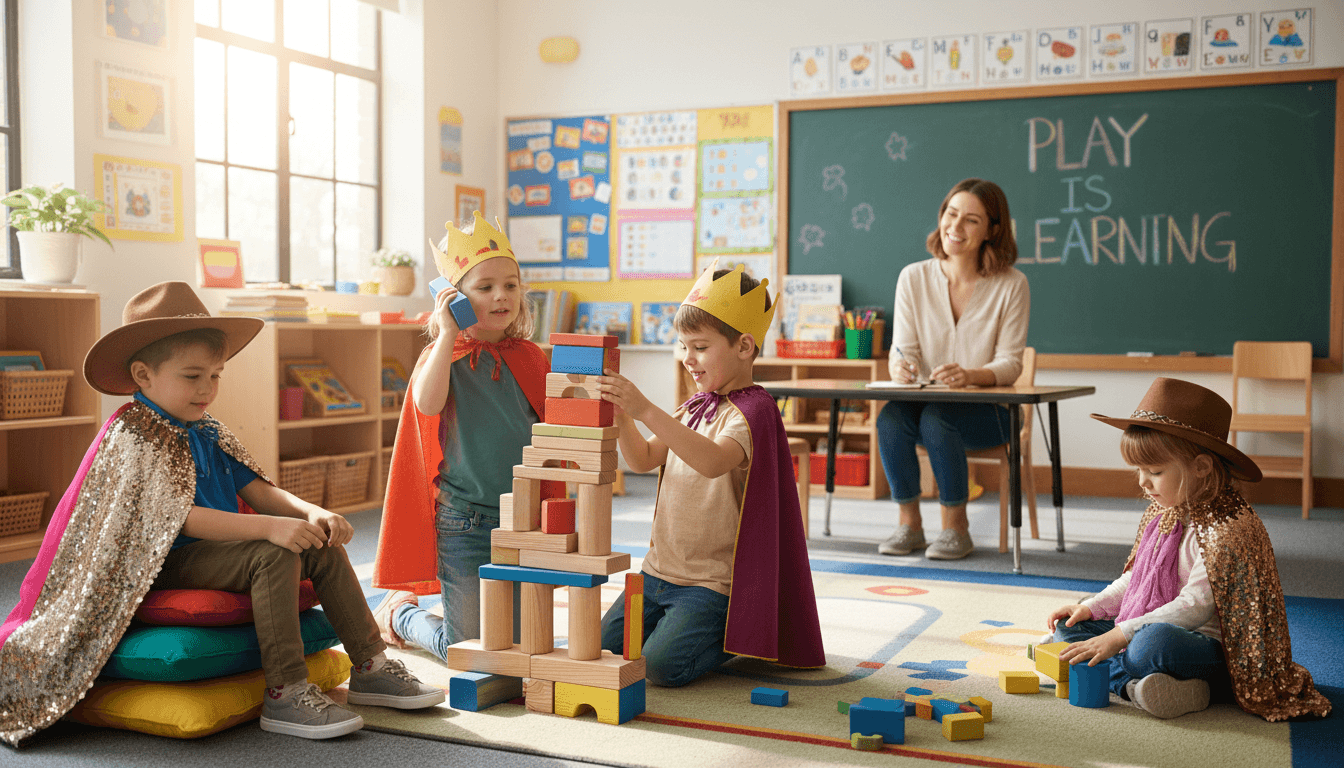
- "Children have been building with unit blocks this month, sorting by size and figuring out how to make their structures balanced. Block play is one of the strongest early math activities we know of: it builds spatial reasoning, measurement concepts, and the persistence to try again when something falls."
- "This week we acted out the story of 'The Three Billy Goats Gruff' with the children taking different roles. Dramatic play at this age builds vocabulary, sequencing (first, then, finally), and the ability to hold and retell a narrative, which is a core pre-reading skill."
- "We introduced a sensory bin with dried beans and measuring cups. Children are practicing pouring, estimating, and comparing quantities. This is early math, not worksheets, but it is building the same number sense."
What Research to Reference Without Overwhelming Families
You do not need to turn your newsletter into a literature review. But one brief research reference per issue, handled lightly, lends authority to what you are describing. The key is to name the finding without citing the paper.
Phrases that work: "Research from early childhood development consistently shows that pretend play builds executive function, including focus and self-regulation, more effectively than direct instruction at this age." Or: "The National Association for the Education of Young Children considers play-based learning the standard approach for preschool for good reason: it matches how 3 and 4 year old brains actually develop."
These references do not require footnotes. They tell parents that what they are seeing is not an accident or a shortcut. It is backed by the field.
Phrases That Reassure Without Sounding Defensive
The tone matters as much as the content. Describing play-based learning in a way that sounds defensive suggests the teacher is worried about being questioned. The better posture is confident and informative, sharing the reasoning because it is interesting, not because you feel the need to justify yourself.
Phrases that land well:
- "Here is what we were learning through that."
- "This might look like play, and it is, but watch what is happening underneath."
- "We call this free choice time, and it is one of the most structured parts of our day."
- "By the end of this unit, children will be able to..."
Phrases to avoid: "Just remember that play is important." "We are not just playing." "As educators, we know that..." All of these position the teacher as defending against a criticism, which puts parents on the wrong side of the conversation.
Connecting Play to Kindergarten Readiness Specifically
Parents who are worried about kindergarten readiness respond to direct connection between what you are doing now and what kindergarten teachers will look for. Name those connections when you can.
"Kindergarten teachers consistently report that the children who thrive earliest are those who can sit with discomfort, try again after failing, listen to a story without interrupting, and use words to express needs. All of those skills are what we are building this year, through play, through conversation, and through the daily rhythm of the classroom."
This is more persuasive to a worried parent than a list of letters learned, because it speaks to who their child will be when they walk into kindergarten, not just what they will know.
Making It a Monthly Practice
One strong explanation at the start of the year is not enough. Parents forget. New concerns come up. The best approach is to weave one play-to-learning connection into every newsletter throughout the year as a regular feature.
When you use Daystage to send your monthly newsletter, that consistent structure becomes easy to maintain. You keep the same section in the same place every month, so parents learn to expect it and look for it. The cumulative effect over a school year is that families develop a genuine understanding of your approach rather than just tolerating it.
What Happens When You Get the Question Directly
Even with excellent newsletter communication, some parents will ask directly at pickup or at a conference. When that happens, the newsletter has done its job by giving you a shared language to draw on. You can say: "Remember the block tower series I wrote about last month? Let me show you what your child built."
Documentation and communication together are much more powerful than either one alone. The newsletter plants the understanding. The conference conversation harvests it.
Get one newsletter idea every week.
Free. For teachers. No spam.
Frequently asked questions
When should preschool teachers explain play-based learning to parents in newsletters?
Address it early in the year, ideally in the first or second newsletter before a parent brings it up as a concern. September is better than March. When families understand the connection between play and learning before they start wondering about it, they are more likely to trust what they observe during drop-off and pickup.
What should a play-based learning newsletter for parents include?
Include a specific activity the class did that week, name the developmental skill it was building, such as turn-taking during block play or fine motor control during playdough work, and give one parallel example a parent can try at home. Specificity is what converts skeptical parents because it replaces an abstract philosophy with something they can picture.
How should preschool teachers explain play-based learning without sounding defensive?
Lead with the observation, not the theory. Instead of explaining why play is learning, describe what you watched children do and what it showed you about their development. A parent who hears that their child negotiated with a peer over who goes first in a game understands more about social-emotional development than they would from reading a definition of the term.
What are common mistakes in communicating play-based learning to preschool parents?
The most common mistake is using early childhood education vocabulary without translation, words like 'schema play,' 'loose parts,' or 'emergent curriculum' that mean nothing to families outside the field. A close second is waiting until a skeptical parent complains before explaining the approach, at which point the communication feels reactive rather than confident.
Is there a tool that helps preschool teachers communicate learning through play to families?
Daystage is built for early childhood teachers and makes it easy to share the story behind classroom activities, helping families understand what their child is actually gaining from play-based experiences.

Adi Ackerman
Author
Adi Ackerman is a former classroom teacher and curriculum writer with 8 years in K-8 schools. She writes about school communication, parent engagement, and what actually works in real classrooms.
More for Pre-K
Ready to send your first newsletter?
3 newsletters free. No credit card. First one ready in under 5 minutes.
Get started free