
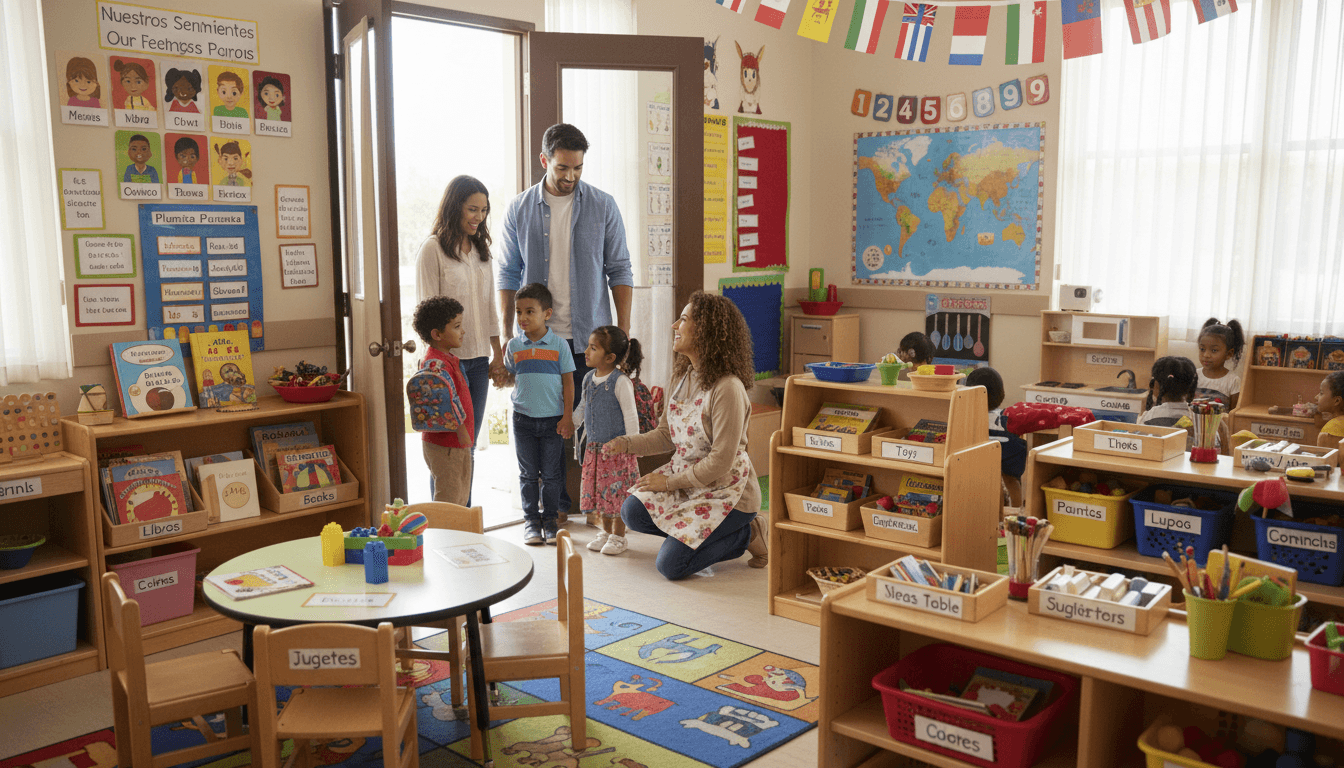
Preschool Learning Objectives Newsletter: Helping Families Understand What Children Are Working Toward
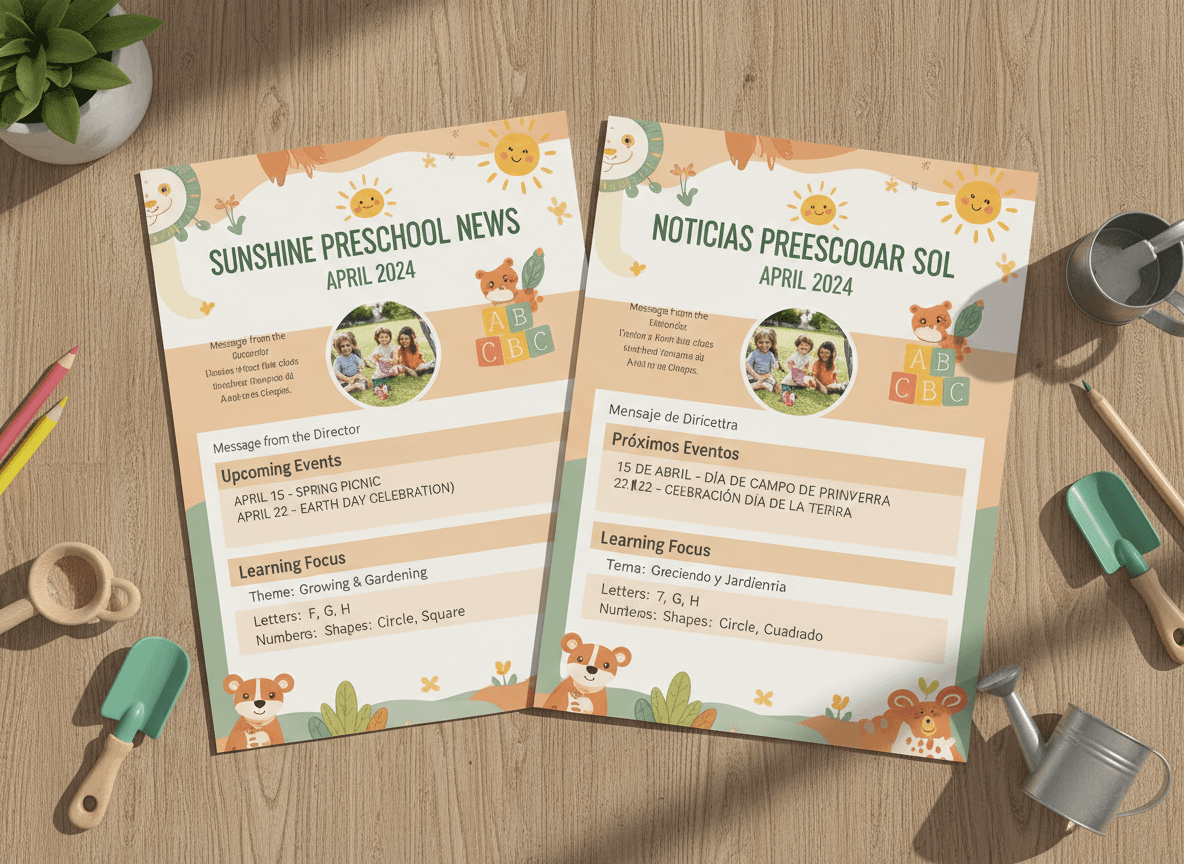
A preschool newsletter that only describes events and schedule changes misses one of its most powerful uses: giving families a window into what their child is learning and how to support it. Monthly learning objectives, written in plain language, transform families from observers of school into active participants in their child's development.
What Learning Objectives Look Like in a Preschool Classroom
Preschool learning objectives are not memorization goals. They describe the skills, concepts, and dispositions children are developing through play and exploration. Language objectives might include using sentences of five or more words, asking questions to get information, or retelling the sequence of a simple story. Math objectives might include counting sets of objects accurately, identifying basic shapes in the environment, and comparing quantities using more and fewer.
Social-emotional objectives are equally important: managing frustration with support rather than shutting down, expressing feelings with words rather than physical action, and maintaining a back-and-forth interaction with a peer or adult for three or more turns. These are not soft skills. They are the skills that determine whether a child can access academic instruction at all.
This Month's Focus Areas
Feature two or three specific objectives from the current month's curriculum. Write each one as a child behavior you can observe, not a curriculum term. Then describe which classroom activities are building toward that skill and how families can reinforce it at home in one or two sentences.
Example: "We are working on retelling stories in sequence. During storytime, we practice telling what happened first, next, and last. At home, you can ask your child to retell a book you just read together, or to tell you about something that happened at school from beginning to end." That is a complete learning objective communication in four sentences.
The Connection Between Play and Learning Goals
One of the most valuable things a newsletter can do is make the connection between specific play activities and the learning objectives they build. Block play builds spatial reasoning and geometry vocabulary. Dramatic play builds language, narrative thinking, and social negotiation. Painting builds fine motor skills and color concepts. Sensory play builds scientific vocabulary and self-regulation.
When families understand these connections, they stop wondering when the real learning happens and start seeing the learning inside every activity in the room. That shift in perspective is one of the most important things a preschool program can accomplish with its family communication.
Connecting This Month's Objectives to Kindergarten
Occasionally, connect this month's objectives to what kindergarten will build on. Not to create anxiety about readiness, but to help families understand the developmental continuity between preschool and the next setting. "The phonological awareness skills we are building this month, noticing beginning sounds in words, are directly connected to the phonics instruction your child will receive in kindergarten."
This context helps families understand why the objectives matter and invest in the home reinforcement suggestions more seriously. Development is not a series of disconnected activities. It is a progression, and families who can see the trajectory are better partners in supporting it.
Celebrating Observable Progress
Include a brief note on what the class has accomplished toward objectives from last month. "Last month we focused on counting sets to ten. Most of the class can now reliably count sets of eight or fewer objects without making pointing errors. Several children are beginning to count up to fifteen." Families who see progress reported concretely develop confidence in the program and in their child's development.
Daystage makes it easy to build a consistent learning objectives section into every monthly newsletter that gives families clear, actionable information about what their child is working on and how to help. When learning at school and learning at home are aligned, children make faster progress in both places.
Get one newsletter idea every week.
Free. For teachers. No spam.
Frequently asked questions
Why should preschool teachers share learning objectives with families?
Families who know what skills the class is working on this month can reinforce the same learning at home, in the car, and during everyday activities. When a parent knows the class is working on counting sets to ten, they can count crackers at snack time and make it a game. That informal reinforcement adds up significantly across a month.
How do you describe preschool learning objectives without using education jargon?
Translate each objective into a specific, observable behavior. Instead of 'developing phonological awareness,' say 'noticing when words rhyme and clapping each syllable in a word.' Instead of 'one-to-one correspondence,' say 'counting objects by pointing to each one and saying the number.' Concrete descriptions are more actionable than technical terms.
How many learning objectives should a newsletter cover in a month?
Two to four specific objectives across the main domains is enough. More than that and families lose the thread. Focus on the objectives the class is actively working on right now, not a comprehensive curriculum overview. Depth on a few goals is more useful than breadth across many.
How do preschool learning objectives connect to state standards?
Most preschool programs are aligned to their state's early learning standards, which describe expected developmental progression across domains. Your newsletter does not need to cite standards by code, but it can mention that the goals are aligned with what states and researchers identify as the key skills for early childhood success.
Can Daystage help preschool teachers communicate learning objectives to families monthly?
Daystage lets teachers build a consistent monthly newsletter format with a learning objectives section that families can reference throughout the month as they interact with their child at home.

Adi Ackerman
Author
Adi Ackerman is a former classroom teacher and curriculum writer with 8 years in K-8 schools. She writes about school communication, parent engagement, and what actually works in real classrooms.
More for Pre-K
Ready to send your first newsletter?
3 newsletters free. No credit card. First one ready in under 5 minutes.
Get started free