

Pre-K Snack and Meal Newsletter: Nutrition and Allergies
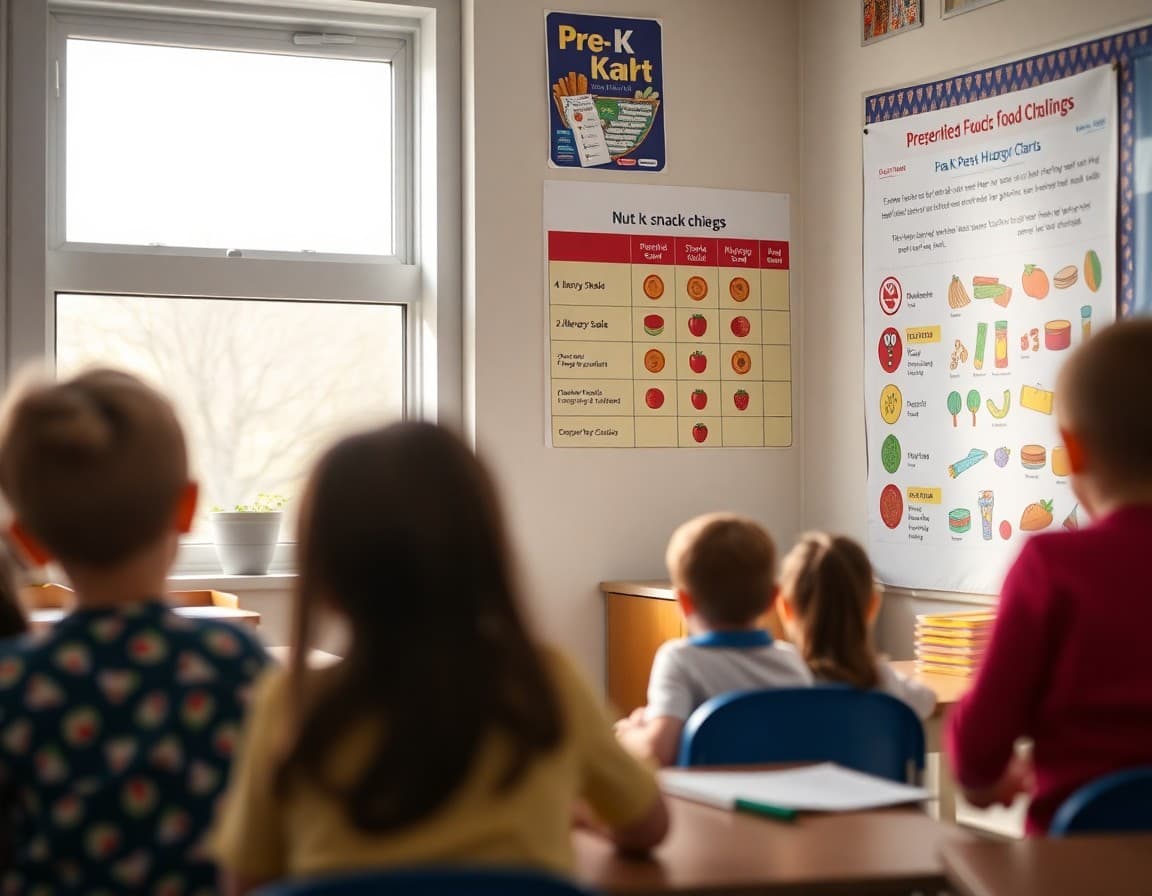
A pre-K snack and meal newsletter covers territory that feels mundane until it is not. Food allergies, religious dietary requirements, and nutrition policy are all areas where unclear communication creates real problems. A clear, specific newsletter about snack and meal practices prevents the majority of food-related conflicts before they happen.
Why Snack Time Is a Teaching Opportunity
Snack time in a well-run pre-K classroom is not just a fuel break. It is a structured social experience. Children practice conversation by sitting together and talking about their day. They practice independence by opening their own containers, pouring their own drink, and cleaning up after themselves. They practice math by counting crackers and comparing quantities. And they practice science by noticing what happens when a banana turns brown or a grape is left in the sun.
Teachers who treat snack time as an academic opportunity see richer language development and stronger classroom community than teachers who treat it as a transition break. The investment is the same five minutes. The return is significantly different.
Our Snack Policy and What It Means for Families
Our classroom operates as a nut-free environment. This means no peanuts, peanut butter, tree nuts (almonds, cashews, walnuts, pecans), or foods that may contain these ingredients. This policy applies to every food sent from home, including birthday treats, holiday foods, and cultural celebrations. We know this is sometimes inconvenient. We also know that a child in anaphylaxis is a medical emergency that fundamentally changes the classroom experience for every child and family for a long time afterward.
Approved snack options include: plain crackers, cheese, fresh fruit, cut vegetables, sunflower seed butter (as an alternative to peanut butter), yogurt, applesauce, and hummus. If you are unsure whether a packaged snack is nut-safe, check the allergen statement on the label. "May contain" statements indicate shared manufacturing equipment and are not acceptable in our classroom.
Managing Food Allergies in the Pre-K Setting
Three steps every family with an allergic child needs to take before the school year begins: (1) Submit the completed allergy action plan signed by your child's physician. This is not optional. Verbal notification to the teacher is not a substitute for written documentation. (2) Provide an epinephrine auto-injector to the classroom. Many families keep two on file: one with the classroom teacher and one in the school office. (3) Review the action plan with every adult who works in the classroom, including substitutes and classroom volunteers.
For families who are not directly affected by a food allergy: your compliance with the snack policy is what makes it work. A single well-intentioned parent who sends peanut butter crackers because they forgot about the policy can cause a medical emergency. The policy holds only when every family follows it every day.
A Template for Your Snack Newsletter Section
This language can be adapted for the beginning of the year or any time a reminder is needed:
"Our classroom has [X] children with diagnosed food allergies this year. As a result, our classroom is nut-free and [list any additional restrictions]. Please review the list of approved snacks below and contact me with any questions before sending food from home. If your child is bringing a birthday treat to share, please check with me two weeks in advance so I can review the ingredient list and let you know if any adjustments are needed. I want every family celebration to be something every child can participate in."
Nutrition Content in the Monthly Newsletter
Including a brief nutrition section in your monthly newsletter serves families who are trying to feed their pre-K children well but are not sure what children this age actually need. Key facts worth sharing: preschoolers have small stomachs and need snacks between meals because they cannot eat enough at a single sitting to maintain energy. Protein at breakfast reduces mid-morning behavior problems. Iron-rich foods (beans, dark leafy greens, fortified cereals) support brain development during a critical window. Forcing children to finish their plates creates negative associations with eating that can persist into adulthood.
Keep nutrition content practical. "Pack a protein with every snack" is more actionable than "ensure adequate macronutrient balance." Parents who are managing morning routines with a 4-year-old need the simplest possible guidance that produces the most reliable results.
Celebrating Birthdays and Holidays with Food
Food-based celebrations are deeply cultural and deeply meaningful for families. The goal is not to eliminate them but to make them inclusive. When a family wants to bring a birthday treat, ask two weeks in advance, review ingredients together, and when necessary, work with the family to identify an allergen-safe alternative that still feels celebratory. A cupcake made with sunflower seed butter instead of peanut butter is still a cupcake. A cookie with a clear ingredient list is still a cookie.
For religious or cultural food practices, communication is everything. Families who observe halal or kosher dietary laws need advance notice of any school-provided food. Vegetarian and vegan families need ingredient transparency for cooked foods. Building a practice of sharing the month's planned food events in advance gives all families time to make alternative arrangements if needed.
Teaching Children to Manage Their Own Food Needs
By age 4, many children can identify their own food allergies and say "I can't eat that" to a peer or another adult. This is a life skill worth teaching explicitly. We practice food safety language in class: "That has nuts in it and I am allergic," "I do not eat pork," "I am vegetarian." Children who can advocate for their own food needs become safer as they gain independence. Families reinforce this at home by explaining restrictions in age-appropriate language and practicing what the child should say when offered an unsafe food.
Get one newsletter idea every week.
Free. For teachers. No spam.
Frequently asked questions
What foods are appropriate for pre-K classroom snacks?
The best pre-K snacks combine a whole grain or vegetable with a protein or healthy fat. Examples include apple slices with sunflower seed butter, cheese and whole-grain crackers, hummus with vegetable sticks, or yogurt with berries. Snacks that are high in sugar and low in protein produce energy spikes followed by crashes that make the hour after snack time difficult for children and teachers. Schools with low-sugar snack policies consistently report better afternoon behavior than those without them.
How serious are nut allergies in pre-K classrooms?
Nut allergies in young children can cause anaphylaxis, which is a medical emergency that can be fatal without immediate epinephrine treatment. Pre-K classrooms frequently operate as nut-free environments not because every child is allergic but because preschoolers share food, touch each other's hands, and cannot reliably avoid allergen exposure the way older children can. If your classroom has a nut-free policy, it applies to all foods sent from home, including granola bars, crackers, and baked goods that may contain tree nuts or peanuts.
What should families do if their child has a food allergy?
Complete the allergy form provided by the school and submit it before the first day. Bring the required documentation from your child's physician specifying the allergy, the reaction type, and the emergency action plan. If your child requires an epinephrine auto-injector, provide one to the teacher and ensure the school nurse has a second one on file. Update the allergy form any time your child's allergies change. Do not assume the school already knows about an allergy mentioned verbally at drop-off.
Can children with dietary restrictions based on religion or culture be accommodated?
Yes. Pre-K programs are expected to accommodate dietary restrictions for medical, religious, and cultural reasons. Families should communicate these needs in writing at enrollment and provide any required documentation. Most schools can accommodate halal, kosher, vegetarian, and vegan dietary needs with advance notice. The key is early communication. Telling a teacher the morning of a classroom celebration that a child cannot eat the birthday cupcakes leaves no time to prepare an alternative.
How do you handle snack time in a way that builds healthy eating habits?
Snack time in our classroom uses what nutrition educators call 'division of responsibility': the teacher decides what food is offered and when, and children decide whether and how much to eat. We never require children to try a food, and we never use food as a reward or punishment. Children who feel pressure to eat specific foods develop worse relationships with food than children who are given autonomy. Daystage newsletters let us share our monthly snack menu in advance so families can reinforce our nutrition conversations at home.

Adi Ackerman
Author
Adi Ackerman is a former classroom teacher and curriculum writer with 8 years in K-8 schools. She writes about school communication, parent engagement, and what actually works in real classrooms.
More for Pre-K
Ready to send your first newsletter?
3 newsletters free. No credit card. First one ready in under 5 minutes.
Get started free