
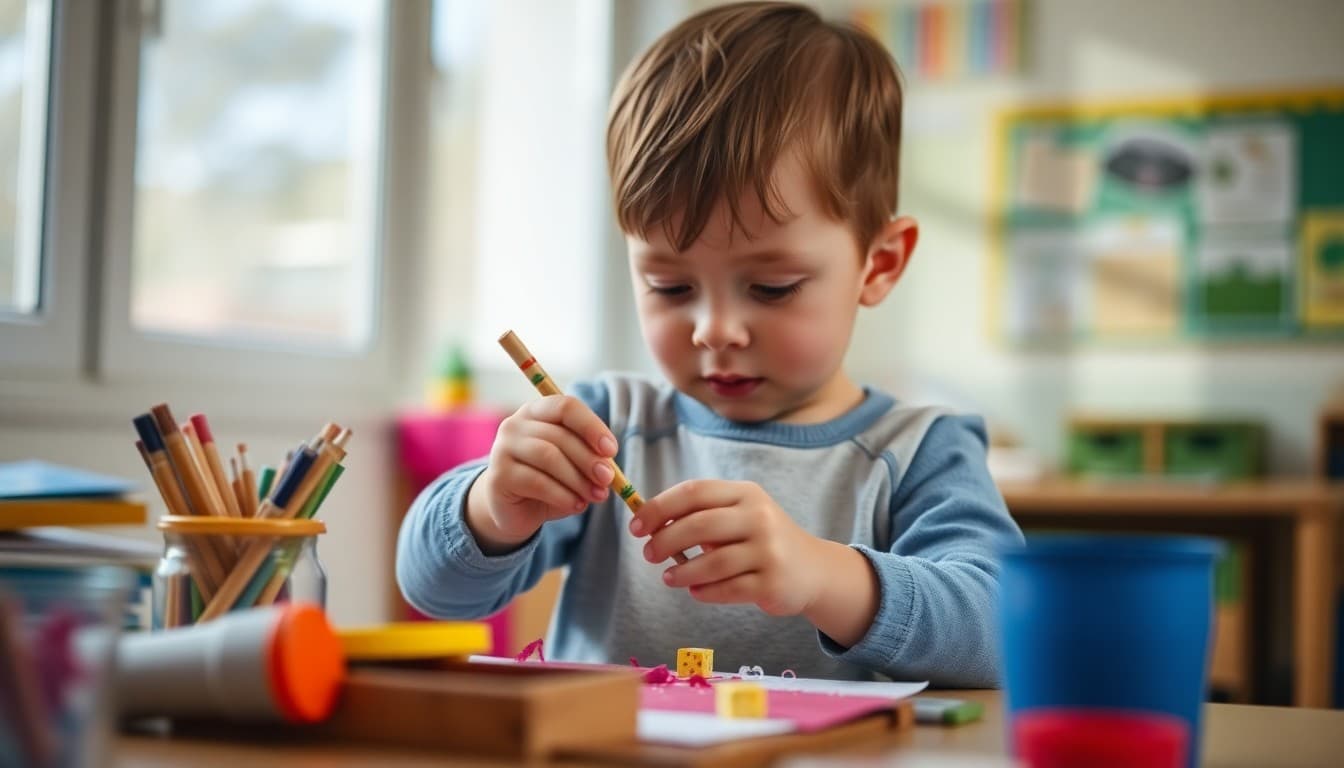
Pre-K Fine Motor Skills Newsletter: Getting Ready to Write

Fine motor development in pre-K is often treated as craft time rather than academic preparation. The reality is that the hand strength, coordination, and control children develop through cutting, drawing, building, and manipulating materials in pre-K is exactly what makes handwriting instruction possible in kindergarten. A fine motor skills newsletter that connects the classroom's art and play activities to specific developmental outcomes gives families a much richer picture of what their child is learning and how to support it at home.
Why Playdough Is Not Just Play
One of the most developmentally powerful materials in a pre-K classroom is also one of the cheapest and simplest: playdough. Rolling, squeezing, pinching, and cutting playdough builds hand strength and the isolated finger movements that are prerequisites for a functional pencil grip. A child who spends 20 minutes working with playdough is building the same muscles they will use to form letters in kindergarten. The newsletter should make this connection explicit so families understand that open-ended materials like playdough, clay, and putty are developmental tools, not time-fillers.
Pencil Grip Development: What Is Typical
Pencil grip development follows a predictable sequence, and the newsletter should describe it so families know what to look for and what is and is not cause for concern. Very young children grip writing tools with their whole fist. As shoulder and elbow control develops, the grip moves closer to the tip of the tool. As fine motor coordination develops further, children begin to use their fingers to control the tool, moving toward the three-finger (tripod) or four-finger (quadrupod) grip that allows for efficient, legible writing. Most children are still somewhere in the middle of this progression in pre-K, and that is entirely appropriate. Forcing a mature grip before the underlying hand strength is present creates discomfort and can produce compensatory patterns that are harder to correct later.
Scissor Skills in Pre-K
Scissor skills are a specific fine motor milestone that develops incrementally through the pre-K years. At age 3, most children can make random snips in paper. At age 4, most can cut along a straight line with some accuracy. At age 5, many children can cut along a curved line and cut out simple shapes. Using scissors requires bilateral coordination (the two hands doing different things simultaneously), hand strength, and visual-motor coordination. The newsletter should give families practical guidance on scissor practice at home: use real child-sized scissors rather than the flimsy kind that frustrate children without building skill, start with cutting playdough or foam rather than paper if the child struggles with paper, and supervise without hovering so the child has real cutting experience.
Classroom Activities and Their Fine Motor Purpose
Describe two or three current classroom activities and connect each one to its specific fine motor purpose. If the class is doing a lacing activity, explain that threading a lace through holes develops the isolated finger movements used in writing. If the class is using tweezers to sort small objects, explain that this builds the pincer grip. If the class is painting with small brushes, explain that small brush control develops the same wrist rotation used in letter formation. These specific connections help families understand that the classroom's playful activities are intentionally designed, not arbitrary.
Template Excerpt: Fine Motor Activity Newsletter
Here is a sample activity section from a fine motor newsletter:
"Fine Motor Activities to Try This Week: 1. Tearing and Collage: Give your child a stack of old magazines or colorful paper. Ask them to tear pieces into strips or chunks. Glue them onto a large sheet to make a collage. Tearing paper builds hand strength and bilateral coordination. 2. Stringing: Cut a shoelace into 12-inch pieces and gather dried pasta or large wooden beads. String a pattern: pasta, bead, pasta, bead. This builds the pincer grip and left-right hand coordination. 3. Salt Writing: Pour a thin layer of table salt onto a baking tray. Practice drawing shapes and letters in the salt with one finger. This builds tactile feedback for letter formation without the pressure of pencil on paper."
When to Mention Fine Motor Concerns
Most fine motor development falls within a wide normal range in pre-K. Families should mention concerns to the teacher if: a child avoids drawing, cutting, or fine motor activities completely, a child's grip is so tense that they tire very quickly when using a writing tool, a child cannot produce any representational drawing by age 4 and a half, or a child shows significant asymmetry (using only one hand exclusively for everything and keeping the other completely passive). These are starting points for a conversation. The school occupational therapist, if your district has one, can conduct a brief screening if the teacher has concerns following a family report. Early identification and support for fine motor delays produces better outcomes than waiting until the child reaches kindergarten and encounters formal writing instruction.
Get one newsletter idea every week.
Free. For teachers. No spam.
Frequently asked questions
What fine motor skills should pre-K children develop?
Key fine motor milestones for the pre-K years include: holding a crayon or marker with a functional grip (not necessarily perfect), cutting along a straight line and then curved line with child scissors, stringing large beads, completing simple puzzles of 8 to 10 pieces, using tongs or tweezers to pick up small objects, drawing basic shapes, and writing their first name with some legibility by age 5. These skills build on each other and are foundational for handwriting instruction in kindergarten.
Why do fine motor skills matter for academic readiness?
Fine motor skills directly prepare children for handwriting, which remains a significant part of academic work through the elementary years. Beyond handwriting, fine motor control is involved in using scissors for art projects, manipulating manipulatives in math, managing classroom materials independently, and using technology devices. Children who enter kindergarten with weak fine motor skills often struggle with the physical demands of writing before they struggle with the cognitive demands of reading.
What does a functional pencil grip look like in a pre-K child?
A functional grip is one that allows the child to produce legible marks without fatigue or pain. The developmentally typical progression moves from a fist grip (all fingers wrapped around the tool) in toddlerhood to a variety of transitional grips in early preschool, toward a dynamic tripod or quadrupod grip (tool resting between thumb and first two fingers) by age 5 or 6. Pre-K teachers do not enforce a single correct grip; they guide children toward a grip that is functional and not causing physical strain.
What activities at home build fine motor skills?
The most effective fine motor development activities are everyday ones: playing with playdough, snapping and unsnapping clothing, using child-sized scissors to cut paper or playdough, stringing pasta or beads onto a shoelace, building with Duplos and then Legos, tearing paper for art projects, using tweezers to pick up cotton balls, and coloring with short broken crayons that naturally encourage a tripod grip. These activities require minimal materials and produce significant development when done regularly.
Can Daystage help pre-K teachers share fine motor activity ideas with families?
Pre-K teachers use Daystage to send monthly fine motor development newsletters with activity ideas that match the classroom's current focus. Including photos of the classroom materials and activities in the newsletter helps families visualize what their child is working on and find equivalent activities at home without requiring specific purchased materials.

Adi Ackerman
Author
Adi Ackerman is a former classroom teacher and curriculum writer with 8 years in K-8 schools. She writes about school communication, parent engagement, and what actually works in real classrooms.
More for Pre-K
Ready to send your first newsletter?
3 newsletters free. No credit card. First one ready in under 5 minutes.
Get started free