
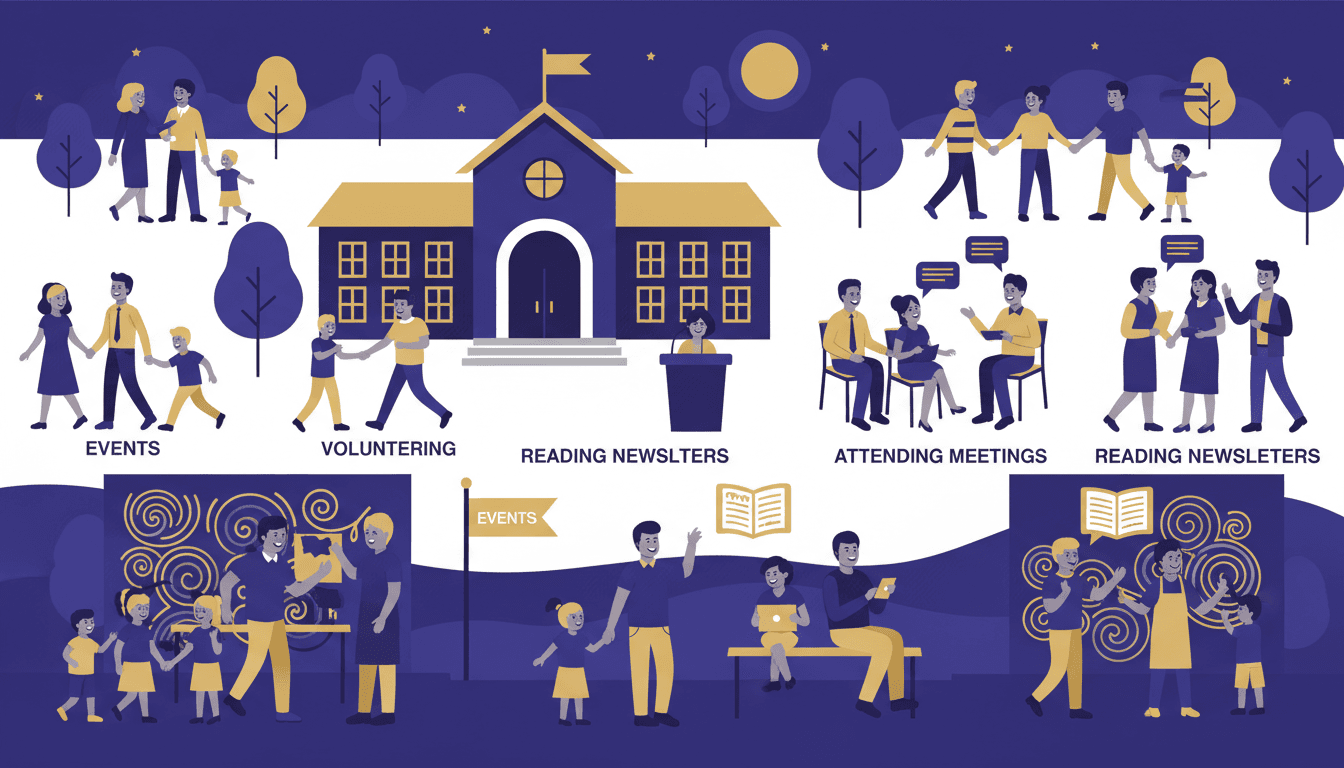
10 Parent Engagement Newsletter Strategies That Actually Work for Schools
Parent engagement is the outcome. The newsletter is the mechanism. But most school newsletters are not designed to create engagement. They are designed to inform, which is a different goal with different criteria for success.
Information alone does not engage families. Connection does. Here are ten strategies that shift a school newsletter from a one-way information delivery to a tool that actually builds parent involvement.
1. Start with the most human moment of the week
Lead every newsletter with a specific, genuine classroom moment. Not a curriculum summary. A real moment: the conversation that surprised you, the student who asked a question that changed the direction of the lesson, the project that did not work the way anyone expected.
Parents who read this feel like they were there. That feeling is the beginning of engagement. Start here before anything else.
2. Give parents a question to use at dinner
"Ask your child: if you could change one thing about how we ran the science experiment, what would it be?" This is the single highest-leverage engagement tool in a classroom newsletter, and it costs 15 seconds to write.
Parents who ask this question and get an answer feel connected to their child's school experience. They are more likely to open next week's newsletter to get the next question.
3. Make the first action item impossible to miss
A newsletter where important action items are buried in paragraph four has a parent engagement problem by design. Parents who miss deadlines, fail to return forms, or show up unprepared are sometimes just responding to a communication system that made it easy to miss things.
Put a labeled "Action needed this week" section at or near the top of every newsletter. One item. One deadline. One link. Make it the first thing parents encounter after the opening.
4. Show learning in progress, not just results
A newsletter that only reports finished outcomes ("students completed their essays") tells parents very little about what their child is experiencing. A newsletter that shows learning in progress ("we are in the middle of a project where students have to disagree with each other in writing and defend their position") is interesting, and it gives parents context for conversations with their child.
In-progress learning is messier and more honest. It is also more engaging.
5. Acknowledge parents' lives outside school
Parents who feel like the school sees them only as resources to be mobilized (sign this, attend that, volunteer here) disengage over time. Parents who feel recognized as whole people with busy lives and real constraints stay more connected.
Small acknowledgments go a long way: "If you can make it to the book fair, great. If not, here is how to order online." Or: "I know this is a busy stretch of the year for a lot of families. Here is everything in one place." These signals communicate that the school understands the relationship is not one-directional.
6. Include one resource parents can use at home this week
A short book recommendation, a math game, a YouTube video that connects to what you covered in class, or a sentence about what to look for when reading with their child. Something concrete. Something usable.
Parents who use resources from the newsletter are more engaged with the classroom. They also have something to connect with their child about. The resource does not need to be long. One sentence and a link is enough.
7. Use photos that show learning, not just smiling
A photo of students working on a project, mid-process, engaged in something, tells a more compelling story than a posed group photo. It shows parents something that is actually happening. And it gives parents something to ask their child about: "I saw a photo of you working on something, what was that?"
8. Invite responses and actually respond to them
"Reply if you have questions" is standard. "I would love to know: what does your child tell you about school?" is different. It invites a relationship, not a transaction.
When parents respond, write back. Even briefly. A teacher who consistently responds to parent replies builds a reputation as someone who is genuinely accessible. That reputation compounds over the year.
9. Close each quarter with a genuine reflection
At the end of each quarter, send a newsletter that does something most teachers never do: reflect honestly on how it went. What worked, what surprised you, what you are adjusting for the next quarter. This kind of honest self-assessment from a teacher builds enormous trust with families. They see a professional who is thoughtful, not just executing a curriculum.
10. Make the newsletter the best single source on your classroom
Parents should feel that your newsletter tells them things they cannot get anywhere else: what the class is actually working through, what the dynamics are like, what their child might bring home, and what to pay attention to. If your newsletter duplicates what is on the school website and the app, it has no unique value. If it is the place where a parent learns what is actually happening in Room 12, they will read it every week.
Building a newsletter that is genuinely the best source of information on your classroom is easier when the tool makes it fast to publish. Daystage is designed for exactly that: a clean, branded newsletter that takes 20 minutes to write and lands in parents' inboxes looking like someone put real care into it. Because you did.
Engagement is built over a year, not a single issue
None of these strategies produces a dramatic transformation from one newsletter to the next. Parent engagement is built through consistency, through showing up week after week with something worth reading, and through gradually training families that your newsletter is a reliable window into their child's school experience.
Pick two or three of these strategies and apply them consistently for six weeks. Then evaluate. What changed? What are parents responding to? What questions are they no longer asking because the newsletter answered them first?
Build from there.
Get one newsletter idea every week.
Free. For teachers. No spam.
Frequently asked questions
When should teachers include dinner conversation questions in school newsletters?
Every week, without exception. A single dinner question like 'If you could change one thing about this week's science experiment, what would it be?' takes 15 seconds to write and gives parents a concrete way to connect with their child's school experience. Parents who use these questions are more likely to open next week's newsletter.
What newsletter content creates the most genuine parent engagement?
Specific, real classroom moments outperform curriculum summaries every time. A newsletter that describes what actually happened, including an unexpected question a student asked or a project that did not go as planned, gives parents something they can picture. Generic updates like 'students continued their writing unit' give parents nothing to engage with.
How should schools use newsletters to involve parents who have limited time?
Include one concrete resource each week that parents can use at home in under two minutes. A short book recommendation, a math game, or a YouTube video connected to that week's class content. Parents who use resources from the newsletter are more engaged with the classroom and have something to connect with their child about.
What approaches reduce parent engagement with school newsletters over time?
Treating newsletters as one-way information broadcasts rather than two-way communication tools. Parents who are never invited to respond, never asked for input, and only addressed as people who need to sign things and attend events disengage over time. Small invitations to reply or share observations at home change the relationship.
What tool helps schools run parent engagement newsletter strategies consistently?
Daystage gives teachers the structure to implement these strategies week after week. Built-in sections for classroom moments, home questions, and action items mean teachers do not have to reinvent the format. The consistency is what makes engagement compound over the school year.

Adi Ackerman
Author
Adi Ackerman is a former classroom teacher and curriculum writer with 8 years in K-8 schools. She writes about school communication, parent engagement, and what actually works in real classrooms.
More for Parent Engagement
Newsletter Fatigue Is Real. Here Is How Teachers Can Avoid It
Parent Engagement · 6 min read
Text vs. Email for School Newsletters: How to Choose the Right Channel for Each Message
Parent Engagement · 5 min read
School Newsletter Image Copyright: What Teachers Need to Know Before Sending
Parent Engagement · 5 min read
Ready to send your first newsletter?
3 newsletters free. No credit card. First one ready in under 5 minutes.
Get started free