

School Newsletter Best Practices for High-Poverty School Communities
In schools serving high-poverty communities, the families most affected by the quality of school communication are often the ones least reached by standard newsletter approaches. Work schedules that leave no time for email. Housing instability that means contact information changes frequently. Prior negative experiences with schools that make receiving a school communication feel more like a summons than an invitation. And, in many communities, digital access gaps that leave some families entirely outside the reach of email-based communication.
The answer is not to communicate less. It is to communicate differently.
Lead with what families can actually do
Newsletters in high-poverty school communities should front-load concrete, actionable information above narrative and curriculum content. A parent who arrives home after a 10-hour shift, manages dinner, checks homework, and then opens a school newsletter at 9 pm has about four minutes of energy left for school communication. A newsletter where the permission slip deadline is in paragraph five will not be found.
An action items section at the top of every newsletter, clearly labeled and in bullet format, ensures that every parent who opens the email can find what they need to do in under 60 seconds, regardless of whether they read the rest.
Write without assuming stability
Language that assumes a stable, resourced household is a small but consistent form of alienation for families who do not have that stability. "Set up a quiet workspace at home for homework" is advice that assumes a family has a dedicated quiet space. "Ask your parent to review your reading log" assumes a parent has time and literacy in the language the log is written in. These assumptions are not malicious. They are defaults that go unexamined.
Replacing these assumptions with more flexible language, "find a calm moment to work on the reading log" or "have someone in your family hear you read for a few minutes," opens the activity to the full range of households in your class without making any family feel that the instructions do not apply to them.
Include resource information as a standard section
In communities where families regularly face food insecurity, housing instability, healthcare access challenges, or other material needs, a brief standing section pointing to available community resources is a service rather than a distraction. "Community Resources This Week" with a link to the school's family support page, a food pantry schedule, or a free community event requires minimal effort to maintain and has disproportionate value for families navigating difficult circumstances.
This section should not be positioned as charity. It should be framed as information: "Resources available to all families in our school community this month." Normalizing resource access as standard school communication removes the barrier of families feeling they need to ask for help.
Make financial requests without shame
Field trips, school supplies, class project materials, and activity fees are regular newsletter topics. In high-poverty school communities, these requests often cause anxiety for families who cannot meet them, and embarrassment can keep families from asking for the assistance that is available.
Include financial assistance information directly alongside every financial request, not as a footnote or a separate communication. "Field trip cost is $10. Financial assistance is available for any family who needs it. Contact the office before [date]. No forms or applications required." This framing normalizes assistance as part of the standard process, not as an exceptional request that requires courage to make.
Build trust through consistency before you need it
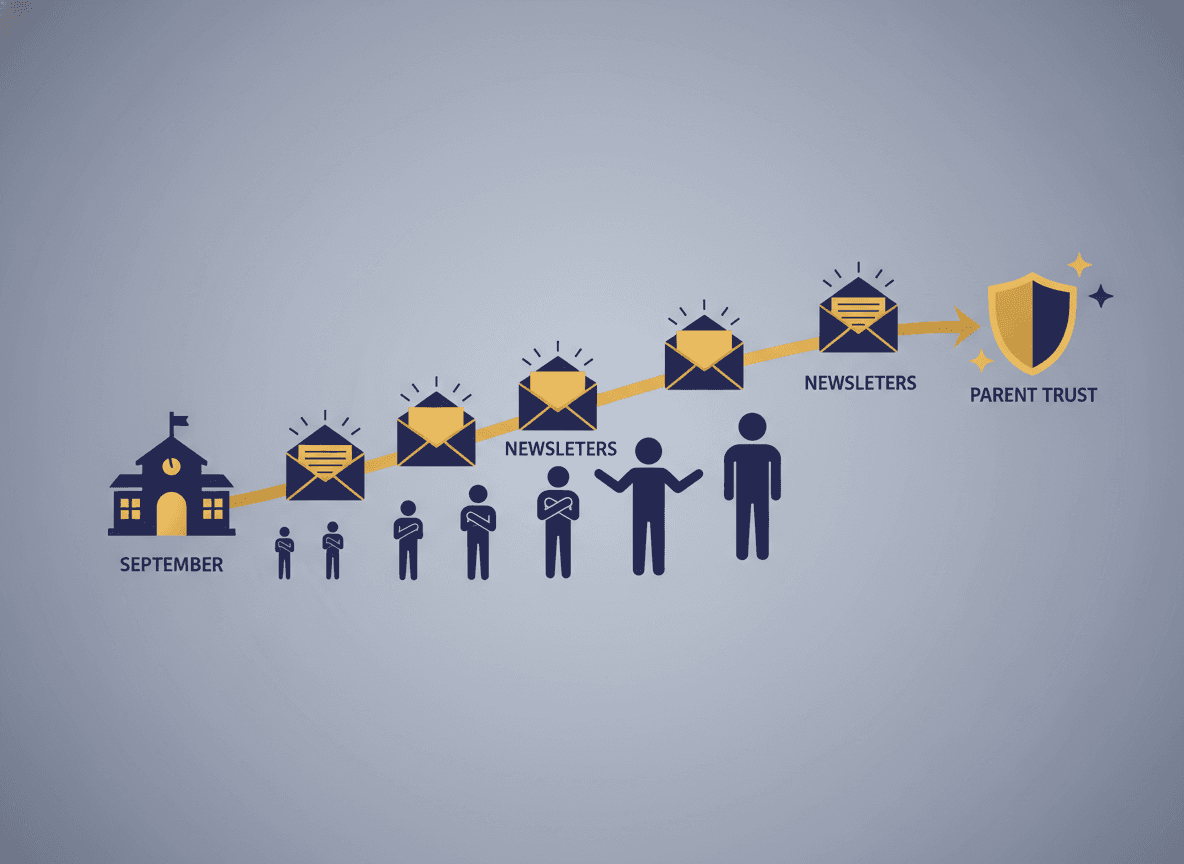
In communities where schools and families have had difficult histories, trust does not come from a single well-written newsletter. It comes from dozens of newsletters that arrived on time, told the truth, and treated families with respect. The newsletter is not a relationship. It is evidence of a relationship being built.
The best practice for high-poverty school communities is the same as everywhere: show up every week, be honest, and write to the families you actually have rather than the ones you imagine. What differs is the urgency and the stakes. In communities where disengagement from school is a real risk with long-term consequences for children, consistent and respectful communication is not a nice-to-have. It is part of the educational work.
Get one newsletter idea every week.
Free. For teachers. No spam.
Frequently asked questions
Why is parent engagement through newsletters particularly challenging in high-poverty schools?
Families in high-poverty communities often face multiple simultaneous barriers: unreliable technology access, work schedules that leave little time for school communication, prior negative experiences with schools, language barriers, housing instability that leads to changing contact information, and distrust of institutions. No single newsletter change addresses all of these, but thoughtful design can reduce several.
What should teachers in high-poverty schools prioritize in newsletter communication?
Concrete, actionable information that directly affects the family's ability to support their child. Resource information that is actually available to them. Language that is clear, direct, and respectful rather than bureaucratic. And clear invitations to engage without any assumption that engagement will happen on the school's preferred terms.
How should newsletters in high-poverty school communities handle resource requests from families who may not be able to afford them?
Always include information about available assistance alongside any resource request. 'Field trip cost is $12. Contact the office by [date] if financial assistance is needed, no application required' normalizes assistance as a standard option rather than an exceptional accommodation that requires courage to ask for.
What role does a newsletter play in rebuilding trust between schools and families who have had negative experiences?
Consistency, honesty, and respect over time are the building blocks of trust repair. A newsletter that arrives reliably, tells families true things about their child's school experience, and treats them as capable and caring adults, rather than as problems to manage, lays the groundwork for better relationships even when previous experiences were difficult.
How does Daystage support effective communication in under-resourced school communities?
Daystage provides professional newsletter infrastructure at no cost to families and low cost to schools. Teachers in high-poverty schools can use Daystage to produce consistent, high-quality newsletters without the technical complexity of setting up email marketing tools. The tool works regardless of school budget and handles deliverability so teachers can focus on the content.

Adi Ackerman
Author
Adi Ackerman is a former classroom teacher and curriculum writer with 8 years in K-8 schools. She writes about school communication, parent engagement, and what actually works in real classrooms.
More for Parent Engagement
AI Writing Tools for School Newsletters: How to Use Them Without Losing Your Voice
Parent Engagement · 5 min read
Spring School Newsletter Guide: What Families Need to Know in the Final Stretch
Parent Engagement · 5 min read
How to Handle Negative Parent Feedback About Your School Newsletter
Parent Engagement · 5 min read
Ready to send your first newsletter?
3 newsletters free. No credit card. First one ready in under 5 minutes.
Get started free