

Remind vs. School Newsletter: When to Use Each
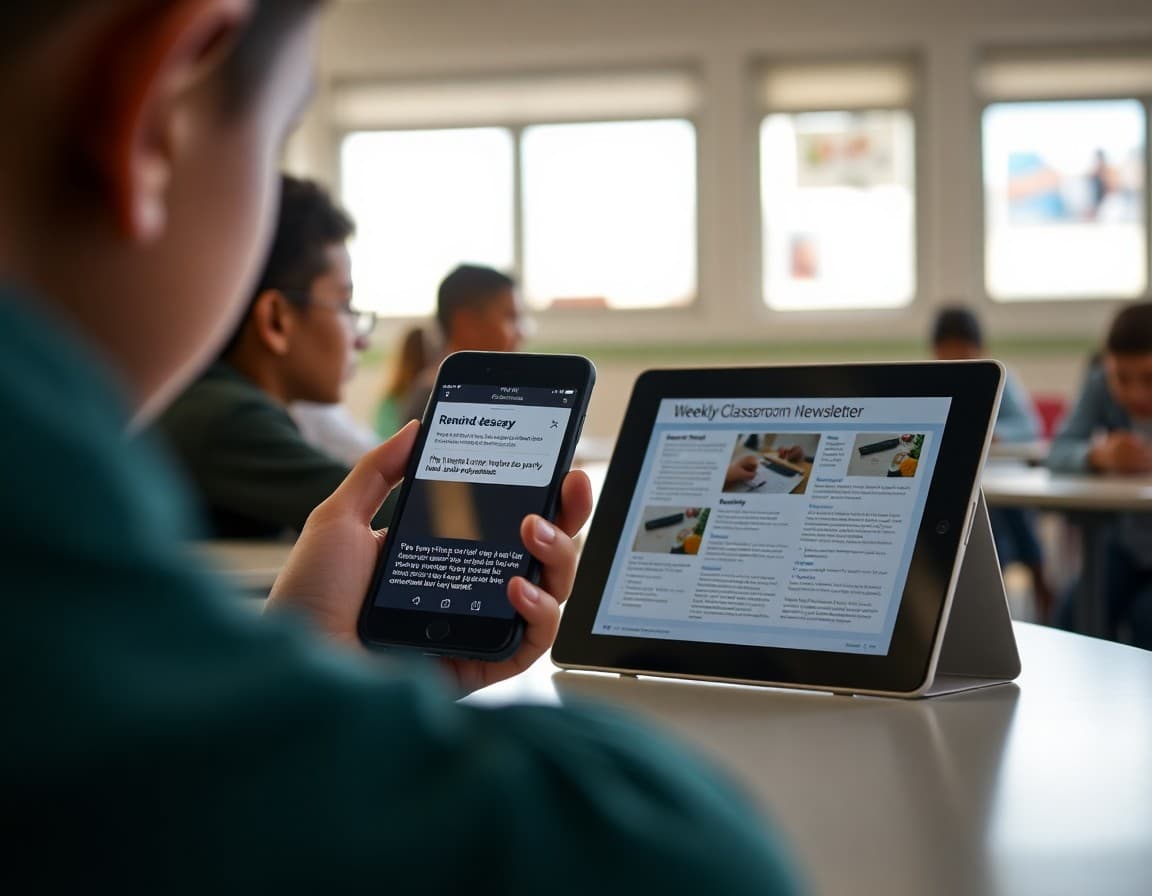
Remind and newsletters solve different communication problems. Knowing which one to reach for and when is one of the most practical skills a new teacher can develop. The teachers who struggle with family communication are often the ones using the wrong tool for the job.
What Remind Is Designed to Do
Remind is a messaging tool. It sends short text notifications to families who have joined your class channel. The design is intentionally simple: one-way or two-way short messages, fast delivery, minimal setup for families. Think of it as a group text for your classroom.
Remind is excellent for reminders that need immediate delivery. Picture day tomorrow. Test on Friday. School closes early today. Permission slips due by end of the week. These are communication moments where timeliness matters and length does not. A 30-word Remind message is the right tool for all of them.
What Newsletters Are Designed to Do
A newsletter is a structured communication document. It has sections, headers, and paragraphs. It delivers information that requires context: what we are studying this month, how the homework system works, what families should know about the upcoming assessment, how to contact the teacher. None of that information fits in a Remind message.
Newsletters also create a record. A family who wants to find out when the science fair is can search their email for your newsletter. A Remind message sent three weeks ago is buried in a message thread and much harder to retrieve.
The Cases Where Remind Outperforms Newsletters
Emergency information. If school is dismissed early due to weather, a Remind message reaches families on their phones in real time. A newsletter scheduled for Friday is irrelevant for a 1 PM weather dismissal. For any time-sensitive safety or schedule information, Remind is the faster and more appropriate tool.
Low-friction follow-up. After sending a newsletter with a permission slip attached, a Remind message three days before the deadline saying "Permission slips for the science museum are due Thursday" catches families who missed or forgot the newsletter. The reminder converts readers into responders.
The Cases Where Newsletters Outperform Remind
Structured information. Explaining your grading system in a Remind message is not possible. Introducing yourself to families requires more than 300 characters. Sharing a month of upcoming dates with context requires a formatted list, not a run-on sentence in a text field.
Universal reach. Remind requires families to opt in. Not all families join, and some who join do not have Remind installed and receive messages as SMS texts, which have character limits. Newsletters go to every email address you have, and while email delivery is not perfect, the gap between Remind adoption and email reach typically favors newsletters.
Building a System That Uses Both
Define the role of each tool at the start of the year and communicate it to families in your first newsletter. "I send a newsletter every [day] with the week's updates and important information. I also use Remind for quick reminders about time-sensitive items. Please join our Remind channel at [code or link]."
That clarity prevents families from expecting newsletter-level information in a Remind message and from thinking a Remind message about tomorrow's test means the newsletter is coming late.
Remind vs. Newsletter for Different Parent Types
Some families are email-forward and will reliably read your newsletter. Others are phone-forward and are more likely to respond to a Remind text. Families with multiple children juggling different school schedules tend to prefer quick reminders over long newsletters. Families of younger children often want more narrative detail. A two-channel system serves all of these preferences better than choosing one tool and expecting all families to adapt to it.
Get one newsletter idea every week.
Free. For teachers. No spam.
Frequently asked questions
What is Remind and how do teachers use it?
Remind is a messaging app designed for school communication. Teachers set up a class channel and families join by texting a code or clicking a link. Teachers send text-based messages that appear in families' SMS or the Remind app. It is commonly used for quick reminders: permission slips due tomorrow, picture day is Friday, dismissal schedule change. Remind also supports attachments and two-way messaging in its paid tier.
What is the main limitation of using Remind as a primary communication tool?
Remind messages are short, text-based, and unformatted. They work for quick reminders but are not designed for the type of structured, detailed communication that families need to understand a curriculum, follow a project's progress, or make informed decisions about their child's education. Remind also requires families to opt in by joining your class channel, which not all families do.
When should I use Remind instead of a newsletter?
Use Remind for time-sensitive reminders that need to reach families quickly: a test tomorrow, a permission slip deadline, a last-minute schedule change, a school event reminder. Remind is the right tool when the message is short enough to fit in a text and the timing matters more than the format.
Can I use Remind to deliver newsletter content?
You can link to a newsletter from a Remind message. Many teachers send a brief Remind text that says 'This week's newsletter is ready' with a link. This combination gives families the immediacy of a text notification with the depth of a properly formatted newsletter. It is more effective than trying to compress newsletter content into a Remind message.
Is there a free version of Remind that teachers can use?
Yes. Remind has a free tier that covers basic class messaging. The free version limits message length and does not include some features of the paid tier. For most basic reminder use cases, the free tier is sufficient. Daystage is a separate tool specifically for newsletters and school communication that complements Remind by handling the structured information delivery that Remind is not designed for.

Adi Ackerman
Author
Adi Ackerman is a former classroom teacher and curriculum writer with 8 years in K-8 schools. She writes about school communication, parent engagement, and what actually works in real classrooms.
More for New Teacher
Ready to send your first newsletter?
3 newsletters free. No credit card. First one ready in under 5 minutes.
Get started free