
How Often Should Teachers Send a Classroom Newsletter?
Newsletter frequency is the question new teachers ask most often after "what should I write." The answer depends on your grade level, your school's communication culture, and how much time you can realistically commit. Here is a framework for making the right choice and sticking to it.
Why Consistency Matters More Than Frequency
A teacher who sends a reliable newsletter every two weeks is more trusted by families than one who sends weekly for September and October, then drops to monthly by December. Families build expectations around your communication. When you meet those expectations consistently, they trust you. When you miss them, they wonder what is happening.
Pick a frequency you can maintain through the busiest weeks of the year: testing weeks, conference season, field trip weeks, and the last two weeks before winter break. If weekly feels impossible to sustain through all of those, biweekly is the right choice.
Weekly Newsletters: Pros and Cons
Weekly newsletters build the strongest family engagement over time. Families who hear from you every week form a clear picture of what is happening in your classroom. They ask better questions. They provide more relevant support at home. They are more likely to respond to requests for volunteers, supplies, or information.
The cost is time. A genuinely useful weekly newsletter takes 30 to 45 minutes to write, even with a consistent template. Over a 36-week school year, that is 18 to 27 hours of newsletter writing. That is a significant commitment and one that many teachers underestimate in August.
Weekly newsletters are most appropriate for elementary grades, especially K through 3, where families are most engaged with daily classroom details and where the homework and schedule information changes frequently enough to justify weekly updates.
Biweekly Newsletters: The Practical Middle Ground
Biweekly newsletters cut the time commitment in half while maintaining a communication pattern that families can rely on. A biweekly newsletter covers two weeks of content, which naturally prompts slightly more summarized, higher-level content rather than the day-by-day detail of a weekly newsletter.
For most upper elementary and middle school classrooms, biweekly is the sweet spot. Parents of older students generally need less logistical detail and more context about bigger academic milestones. A biweekly newsletter that covers the unit arc, upcoming assessments, and any logistical items serves that need well.
Monthly Newsletters: When They Work
Monthly newsletters can work for secondary teachers with large student loads or for specific subject areas like specials, where the curriculum moves in longer arcs. A monthly newsletter from a music teacher covering the term's concert preparation, practice expectations, and upcoming performance dates is sufficient and appropriate.
Monthly newsletters do not work well for grade-level homeroom teachers or for any teacher who regularly has time-sensitive information to communicate. If you find yourself sending one-off emails between monthly newsletters, that is a signal that monthly is not frequent enough for your communication needs.
Special Newsletters Outside Your Regular Schedule
Every teacher should have a plan for sending newsletters outside their regular schedule when something important warrants it. A field trip announcement with a permission slip requires immediate communication regardless of when your next scheduled newsletter is. A behavior policy change that affects homework warrants a standalone send.
These special sends should be clearly labeled as additional communications so families do not think they are getting the scheduled newsletter early. "Quick update from [Teacher Name]" in the subject line signals an additional message distinct from your regular newsletter.
Building Your Newsletter into Your Weekly Routine
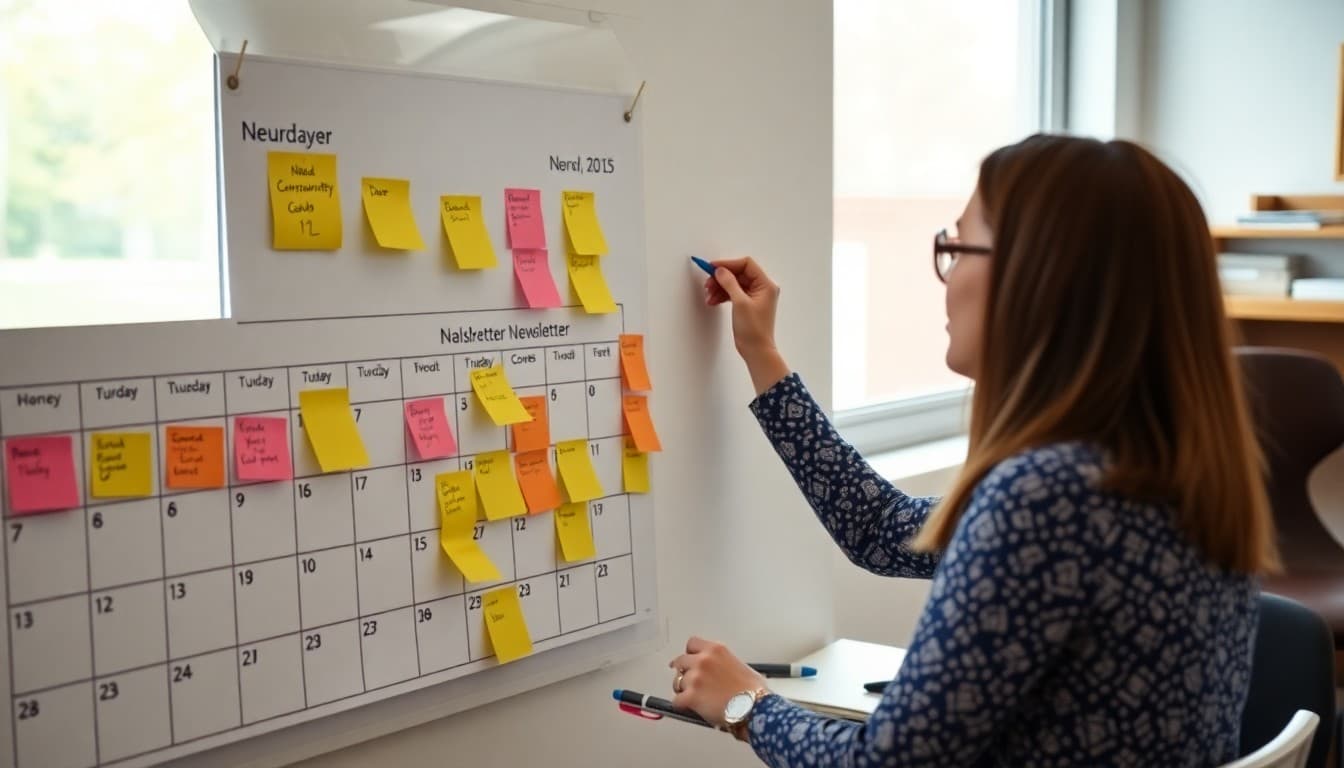
Block newsletter writing time on your calendar the same way you block prep time. Many experienced teachers write their newsletter on Thursday afternoon as a cap on the week and a preview of what is coming. Others write Monday morning as a way to set intentions for the week. The specific day matters less than having a consistent slot that you protect.
A template helps significantly. Start each newsletter with the same structure: a brief intro, curriculum update, upcoming dates, and contact information. The structure gives you a container to fill rather than a blank page to face every week. Over time, the template becomes a habit, and the habit becomes the foundation of your family communication strategy.
Get one newsletter idea every week.
Free. For teachers. No spam.
Frequently asked questions
Is weekly or biweekly better for a classroom newsletter?
Weekly newsletters perform better on almost every measure of family engagement: open rates, reply rates, and family confidence in their teacher's communication. Biweekly newsletters are more manageable for teachers with heavy workloads but create gaps where families lose touch with classroom information. If you must choose biweekly, send on a predictable schedule that families can rely on and supplement with brief updates for anything time-sensitive.
What is the minimum newsletter frequency that still builds family trust?
Monthly newsletters are the minimum for maintaining any meaningful communication pattern. Below monthly, families stop expecting to hear from you and your newsletters become rare surprises rather than reliable updates. Most research on parent engagement suggests that monthly communication from a teacher is associated with significantly lower engagement than weekly or biweekly communication. Monthly can work as a floor, not a standard.
Does newsletter frequency matter more at some grade levels than others?
Yes. Elementary school families generally want more frequent communication than middle and high school families. Kindergarten and first grade families are new to school routines and benefit from weekly newsletters that explain what is normal. High school families often prefer less frequent but more substantive communication. Middle school is a reasonable midpoint: biweekly with additional communication around major assessments or events.
What day and time is best to send a classroom newsletter?
Friday afternoon and Monday morning are the two most common send times. Friday newsletters recap the week and preview the next one, giving families weekend reading time. Monday newsletters preview the week ahead and are useful for families who plan their schedules on Monday. Avoid Wednesday and Thursday sends, which get buried in midweek email volume. Consistency matters more than the specific day.
How does Daystage make it easier to maintain consistent newsletter frequency?
Daystage saves your newsletter templates and contact list so you spend less time on setup and more time on content each week. The platform also tracks open rates and delivery so you can see whether your frequency is working. Many teachers find that having a tool designed for newsletters makes the weekly habit much easier to sustain than writing newsletters in a general email client.

Adi Ackerman
Author
Adi Ackerman is a former classroom teacher and curriculum writer with 8 years in K-8 schools. She writes about school communication, parent engagement, and what actually works in real classrooms.
More for New Teacher
Ready to send your first newsletter?
3 newsletters free. No credit card. First one ready in under 5 minutes.
Get started free