

Teacher Certification Newsletter: State Requirements Guide
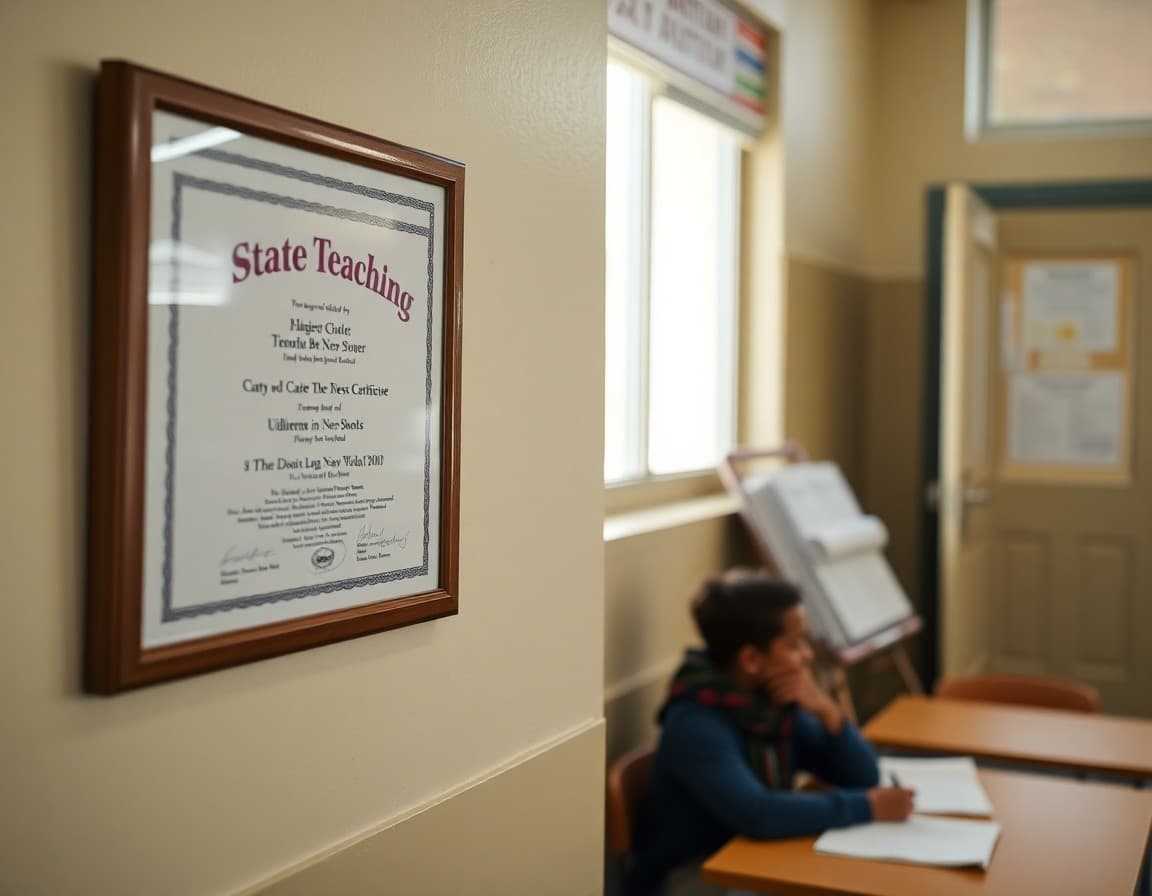
State teacher certification requirements vary significantly. Whether you are navigating your first license, adding an endorsement, or communicating your credentials to a new school community, understanding what to share and how to say it matters for both family trust and professional clarity.
How Teacher Certification Works in Most States
Most states use a tiered certification system. You typically start with an initial, provisional, or intern certificate after completing a teacher preparation program. This qualifies you to teach in a classroom under supervision or with certain conditions, like passing additional tests within a set timeframe. After meeting those requirements, you receive a standard or professional certificate that renews on a cycle, often every three to five years.
Some states have additional tiers for experienced teachers, like a National Board Certified Teacher designation or a master teacher certificate. These are optional advanced credentials that some teachers pursue after several years in the classroom.
What Certificates Cover What Teaching Roles
Certification is grade-level and subject-area specific. An elementary education certificate typically covers K-5 or K-6 depending on the state. A middle school certificate might cover grades 4-8 or 6-8. Secondary certificates are usually subject-specific: English, mathematics, science, social studies. Special areas like physical education, art, music, and library science have their own certificates.
Adding a teaching endorsement expands your certification. Common endorsements include reading specialist, English Language Learner, special education, gifted education, and bilingual education. Endorsements require additional coursework, tests, or supervised experience and appear on your license alongside your primary certification area.
Communicating Certification in Your Newsletter Introduction
Families reading your newsletter do not need a certification primer. They need one sentence that confirms you are credentialed to teach their child. Here are three versions depending on your situation:
Standard certification: "I hold a professional teaching license in [state] for [grade range or subject area] and have been teaching for [X years]."
Provisional or initial certification: "I hold an initial teaching certificate in [state] for [grade/subject] and am completing the remaining requirements for professional certification this year."
Alternative route: "I hold a [state] teaching certificate earned through [program name or alternative route]. My background in [previous field] informs how I approach [subject or skill]."
Any of those sentences answers the family question without inviting unnecessary scrutiny.
Continuing Education and Renewal Requirements
Most teaching licenses require continuing professional development for renewal. This typically means a certain number of professional development hours or graduate credits every renewal cycle. If your state has specific requirements, you are probably tracking them through your school district or a state education department portal.
You do not need to explain license renewal requirements to families in a newsletter. However, if you complete a significant professional development achievement like a graduate degree, a National Board Certification process, or a relevant endorsement during the school year, a brief newsletter mention is appropriate and signals ongoing investment in your practice.
When a New Certification Changes What You Teach
If you add an endorsement or certification that directly affects your classroom, let families know. A reading specialist endorsement means you bring specialized literacy training to your instruction. An ELL endorsement means you have formal preparation for supporting English language learners. A gifted education endorsement shapes how you design enrichment.
Announce these additions in your newsletter with one to two sentences about why it matters for students in your classroom specifically. Keep it practical and student-focused rather than credential-focused.
Out-of-State or Emergency Certification
Teacher shortages in many states have led to increased use of emergency certifications, out-of-state license reciprocity, and provisional placements. If you hold one of these, you are still a qualified teacher in the eyes of the state education department that issued your credential. You can describe your certification status honestly without needing to explain the specific pathway unless it is directly relevant.
If a family specifically asks about your certification status in more detail, answer directly and factually. Most families asking this question are concerned about qualifications in a general sense. A calm, factual answer about your preparation and the state's approval of your license resolves most concerns.
Handling the "Are You Certified?" Question
New teachers sometimes receive this question from skeptical families, particularly if they are young, newly hired, or placed in a school where families have had difficult experiences with teacher turnover. If the question comes up, answer it directly: "Yes, I hold a [state] teaching certificate for [grade/subject]. I'm happy to share more about my background if that's helpful."
A newsletter introduction that proactively mentions your certification reduces the chance you get this question at all. Families who have already read that you are credentialed rarely ask for confirmation again.
Get one newsletter idea every week.
Free. For teachers. No spam.
Frequently asked questions
Do I need to share my teaching certification status with families?
You are not legally required to list your credentials in a parent newsletter, but sharing your certification level builds trust and answers a question families often have but rarely ask directly. A one-sentence mention of your teaching license and subject area is enough. Some states have moved toward more transparency requirements after federal No Child Left Behind provisions, so check your district's communication policies as well.
What is the difference between a provisional and a professional teaching certificate?
A provisional or initial certificate is typically issued to new teachers who have completed a teacher preparation program but have not yet met all ongoing requirements, such as passing additional content tests or completing a mentoring program. A professional or standard certificate indicates full certification status. Both are valid for classroom teaching. If you hold a provisional certificate, you are a licensed teacher.
How do I communicate a provisional certificate to families without undermining their confidence?
Be matter-of-fact. 'I hold an initial teaching certificate and am completing my professional certification requirements this year' is accurate and does not invite alarm. Most families do not know the difference between certificate types and will not ask follow-up questions if you present the information calmly and straightforwardly.
What should I include in a newsletter about a new certification or endorsement I earned?
Share the endorsement, what it covers, and why it benefits your students. 'I completed my reading specialist endorsement this summer, which deepens my ability to support early literacy in our classroom' is specific and relevant. Treat new credentials as good news worth sharing briefly, not as a formal announcement requiring documentation.
How does being certified in multiple states or subjects affect what I communicate to families?
In most cases, families only need to know your current certification status in the state where you teach. Daystage newsletter templates make it easy to include a brief professional bio section where you mention your credentials naturally in the context of your introduction. Multiple certifications can be mentioned if they are relevant to your current teaching role.

Adi Ackerman
Author
Adi Ackerman is a former classroom teacher and curriculum writer with 8 years in K-8 schools. She writes about school communication, parent engagement, and what actually works in real classrooms.
More for New Teacher
Ready to send your first newsletter?
3 newsletters free. No credit card. First one ready in under 5 minutes.
Get started free