
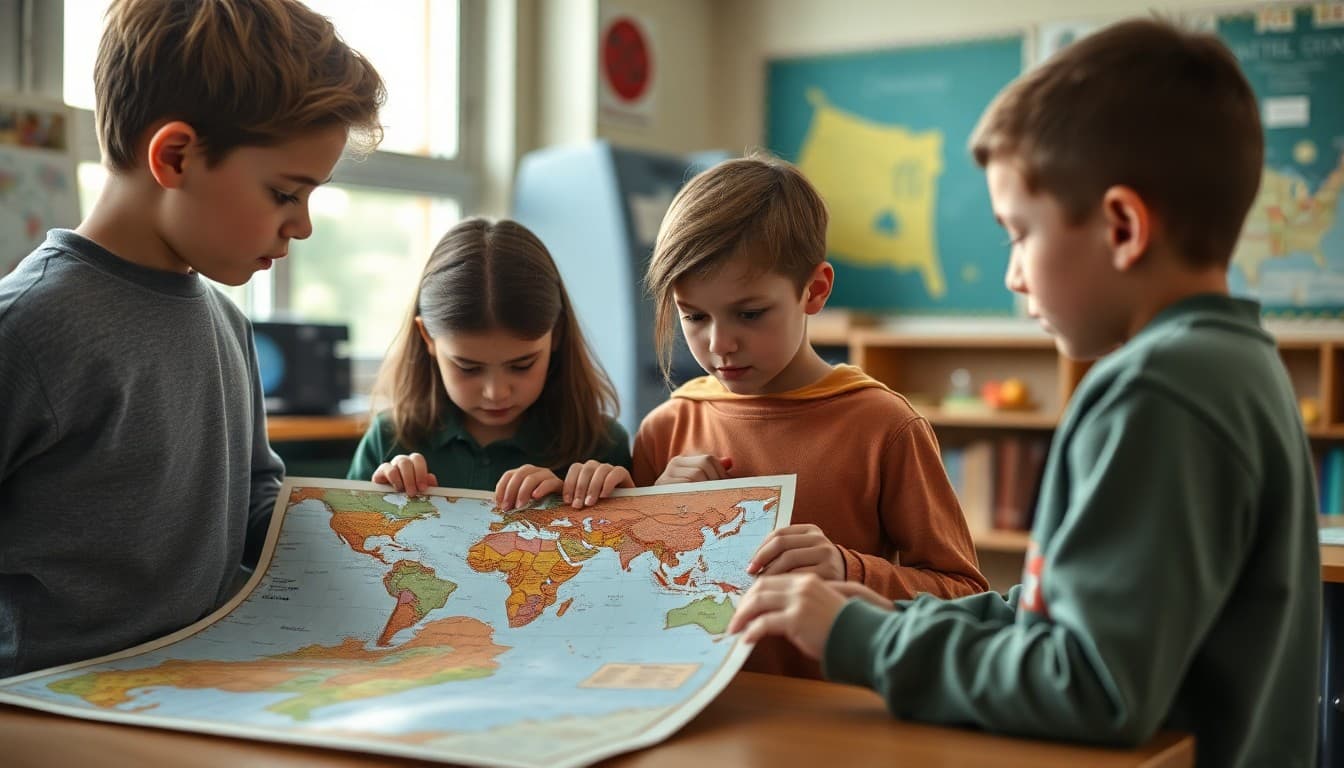
World History Middle School Newsletter: Learning Updates for Parents
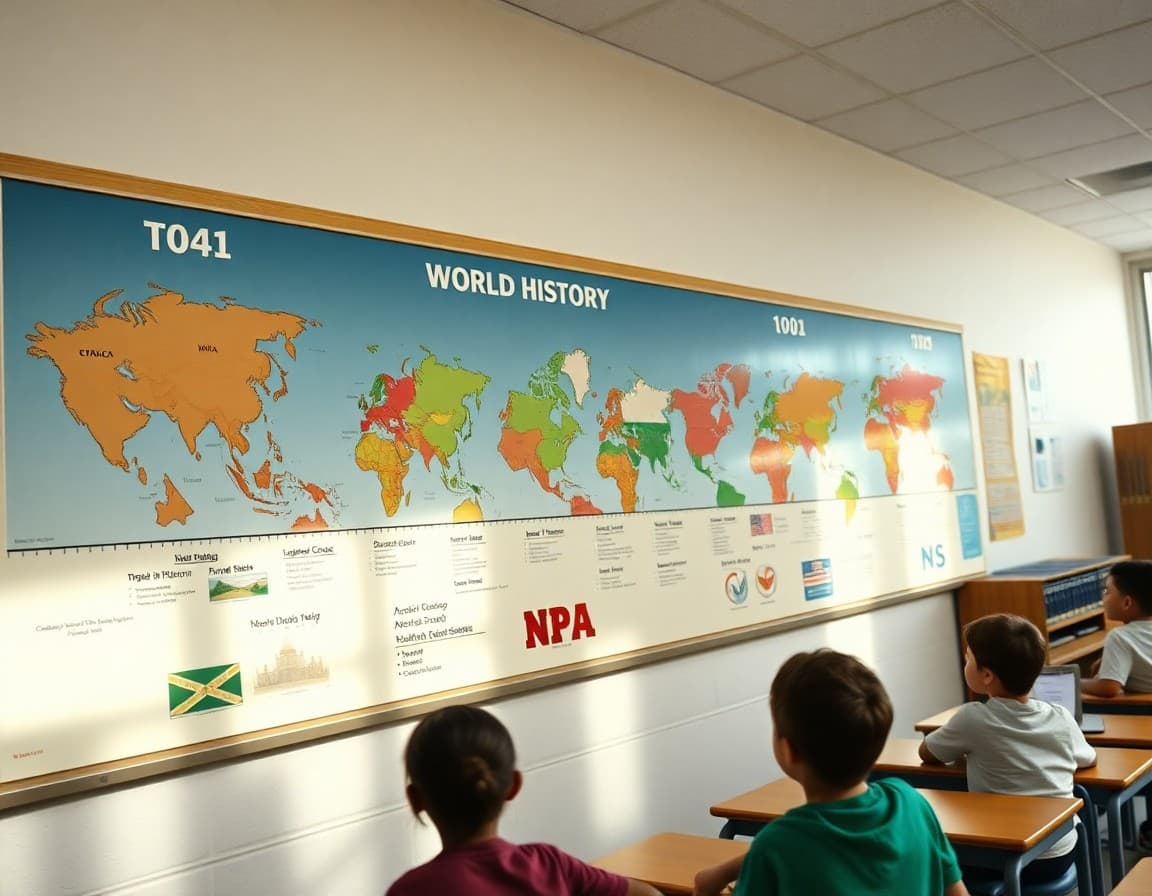
World history at the middle school level is an invitation to see your own moment in time as part of a much longer story. Students who study how ancient trade routes shaped the modern world, how disease has repeatedly altered political power, and how ideas spread and transform across centuries develop a kind of thinking that serves them far beyond the history classroom. A newsletter that brings families into that learning changes how students talk about it at home.
Name the Current Unit and Its Region or Period
Your newsletter should open with the specific unit: the rise of Islamic civilizations and the golden age of learning. The Mongol Empire and its lasting effects on Eurasia. The transatlantic slave trade and its consequences across three continents. European colonialism and its impact on Indigenous populations. When families know what their child is studying, the dinner table becomes an extension of the classroom.
Explain the Historical Thinking Skill
Name the analytical skill your class is focusing on. Corroborating sources from different civilizations. Analyzing how geography shaped the development of a particular culture. Comparing the structure of governance across two ancient civilizations. Tracing the long-term consequences of a single event. When families know the skill, they can ask questions that help students practice it at home.
Include a Primary Source or Cultural Artifact
Here is how to frame this in your newsletter:
"This week students examined excerpts from Ibn Battuta's travel accounts from the 14th century, one of the most extensive records of the medieval Islamic world and sub-Saharan Africa. Students are learning to read primary sources as evidence: who wrote it, what they could see from their position, and what the document tells us that is not said directly. Ask your child who Ibn Battuta was and what he observed that surprised them."
Connect to Family and Cultural Heritage
When the current unit connects to a geographic or cultural region that families in your class come from, say so explicitly. "This unit on the Byzantine Empire and the Eastern Roman world is directly connected to the history of families from Greece, Turkey, and much of the Middle East. If any families have cultural traditions or family stories that connect to this region, we would love to share them with the class." That invitation makes world history personal rather than distant.
Address the Global Connections
World history is not the histories of separate civilizations running in parallel. It is the story of how civilizations have always been in contact, competing, trading, and transforming each other. Your newsletter can highlight the connections in the current unit: how the Silk Road carried not just goods but Buddhism, Islam, and the Black Death across Eurasia. Those connections are often the most memorable part of a world history unit.
Connect to Current Events
The patterns of world history appear in today's news. Borders drawn by colonial powers continue to cause conflict. Trade routes established centuries ago still shape economic relationships. Religious and ethnic tensions that began in medieval or early modern history are still present in contemporary geopolitics. Your newsletter can name one connection between the current unit and something happening in the world, which gives families an immediate hook for conversation.
Preview Upcoming Assessments
Tell families what assessments are coming and what format they will take. A comparative essay between two civilizations. A map quiz on regional boundaries. A primary source analysis. A research project on a figure from the period. Families who know what is coming can help their child prepare in the right direction.
End With a Question That Stays With Students
Close your world history newsletter with a question that sends students out of the page thinking. What would be different about the modern world if the Mongol Empire had never happened? What invention from the Islamic golden age do we still use today? How did the transatlantic slave trade shape the country your family lives in? Daystage makes it easy to end a newsletter with a genuine intellectual question that families and students carry into the week.
Get one newsletter idea every week.
Free. For teachers. No spam.
Frequently asked questions
What time periods does middle school world history typically cover?
Middle school world history programs vary, but common coverage includes ancient civilizations (Mesopotamia, Egypt, Greece, Rome, China, India), the medieval period, the Renaissance and Reformation, the Age of Exploration and colonialism, the Enlightenment and democratic revolutions, industrialization, imperialism, the World Wars, and the Cold War era.
How is world history taught in middle school compared to a textbook overview?
Modern world history instruction emphasizes depth over breadth and focuses on historical thinking skills: comparing civilizations, analyzing trade and cultural exchange, evaluating the impact of geography on historical development, and understanding causation and consequence across long time periods. Students analyze primary sources from multiple cultures rather than reading only about events.
How can families connect world history to their own heritage?
Family heritage is one of the most powerful connections available in world history. Ask your child which current unit overlaps with your family's regional or cultural background. Sharing family stories, cultural traditions, or family artifacts from the period being studied brings the curriculum to life in a way no textbook can.
What world history concepts do middle school students typically struggle with?
Causation in complex historical events is difficult: most students initially assign single causes to events that had many. Perspective-taking across different cultures is challenging when students only have access to the narrative from one point of view. The global connections between civilizations, trade routes, disease spread, and cultural exchange, are often underappreciated until explicitly taught.
What tool can I use to send world history updates to middle school families?
Daystage lets you send a world history newsletter with unit summaries, discussion questions, primary source excerpts, and family connection suggestions in a readable format that keeps families engaged throughout the year.

Adi Ackerman
Author
Adi Ackerman is a former classroom teacher and curriculum writer with 8 years in K-8 schools. She writes about school communication, parent engagement, and what actually works in real classrooms.
More for Middle School
Ready to send your first newsletter?
3 newsletters free. No credit card. First one ready in under 5 minutes.
Get started free