

Wisconsin Middle School Newsletter Guide for Teachers
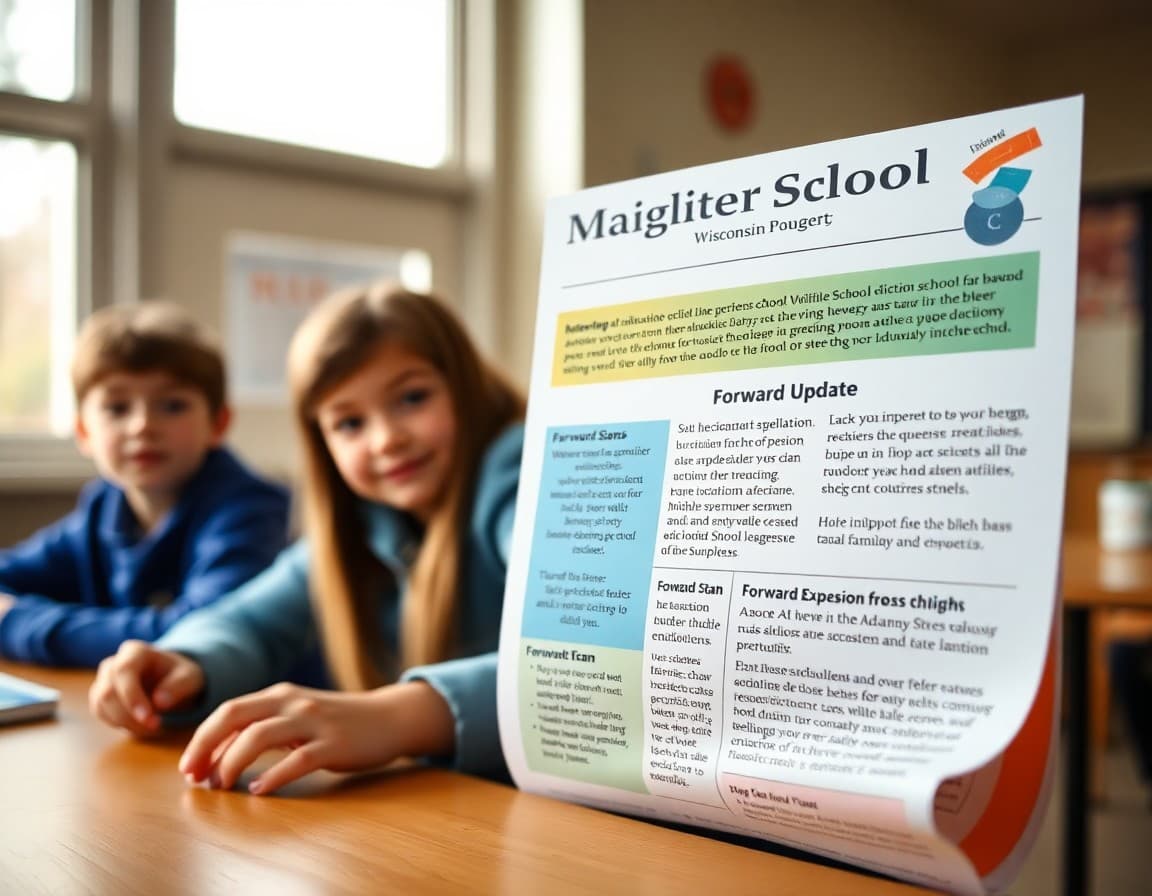
Wisconsin middle school teachers serve students in a state where school choice is a genuine reality that affects enrollment decisions at every grade level. Milwaukee's voucher program, the state's open enrollment system, and a growing charter school sector mean that families are evaluating their school choices throughout the middle school years, not just at kindergarten or ninth grade. A newsletter that consistently demonstrates the quality of your classroom's instruction is part of the case for why your school is worth choosing and staying at.
Wisconsin's Middle School Education Context
Wisconsin's middle school landscape varies enormously by geography. Milwaukee's middle schools operate within one of the most complex school choice markets in the country, where public schools compete with voucher schools, charter schools, and open enrollment transfers. Madison's middle schools serve a relatively stable and educated population that is nonetheless diversifying rapidly. Fox Valley middle schools in Appleton, Neenah, and Menasha are experiencing demographic change tied to the region's manufacturing and food processing industries. Rural Wisconsin middle schools are smaller, more homogenous, and often serve as the center of their community's social life. Each context shapes what families need from your newsletter.
What Wisconsin Middle School Parents Want
Wisconsin middle school parents want the standard information: what their child is learning, what assessments are coming up, what extracurricular opportunities exist, and how their student is performing relative to grade-level expectations. In Milwaukee and other choice-market cities, families also want to understand how their school's academic performance compares to alternatives. A newsletter that includes specific information about what students are learning and how their progress is measured gives families real data to inform enrollment decisions, which ultimately benefits schools that are doing good work.
Designing a Wisconsin Middle School Grade-Level Team Newsletter
A combined grade-level team newsletter from all core teachers covers more ground efficiently and gives families a complete picture of their student's academic life in one document. Each teacher contributes a three to four sentence section on current content and upcoming assessments. A shared section covers school-wide announcements, Forward Exam updates, and counselor notes. The finished newsletter stays under one page and is sent biweekly. Rotate editorial responsibility so the production burden is shared across the team.
A Template Section for Wisconsin Middle School Classrooms
Here is how a seventh-grade ELA teacher in the Green Bay Area Public School District formats their biweekly section:
English Language Arts: We finished our informational text unit this week and students submitted their research-based explanatory essays. Feedback will be available in Infinite Campus by Thursday. Next unit: argument writing, which is a major focus of the Wisconsin Forward Exam for grade 7. Students should expect to read and analyze one argument text per week as we build toward writing their own. Students who want to review essay feedback with me before we move on should stop by my room during advisory period this week or next.
That section gives a deadline, previews what is next, connects to the Forward Exam, and offers a specific support opportunity. Five sentences, complete.
Addressing the Wisconsin Forward Exam in Your Newsletter
Wisconsin's Forward Exam for grades 6-8 assesses ELA and mathematics, with science added in grade 8. The spring testing window typically runs from April through May. Beginning in February, your newsletter should explain what the Forward Exam covers at your grade level, describe the assessment format, and give families specific preparation suggestions. Link to Wisconsin DPI's released practice items online. Wisconsin's School Report Card uses Forward Exam results to rate schools, and families in choice markets actively follow these ratings. Transparent communication about what the assessment covers and how your class prepares students for it demonstrates academic confidence and integrity.
Addressing Wisconsin's School Choice Context in Your Newsletter
Wisconsin middle schools in Milwaukee, Racine, and other cities with active choice markets benefit from newsletters that implicitly (not explicitly) make the case for the school's value. The case is made through specificity, not sales language. When a newsletter explains exactly what students are learning, how progress is measured, and what results look like, it gives families genuine information about the quality of instruction they would lose by transferring. This is the right reason to write a specific, professional newsletter, and the school choice consideration is a natural byproduct of doing it well.
Preparing Wisconsin Eighth Graders for High School
Wisconsin high school course selection for ninth grade happens in spring of eighth grade. Many Wisconsin high schools offer honors tracks, AP courses, and in some districts, dual enrollment options through the Wisconsin Technical College System or University of Wisconsin institutions. Your eighth-grade newsletter should begin covering high school pathways in January, explaining course sequencing, what advanced course eligibility looks like, and what the enrollment timeline involves. In Milwaukee's choice market, some families are also choosing between high school options from different school sectors, and your newsletter can help them understand what strong academic preparation at your school has positioned them for.
Reaching Wisconsin's Diverse Middle School Communities
Wisconsin's middle schools in Milwaukee and the Fox Valley are among the most diverse in the Midwest. Milwaukee has significant Black, Hispanic, and Hmong communities with distinct educational needs and communication preferences. Appleton and Green Bay have substantial Hmong populations established through refugee resettlement programs over three decades. Spanish-speaking communities are growing across the state in both urban and rural settings. A brief translated newsletter section in Spanish, Hmong, or Somali for the languages present in your building signals inclusion that many Wisconsin middle school families do not take for granted. Daystage's newsletter platform makes formatting bilingual content straightforward without requiring significant technical expertise.
Get one newsletter idea every week.
Free. For teachers. No spam.
Frequently asked questions
What should Wisconsin middle school newsletters include?
Cover current unit content and upcoming assessments, homework expectations and project deadlines, extracurricular activities and sports schedules, Forward Exam preparation reminders in spring, and eighth-grade high school transition information in the second semester. Wisconsin middle school newsletters should also address school choice considerations for families in Milwaukee and Racine who may be evaluating enrollment options during middle school years.
How often should Wisconsin middle school teachers send newsletters?
Biweekly newsletters work well for most Wisconsin middle schools. Combined grade-level team newsletters are more efficient for teachers and more useful for families than individual teacher newsletters. In Milwaukee's competitive school choice environment, consistent biweekly newsletters also help families evaluate their school choice by demonstrating what students are learning on a regular basis.
How does Wisconsin's Forward Exam affect middle school newsletter content?
Wisconsin's Forward Exam tests grades 6-8 in English language arts and mathematics, and grade 8 in science. Results feed into Wisconsin's School Report Card accountability ratings. Beginning in February, your newsletter should flag the testing window, explain what the Forward Exam covers at your grade level, and give families specific preparation suggestions. Wisconsin DPI publishes released practice items that are worth linking in your newsletter.
How do I address Wisconsin's diverse middle school communities in newsletter communication?
Wisconsin's middle school communities range from majority-minority urban schools in Milwaukee to rural schools with predominantly white student bodies and growing Hispanic or Hmong populations in the Fox Valley. Newsletters that acknowledge the specific community's demographics and include translated summaries for non-English-speaking families signal genuine inclusiveness. In Milwaukee, addressing school choice considerations and school accountability data honestly is particularly important for family trust.
Does Daystage work for Wisconsin middle school grade-level team newsletters?
Yes. Daystage supports collaborative newsletter creation where multiple teachers contribute sections to a single document. For Wisconsin middle schools where individual teacher newsletters would result in families receiving five or six separate emails per week, a unified team newsletter through Daystage is a significant improvement in both efficiency and usefulness. The platform's open rate tracking helps teams identify which families need direct outreach through other channels.

Adi Ackerman
Author
Adi Ackerman is a former classroom teacher and curriculum writer with 8 years in K-8 schools. She writes about school communication, parent engagement, and what actually works in real classrooms.
More for Middle School
Middle School Counselor Newsletter: What to Include and How to Reach Families
Middle School · 7 min read
Middle School Back-to-School Newsletter: What Families Need to Know Before Day One
Middle School · 7 min read
5th to 6th Grade Transition Newsletter: How to Prepare Families for Middle School
Middle School · 7 min read
Ready to send your first newsletter?
3 newsletters free. No credit card. First one ready in under 5 minutes.
Get started free