

Washington Middle School Newsletter Guide for Teachers
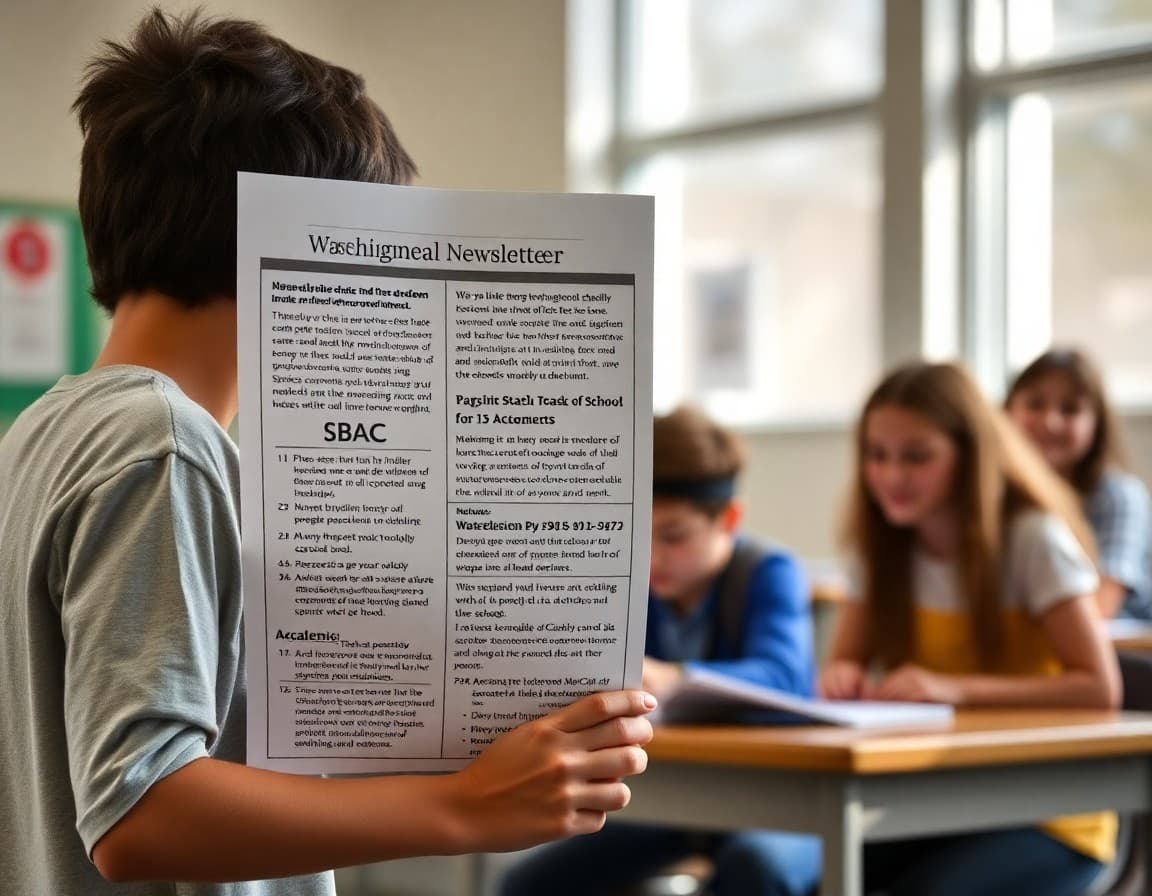
Washington State middle school teachers work in a system that values the whole child, invests significantly in social-emotional learning, and takes an increasingly skills-based approach to assessment through SBAC. In that context, a newsletter that explains not just what students are learning but why the school's approach is designed the way it is serves families better than one that simply reports content coverage and test dates.
Washington's Middle School Educational Context
Washington middle schools are shaped by several state-specific factors: the Smarter Balanced assessment framework that emphasizes critical thinking and application rather than recall, Washington's Since Time Immemorial curriculum requirement that incorporates tribal history and sovereignty into all subjects, and the state's Growing Edges framework for social-emotional learning. Middle schools in Western Washington's urban districts are generally better resourced than those in Eastern Washington's rural districts, but the state has invested in equity through its McCleary Act funding increases. Your newsletter should reflect the specific context of your school and community.
What WA Middle School Families Most Need
Washington middle school parents want to understand what their child is working on, how performance on SBAC connects to high school placement and college readiness, and what extracurricular options are available. In Washington's Highly Capable communities, families also want to know whether their student is being appropriately challenged and what advanced course options are available. Your newsletter addresses all of these when it combines a specific academic update with honest assessment context and an extracurricular events section.
Designing a Grade-Level Team Newsletter for WA Middle Schools
Washington middle school grade-level teams that produce a combined newsletter consistently outperform those where each teacher sends independently. Each teacher contributes a three to four sentence section on current content and upcoming assessments. A shared section covers school-wide events, SBAC updates, and counselor announcements. The whole newsletter stays under one page. For the school's counselor, a brief monthly note on social-emotional learning or a relevant resource adds real value, since Washington's emphasis on SEL makes these updates genuinely interesting to many WA parents.
A Template Section for WA Middle School Classrooms
Here is how an eighth-grade science teacher in Bellevue School District formats their biweekly section:
Science: We are in week two of our chemistry unit, focusing on atoms, elements, and the periodic table. Students will have a quiz on Thursday covering element symbols and atomic structure. This material appears on the WCAS (Washington Comprehensive Assessment of Science) in grade 8. I have posted a digital flashcard set in Google Classroom for quiz preparation. Students who want additional support should attend my Tuesday morning help session from 7:45 to 8:15.
That section covers content, gives a quiz date, connects to WCAS, offers a preparation resource, and lists support hours. Five sentences, complete.
Addressing SBAC Preparation in Washington Middle Schools
Washington's SBAC assessments for middle school students cover ELA and mathematics in grades 6-8. The spring testing window typically runs from April through May. Beginning in February, your newsletter should flag the testing window, explain what each SBAC assessment covers at your grade level, and give families specific support suggestions. Washington's SBAC ELA assessments emphasize argumentative writing and close reading of complex texts, which are skills families can support at home by asking their child to defend opinions with evidence and to read articles about topics of genuine interest.
Communicating About Washington's Highly Capable Services
Washington state law requires all districts to identify and serve Highly Capable students, but the nature of those services varies significantly by district. In some districts, Highly Capable students receive differentiated instruction within the general classroom; in others, they attend separate accelerated classes or programs. Your newsletter should explain how your school serves Highly Capable students, what the referral and identification process looks like, and what families should do if they have questions about whether their student is appropriately placed. This is among the most frequently asked topics at WA middle school parent information events.
Preparing Eighth Graders for Washington's High School Transition
Washington high school course selection for ninth grade happens in the spring of eighth grade. Many Washington high schools offer Running Start (dual enrollment through community colleges) for eligible students starting in eleventh grade, Advanced Placement courses, and CTE pathways. Your eighth-grade newsletter should begin covering these options in January, explaining what courses are available, what eligibility requirements exist for advanced programs, and what the transition to high school looks like logistically. Families who understand the system make better course selection decisions than those encountering it for the first time at a spring enrollment meeting.
Reaching Washington's Diverse Middle School Families
Washington's middle schools in King, Pierce, and Snohomish counties are among the most diverse in the Pacific Northwest. Somali communities in Seattle and Renton, Vietnamese communities in White Center and Federal Way, and Spanish-speaking communities throughout the state require translated newsletter content to be fully included. Eastern Washington's Yakima Valley school districts serve large Spanish-speaking agricultural communities that have been present for generations and have deep roots in those communities. Brief translated sections or bilingual subject lines in your newsletter increase family engagement across all of these groups significantly.
Get one newsletter idea every week.
Free. For teachers. No spam.
Frequently asked questions
What should Washington State middle school newsletters include?
Cover current unit content and upcoming assessments, homework expectations and project deadlines, extracurricular news and activities, SBAC preparation reminders in spring, and eighth-grade high school transition information in the second semester. Washington middle school newsletters should also address Washington's Career and Technical Education pathways, which many WA middle schools introduce in seventh and eighth grade as part of the state's focus on college and career readiness.
How often should Washington State middle school teachers send newsletters?
Biweekly newsletters work well for most Washington middle schools. Combined grade-level team newsletters are more efficient and more useful to families than individual teacher newsletters, particularly in larger Western Washington middle schools with 600 or more students where five separate teacher emails per week is an unreasonable burden on families.
How does Washington's SBAC assessment affect middle school newsletter content?
Washington's SBAC assessments for grades 6-8 cover English language arts and mathematics. The spring testing window runs from March through May. Your newsletter should begin flagging the testing window in February, explain what each SBAC assessment covers for your grade level, and give families specific preparation suggestions. Washington also uses WCAS for science in grade 8, which should be addressed in science teacher sections.
What does Washington's Highly Capable program mean for middle school newsletters?
Washington's Highly Capable program is mandated by state law and requires districts to identify and serve students who perform significantly above grade level. If your school has a Highly Capable program, your newsletter should explain what it involves, how students are identified, and what families should do if they believe their student is not receiving appropriate challenge. This is a topic that generates many family questions in Washington's engaged suburban communities.
Does Daystage work for Washington State middle school grade-level team newsletters?
Yes. Daystage supports collaborative newsletter creation for middle school grade-level teams. Multiple teachers can contribute sections to a single document that the platform distributes to a shared parent list. For Washington middle schools in Northshore, Bellevue, or Spokane where individual teacher newsletters would result in families receiving five or six separate emails per week, a unified team newsletter managed through Daystage is a meaningful improvement.

Adi Ackerman
Author
Adi Ackerman is a former classroom teacher and curriculum writer with 8 years in K-8 schools. She writes about school communication, parent engagement, and what actually works in real classrooms.
More for Middle School
Middle School Counselor Newsletter: What to Include and How to Reach Families
Middle School · 7 min read
Middle School Back-to-School Newsletter: What Families Need to Know Before Day One
Middle School · 7 min read
Alaska Middle School Newsletter Guide: What to Include for Families
Middle School · 8 min read
Ready to send your first newsletter?
3 newsletters free. No credit card. First one ready in under 5 minutes.
Get started free