

Team Teaching Newsletters: How Middle School Teacher Teams Can Communicate Together
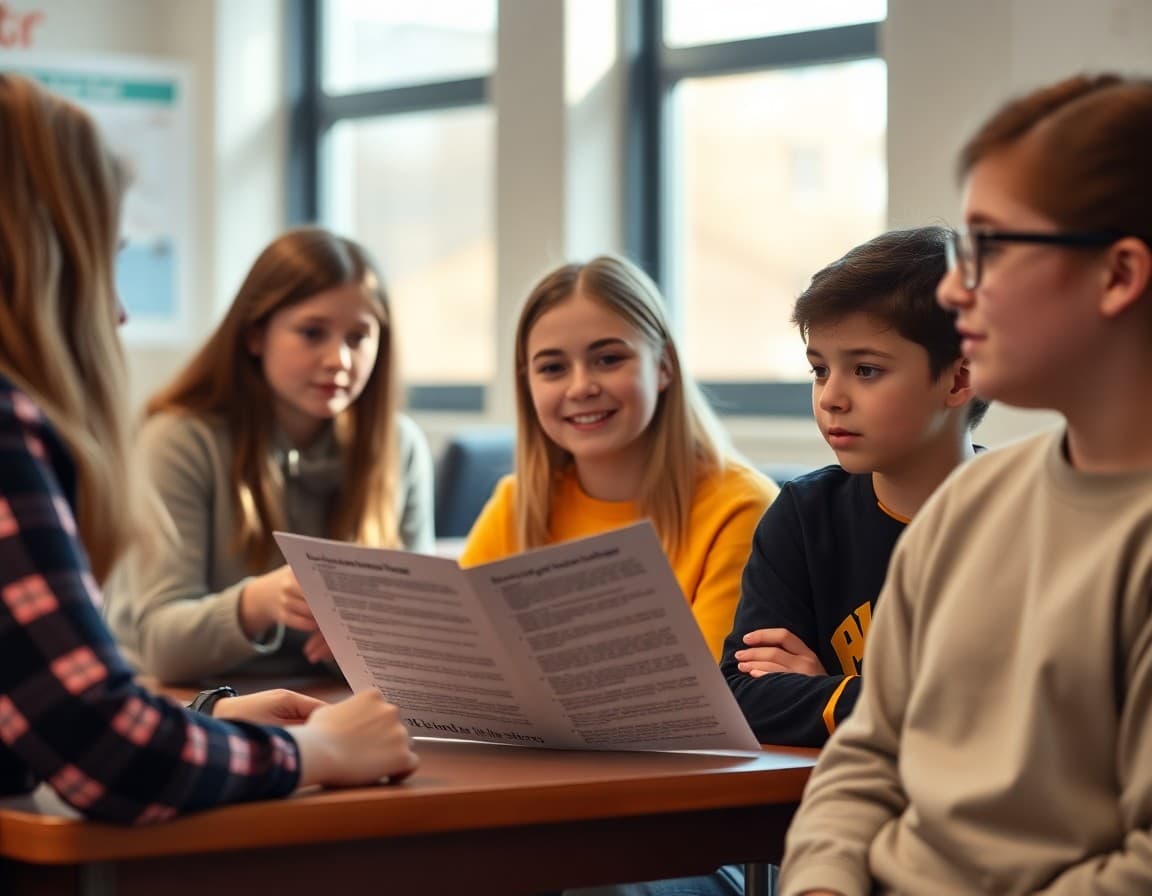
Middle school families often feel they are receiving too many disconnected communications from too many teachers. Four separate newsletters from four different teachers, each with a different format and a different send day, creates information overload and inconsistency. When the same group of teachers forms a team and sends one unified newsletter, families get a better picture of their child's full school week, communication volume drops, and the teachers save time compared to each managing a separate newsletter independently.
The Case for One Team Newsletter Over Four Individual Ones
From a family perspective, a team newsletter answers the question that individual newsletters cannot: what is happening across my child's whole week? A family that reads one four-section newsletter understands the connections between subjects, sees the full homework picture in one place, and has one source to check rather than four. From a teacher perspective, the time savings are real. Each teacher writes three to five sentences per week rather than a full newsletter. The teacher on rotation handles compilation and sending. Over a school year, the time saved compared to individual newsletters is significant.
Setting Up the Team Newsletter System
A team newsletter system needs four things: a shared template, a collection process, a deadline, and a rotation schedule. The template determines the structure that stays consistent every week. A Google Doc that each teacher adds their section to works well as the collection tool. Wednesday noon is a common deadline for a Thursday send. The send rotation ensures no single teacher bears the entire administrative load. Document this system at the start of the year in a short written agreement that all team members sign. The written agreement prevents the ambiguity that erodes team systems over time.
What Each Section Should Cover
Each content area section follows the same structure every week so families know where to look for each piece of information. Week in review: what we worked on this week. Week ahead: what students will focus on next week. Family action items: any test, project, or material that requires family involvement. Keep each section to five sentences maximum. The discipline of being brief makes the newsletter scannable. Families who can read the full newsletter in three minutes read more of it than families who face a dense essay from each teacher. Brevity is a service to the families you are trying to reach.
Handling Interdisciplinary Connections
One of the most valuable things a team newsletter can do is make interdisciplinary connections visible to families. When the social studies unit on ancient civilizations aligns with the ELA unit on mythology and the art class is creating corresponding imagery, the team newsletter can name that connection explicitly. “You may notice that your student is encountering ancient Greece in three different classes this week. We planned this intentionally to help students build deeper knowledge across subjects.” Families who understand these connections help their students make them at home, which reinforces learning. Individual newsletters from separate teachers never create this visibility because no single teacher can describe all the connections.
Managing Tone and Voice Across Multiple Contributors
One challenge of team newsletters is that four different teachers write four different ways. Some sections will be warmer, some more formal, some more detailed. A brief style guide agreed upon at the start of the year reduces these variations. Set a clear limit on newsletter section length. Agree on tone: practical and direct, no education jargon. Agree on format: each section starts with the teacher's name and subject in bold. These simple agreements keep the newsletter feeling cohesive even with multiple contributors. Some teams have the send-rotation teacher do a light edit pass to smooth out obvious voice differences without changing content.
Including Team-Wide Information
Beyond individual subject sections, the team newsletter should include team-wide information at the top. Upcoming field trips or team events, schedule changes, team-wide deadlines, and important school-wide information all belong in a brief opening section before the individual teacher sections. This opening section is where the strongest time-sensitive information lives. Families who are skimming will read this section even if they do not read every teacher section in detail.
Making the Newsletter the First Stop for Families
For a team newsletter to replace individual teacher communications effectively, families need to trust that it is comprehensive. If a teacher regularly sends separate emails to families on top of the team newsletter, families learn that they also need to check those individual communications. The discipline of keeping all regular communication within the team newsletter structure is what makes families confident that checking the newsletter once per week is sufficient. Reserve individual teacher-to-family emails for specific situations that require private communication rather than as a supplement to what could be in the newsletter.
Get one newsletter idea every week.
Free. For teachers. No spam.
Frequently asked questions
What is a team teaching newsletter and how does it work?
A team teaching newsletter is a single weekly communication sent by a middle school teacher team, usually all the teachers who share the same group of students. Instead of each teacher sending a separate newsletter, the team produces one document with sections from each content area. Families receive one email instead of four or five separate newsletters and get a complete picture of what is happening across all of their child's classes. The team typically designates one teacher to compile and send the newsletter each week, rotating that responsibility throughout the year.
How do you get a team of teachers to contribute to a shared newsletter consistently?
Establish a shared template that each teacher fills in the same way every week. Use a shared document like a Google Doc where each teacher adds their section before a Wednesday deadline. The teacher on send duty that week assembles the final newsletter and sends it Thursday. Set section length limits so no one teacher's section dominates the newsletter. Three to five sentences per content area per week is a reasonable limit. Consistency depends on the system being easy enough that it does not become a burden. Simple beats perfect for sustainable team newsletters.
What should each teacher include in their section of the team newsletter?
Each teacher's section should cover three things: what students worked on this week in one sentence, what students will focus on next week in one sentence, and any action items for families like upcoming tests, projects due, or materials needed. This three-part structure is fast to write, easy for families to scan, and provides enough context to support homework conversations without being overwhelming. Some teams add a fourth element: a conversation starter that families can use with their student about that subject.
How do you handle it when one teacher consistently does not contribute on time?
Have a clear written agreement about deadlines and what happens when a section is not submitted. The teacher on send duty sends a reminder the day before the deadline. If the section still does not arrive by send time, the newsletter goes out with a note that the missing teacher's update will be in next week's newsletter. Making the social cost of missing visible, even gently, typically resolves consistency problems. The team newsletter should never hold up because one teacher has not contributed.
How does Daystage help middle school teacher teams send shared newsletters?
Daystage supports newsletter templates with multiple content sections that different team members can contribute to. The teacher managing the send can compile content from the shared template and publish the newsletter without each teacher needing to navigate separate publishing tools. This reduces the administrative overhead of running a team newsletter and makes the process sustainable over a full school year.

Adi Ackerman
Author
Adi Ackerman is a former classroom teacher and curriculum writer with 8 years in K-8 schools. She writes about school communication, parent engagement, and what actually works in real classrooms.
More for Middle School
Ready to send your first newsletter?
3 newsletters free. No credit card. First one ready in under 5 minutes.
Get started free