

Media Literacy Unit Newsletter: What Families Need to Know
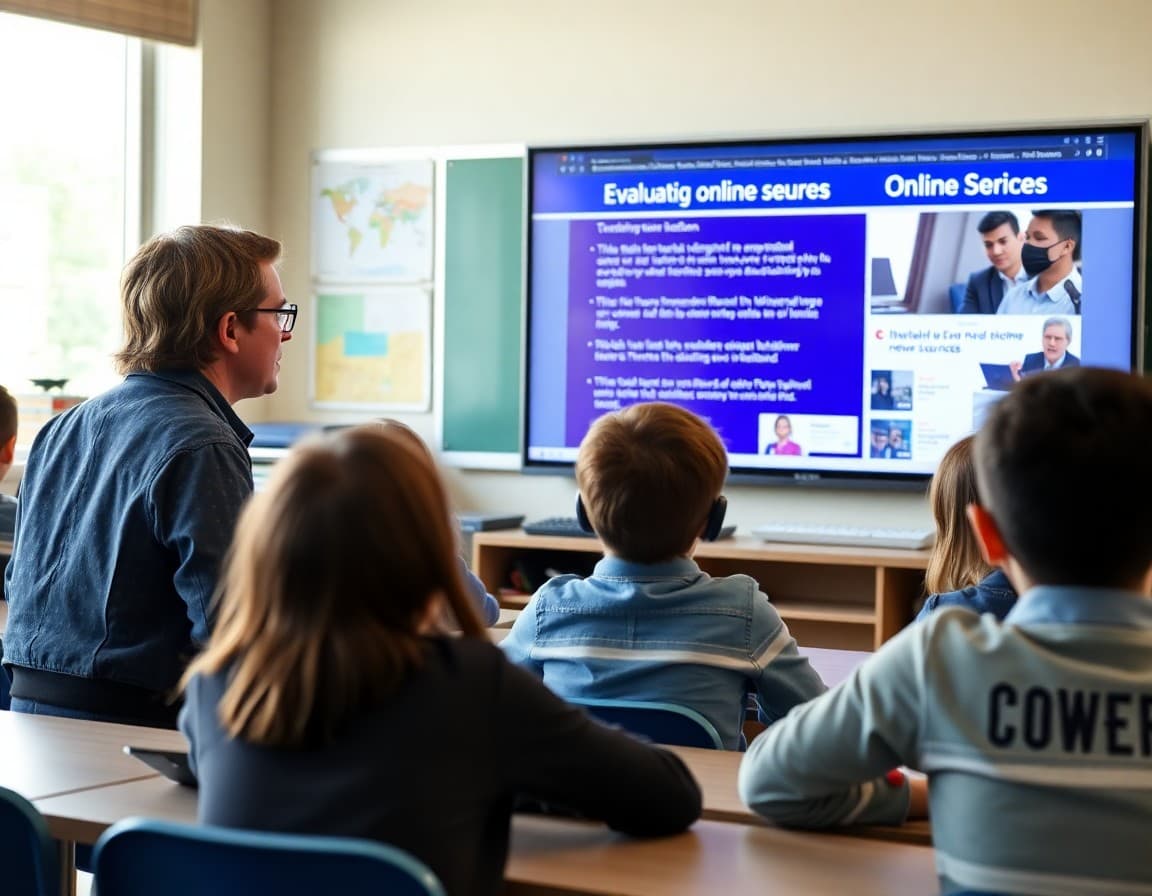
Media literacy is one of the most relevant skills we can teach middle schoolers right now. Students who can evaluate a source, spot a misleading headline, and understand why certain content shows up in their feed are better prepared for nearly every dimension of life as a citizen, a consumer, and a person. A newsletter that brings families into this learning extends the work beyond the classroom and into the daily moments when students encounter media at home. Here is what to include and how to write it.
What the Unit Is Teaching
Students often do not know what skills they are developing when they analyze media. Naming the skills explicitly in your newsletter helps families understand the purpose. During this unit, students will learn to evaluate the credibility of a source by examining who created the content, why they created it, and what their expertise or interest in the topic might be. They will learn to distinguish between news reporting and opinion commentary. They will analyze the headlines and visual design choices that make content more or less likely to be shared widely. And they will examine how algorithms on social media and search engines shape what content they encounter based on their past behavior. Each of these skills has a name and connects to real situations students navigate every day.
The SIFT Method Explained for Families
Many media literacy curricula use the SIFT framework, which stands for Stop, Investigate the source, Find better coverage, and Trace claims to their original context. When students see a claim that seems compelling or alarming, Stop means pause before sharing or believing. Investigate the source means look up who is behind the content before engaging with it further. Find better coverage means look for other credible sources reporting on the same topic rather than relying on one. Trace claims means follow claims back to their original source to see if they were accurately reported or misrepresented in retelling. Sharing this framework with families in your newsletter gives them a common language to use when discussing news and online content with their child at home.
How to Talk About Media With Your Middle Schooler
The conversation at home does not need to be a lesson. It works better as a habit of curiosity. When news comes up at dinner, ask where your child heard about it. When they share something from their phone, ask if they looked up where it came from. When they say something is true because they saw it online, ask what makes them confident in that source. These are not tests. They are the kind of questions that help students build the internal habit of applying their media literacy skills automatically rather than only in a formal classroom setting. Students who hear these questions regularly at home begin asking them of themselves.
Recognizing Misinformation: What Students Are Learning to Spot
Students in this unit will practice identifying specific patterns common in misinformation and misleading content. Emotionally charged headlines designed to trigger sharing before reading is one. Fabricated or decontextualized images presented as evidence of claims they do not actually support is another. Satire and parody accounts whose content gets shared as genuine news by people who did not notice the satirical context. Expert-looking sources that are actually advocacy organizations or industry-funded research. By the end of the unit, students should be able to name what they are seeing in these patterns and explain why it is misleading. Helping families understand these categories lets them recognize when their child is applying these skills in a real conversation.
Making It Relevant to Their Daily Feed
The most effective media literacy instruction uses examples from the platforms and sources students actually use. If your students are on Instagram, TikTok, YouTube, and Reddit, teaching media literacy with 1990s newspaper examples misses the point. The unit will use examples from the platforms students already navigate. This makes the content more engaging and more immediately applicable. Let families know this in the newsletter. When students come home and want to analyze something they saw on TikTok with their parents, that is not a distraction from the curriculum. It is the curriculum working exactly as intended.
What Comes Next After the Unit
Media literacy is not a one-and-done unit. The skills introduced here build throughout middle and high school as students encounter more complex source evaluation challenges in research assignments and current events discussions. The at-home conversation habits families build now compound over time. A parent who asks "where did you hear that?" consistently through middle school produces a high schooler who asks it of themselves. Share your sense of the larger arc with families so they understand that the two weeks they spend on this unit are an investment in a longer-term skillset rather than a self-contained box to check. Daystage makes it easy to send this kind of detailed, organized unit newsletter in a format families will actually read and use.
Get one newsletter idea every week.
Free. For teachers. No spam.
Frequently asked questions
What should a media literacy unit newsletter tell families?
Cover what skills the unit targets, what types of media students will analyze, what critical thinking frameworks they will learn such as the SIFT method or CRAAP test, and how families can reinforce these skills at home. Include two or three specific conversation starters families can use when their child is watching news, scrolling social media, or sharing content they found online.
How can families support media literacy at home?
The most effective support is asking questions rather than providing answers. When a child shares something they saw online, ask where it came from, what makes them think it is accurate, and who benefits from people believing it. These three questions apply to news articles, social media posts, and videos. Modeling the questions consistently over time builds the habit of critical evaluation.
What media literacy skills are appropriate for middle school students?
Middle schoolers are ready to learn source evaluation, to distinguish news from opinion, to recognize advertising and sponsored content, to identify clickbait and sensationalist headlines, and to understand how algorithms curate their content feeds. These skills build on each other and are best taught through analysis of real examples rather than abstract definitions.
How does the media literacy unit connect to language arts standards?
Media literacy connects directly to reading and writing standards around evaluating sources, understanding point of view, analyzing author's purpose, and distinguishing fact from inference. Most state ELA standards for grades 6-8 include explicit media and digital literacy components. Mentioning these connections in your newsletter helps families understand the academic context of the unit.
How does Daystage help teachers communicate about curriculum units like media literacy?
Daystage lets middle school teachers send well-organized unit newsletters with links to supporting resources, at-home activities, and discussion guides. When families receive a clear Daystage newsletter at the start of a media literacy unit, they come away knowing what their student is learning and how to support it.

Adi Ackerman
Author
Adi Ackerman is a former classroom teacher and curriculum writer with 8 years in K-8 schools. She writes about school communication, parent engagement, and what actually works in real classrooms.
More for Middle School
Information Literacy Unit Newsletter for Middle School Families
Middle School · 6 min read
Digital Footprint Unit Newsletter: Helping Families Understand Online Permanence
Middle School · 6 min read
Cyberbullying Unit Newsletter: Supporting Families Through Difficult Conversations
Middle School · 6 min read
Ready to send your first newsletter?
3 newsletters free. No credit card. First one ready in under 5 minutes.
Get started free