
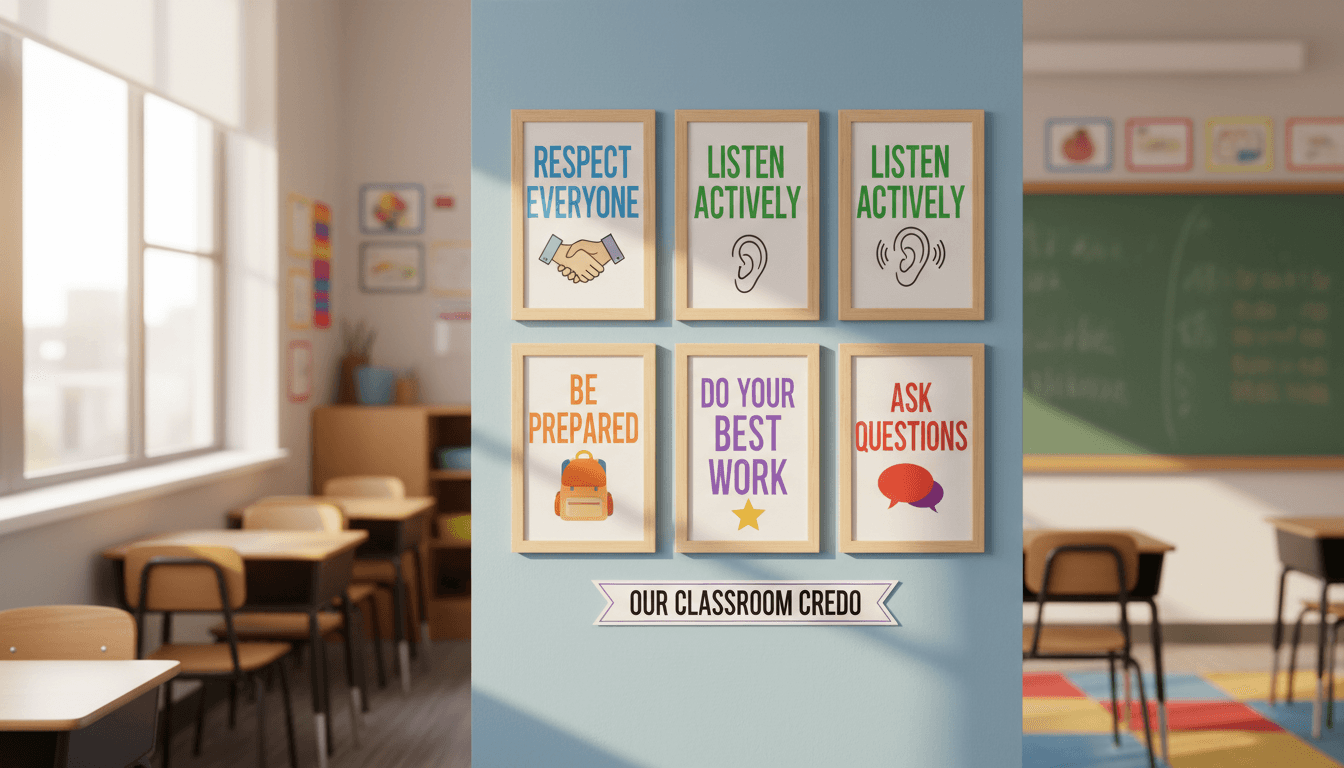
6th Grade Classroom Rules Newsletter: How to Communicate Expectations to Parents Clearly

When parents send their child to 6th grade, they are often operating on assumptions built over years of elementary school. A teacher manages most transitions. Reminders are frequent. Rules are posted in large print and reviewed daily. Middle school works differently, and if families do not know that, they end up surprised and frustrated when their child misses an expectation they did not realize existed.
A classroom rules newsletter at the start of the year is not just a list of dos and don'ts. It is an introduction to how 6th grade works, what independence means at this level, and what parents can do to support the transition without accidentally undermining it.
Lead with the Shift in Expectations
Before listing any specific rules, give parents the context they need. Something like: "In 6th grade, we expect students to begin managing more of their school day independently. That means arriving to class with materials ready, tracking assignments without daily reminders, and asking for help when they need it rather than waiting for a teacher to check in."
That framing matters because it explains why the rules exist. Students are not being held to middle school expectations because elementary expectations were wrong. They are being held to them because developing independence at this age is part of the job.
Be Specific About Consequences
Rules without consequences are wishes. Your newsletter should describe what happens when a student does not follow a classroom expectation, in plain terms.
A simple tiered system is easy to communicate: verbal redirect first, private conversation second, parent contact third. If your school uses a formal system like PBIS or restorative practices, name it and briefly explain what it involves. Parents who understand the process before they receive a call are much more likely to respond collaboratively.
Avoid language that sounds punitive. "Students who choose not to follow the phone policy will lose phone privileges for the day" is clearer and less confrontational than "phones will be confiscated." You are describing a system, not threatening parents.
Phone and Device Policy: Be Direct
The phone policy is almost always the flashpoint. Every 6th grade parent has an opinion about it, and every student will test it at some point.
Write the policy in concrete terms. Where is the phone during class (backpack, locker, a designated bin)? Is it fully off or just silenced? What about earbuds? What happens the first time, the second time? Are there exceptions (medical needs, family emergencies)?
Include a brief explanation of why the policy exists. Research consistently shows that phone presence, even face-down on a desk, reduces working memory and focus. Saying this directly builds credibility with parents who might otherwise see the rule as arbitrary.
Explain the Team or House Model
If your school uses a team structure (a group of core subject teachers who share the same students), your newsletter should explain how it works. Many parents from elementary school backgrounds have never encountered it.
Describe who is on the team, what subjects they cover, and how team teachers communicate with each other about student progress. Explain that this structure means parents may hear consistent messages from multiple teachers, because the team is aligned on expectations and support strategies.
The team model is a genuine advantage for families navigating middle school. Frame it that way. "Your child's teachers talk to each other regularly about how each student is doing. That means we can catch concerns early and celebrate progress as a team, not just subject by subject."
Classroom-Specific Rules Worth Naming
Every classroom has expectations unique to that subject or teacher. Your newsletter should name the ones that most often trip students up:
- Entering the room (are students expected to start a warm-up, check the board, or wait for instruction?)
- Asking for help (hand raised, a signal system, or a private note to the teacher?)
- Leaving the room during class (pass system, sign-out, timing restrictions)
- Late work and make-up policies (how many days after an absence, what the grade impact is)
- Group work expectations (how are roles assigned, how is participation graded?)
Parents who know these specifics can reinforce them at home without guessing. "I know your teacher expects you to start the warm-up when you walk in" is a much more useful parent prompt than a vague "be respectful."
What Parents Should Do When Their Child Does Not Follow the Rules
This section of your newsletter prevents a lot of defensive conversations later. Give parents a clear framework for how to respond when their child comes home and says a teacher was unfair or a rule was applied in a way they did not agree with.
Ask parents to start by hearing their child out, then ask what the rule was and what the child did. Not to litigate the situation, but to understand it. Then reach out to the teacher if there are unresolved questions, rather than assuming the student's account is the full picture.
Frame this as a partnership: "We are all on the same side here. When students know that adults at home and school are aligned, the expectations become easier to meet."
Keep the Tone Collaborative, Not Defensive
The goal of a classroom rules newsletter is not to announce a set of demands. It is to give parents a clear picture of the environment their child is learning in so they can support it.
Close with something that invites dialogue: "If you have questions about any of these expectations, or if there are circumstances about your child I should know as we head into the year, please reach out. The more context I have about each student, the better I can support them."
That invitation costs nothing and opens the door to the conversations that actually help. Parents who feel like partners in the process follow the teacher's lead. Parents who feel like they received a memo are much harder to reach when something goes wrong.
Get one newsletter idea every week.
Free. For teachers. No spam.
Frequently asked questions
How are classroom expectations different in 6th grade compared to elementary school?
Middle school teachers typically expect students to self-manage more. Rather than a teacher prompting every transition, students are expected to have materials ready when class starts, track their own assignments, and advocate for themselves when they have a question. This shift in responsibility is intentional and developmentally appropriate, but it surprises many families who were used to more scaffolding in elementary grades.
How do you communicate a phone or device policy to 6th grade parents without conflict?
Be specific about what is and is not allowed, when, and what happens if the policy is violated. Vague rules create arguments. 'Phones must be off and in backpacks from 8:00 a.m. to 3:00 p.m.' is enforceable. 'No phones during class' leads to debates about what counts as using a phone. Also explain the reason briefly: students focus better and peer dynamics improve when phones are out of the equation during instruction.
What should parents do at home when their child does not follow classroom expectations?
Reinforce that expectations at school are non-negotiable without undermining the student. The most effective thing a parent can do is acknowledge the rule exists and ask their child how they handled a situation, rather than immediately taking the student's side. A simple 'sounds like a hard rule, what did you do when that happened' teaches accountability better than 'that rule seems strict.'
What is the team or house model and how should it be explained in a newsletter?
The team or house model groups a set of students with a consistent group of teachers across core subjects. It creates a smaller community within a larger school, which helps with relationship-building and coordination. In your newsletter, explain that students will spend most of their time with the same group of peers and that team teachers communicate regularly about student progress and concerns.
What tool makes it easy to send a classroom rules newsletter to middle school parents?
Daystage is designed for exactly this kind of communication. You can build a well-organized newsletter with sections for each topic, send it directly to parent emails, and update it as your expectations evolve. For middle school teachers who have multiple class periods, Daystage makes it easy to send to different parent groups without managing separate email lists manually.

Adi Ackerman
Author
Adi Ackerman is a former classroom teacher and curriculum writer with 8 years in K-8 schools. She writes about school communication, parent engagement, and what actually works in real classrooms.
More for Middle School
Sixth Grade Newsletter Template: Welcoming Families to Middle School
Middle School · 7 min read
6th Grade Behavior Newsletter to Parents: How to Communicate Clearly and Constructively
Middle School · 6 min read
Sixth Grade Parent Communication Guide: What Families Need All Year Long
Middle School · 7 min read
Ready to send your first newsletter?
3 newsletters free. No credit card. First one ready in under 5 minutes.
Get started free