

South Carolina Middle School Newsletter Guide for Teachers
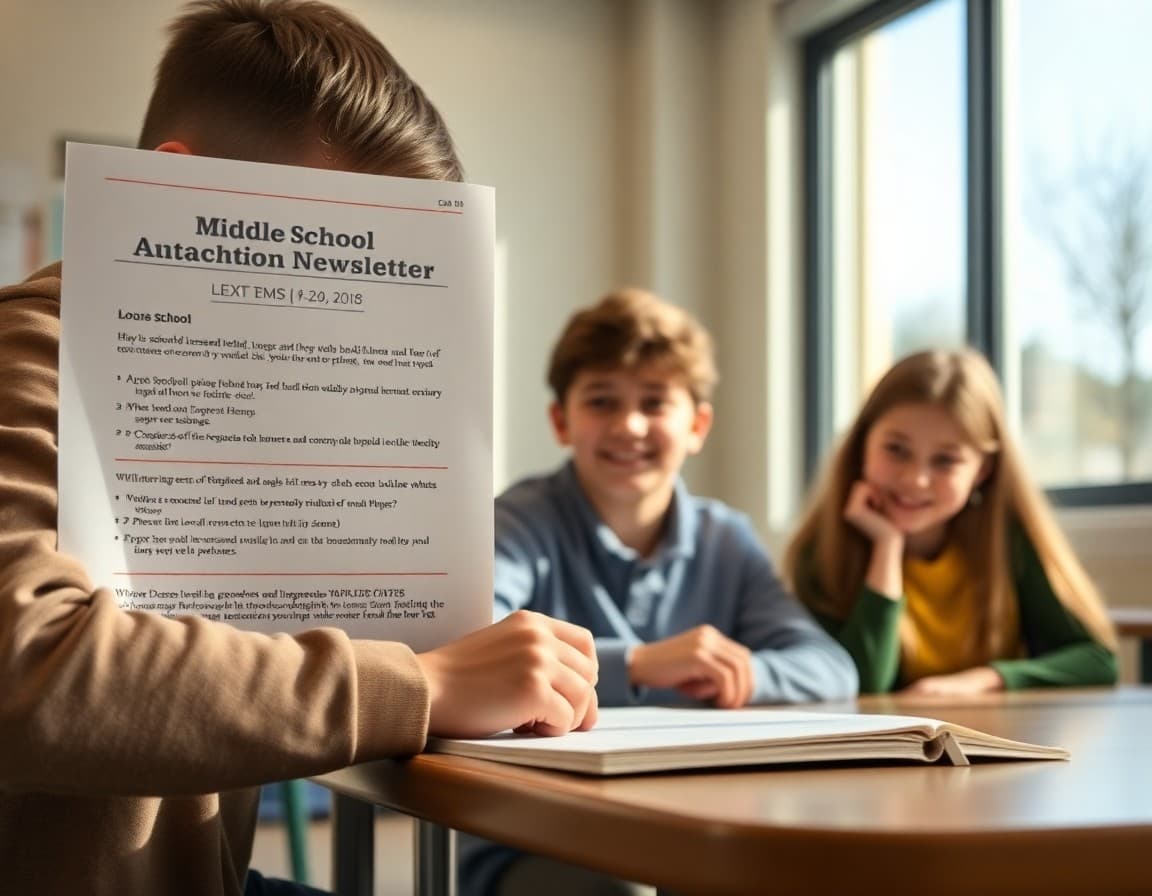
Middle school is the age when students start managing more of their own school communication, which means parents often know less about what is happening in class than they did in elementary school. A regular newsletter from the teacher gives families a direct line to classroom life that does not depend on a 12-year-old to relay the message accurately.
The South Carolina Middle School Communication Challenge
South Carolina middle schools are organized in varied ways: some use traditional departmental structures, others use interdisciplinary teams, and some are part of K-8 buildings. This variation affects how newsletters work in practice. If you are on a grade-level team, coordinate with colleagues to send a combined team newsletter rather than four separate teacher newsletters landing in the same inbox on the same day. A unified approach is more professional and easier for families to track.
What Middle School Parents in SC Want From You
South Carolina middle school parents want answers to three questions: What is my child doing in class right now? What are the upcoming deadlines and tests? And how do I know if my child is struggling before the report card arrives? Your newsletter can answer all three if you write it with those questions in mind. Include current unit topics, upcoming assessment dates, and a clear statement of where families should go if they have concerns about academic progress.
Building a Newsletter Template for a Middle School Team
A grade-level team newsletter works best when each teacher contributes a short section in a consistent format. Keep each teacher's section to three to five sentences covering what students are working on and what is coming up. Add a shared section for team announcements, upcoming dates, and the school counselor's contact for family support needs. The whole newsletter should stay under two pages in a digital format.
A Template Section That Works for SC Middle Schoolers
Here is how a seventh-grade English teacher in Greenville County formats their biweekly update:
English Language Arts: We finished our short story unit and students are getting feedback on their narratives this week. Next, we move into argumentative writing, which is a major focus of the SC PASS exam in spring. Students should expect a timed writing prompt at least once per week as we build those skills. If your child struggled with the narrative assignment, I have posted revision resources on Google Classroom.
That section covers current work, previews what is next, connects to state testing, and directs families to a resource. It is complete in four sentences.
Addressing the Extracurricular Load
Middle school is when students start joining clubs, sports teams, and after-school activities. Your newsletter should acknowledge this rather than ignore it. A brief "School Events and Activities" section that covers upcoming games, club meetings, and school dances helps families plan and shows that you see the whole student, not just the academic one. Coordinate with your school's activities director to get accurate dates.
Connecting Families to SC's Middle School Assessment Calendar
South Carolina middle school students take the SC PASS assessment in grades 6-8, covering English language arts and mathematics. The testing window typically falls in late April and May. Your newsletter should flag testing preparation windows starting in February, explain what the assessment covers, and give families concrete study support suggestions. Families who understand what is being tested are more likely to support preparation at home.
Handling Attendance and Behavior Communication
Middle school newsletters can address attendance expectations without singling out individual students. A short reminder about the impact of absences on SC's assessment eligibility requirements, or a brief explanation of your classroom's behavior expectations, reinforces school culture without requiring a separate parent meeting. Keep this section brief and matter-of-fact rather than punitive in tone.
When Families Do Not Read Your Newsletter
If your open rates are low, look at three variables: send time (Tuesday and Wednesday evenings tend to outperform Monday mornings and Friday afternoons), subject line length (under 50 characters performs better), and newsletter length (shorter newsletters get read more than longer ones). If families are not responding to digital communication at all, ask them directly at Back to School Night how they prefer to receive updates. Some communities respond better to a brief text notification linking to the newsletter than to a direct email.
Get one newsletter idea every week.
Free. For teachers. No spam.
Frequently asked questions
How often should South Carolina middle school teachers send newsletters?
Biweekly newsletters work well for most South Carolina middle school teachers. Families of middle schoolers do not need the same frequency as elementary parents, but they still want regular updates, especially around grading periods and standardized testing windows. Some teachers use a monthly newsletter supplemented by brief grade-level updates during high-priority weeks.
What should a South Carolina middle school newsletter cover?
Cover current unit content and upcoming assessments, homework expectations for the next two weeks, extracurricular news, important dates like progress report distribution and field trips, and brief notes about classroom expectations or policy reminders. South Carolina middle schools using SC PASS assessments should include testing reminders in spring issues.
How do I keep middle school parents engaged when students increasingly manage their own communication?
Acknowledge that your newsletter is for both parents and students. Include one section written directly to students about expectations and one section written to parents about how they can support their child at home. Families appreciate being told how to help rather than just being informed about what is happening. This dual-audience approach also tends to result in students actually sharing the newsletter.
What are South Carolina's middle school communication requirements?
South Carolina does not mandate a specific format for teacher-family communication, but districts typically require regular progress monitoring and family notification when students are at risk of failing. Your newsletter is a complement to, not a replacement for, those formal notifications. Title I schools in South Carolina must also meet federal family engagement requirements.
Is there a newsletter tool designed for South Carolina middle school teachers?
Daystage is built specifically for K-12 educators and works well for middle school contexts. You can create separate newsletters for different classes or grade-level teams, track which families have opened each issue, and set up a sending schedule so newsletters go out automatically on a set day. That consistency matters a lot for building the kind of parent trust that helps during difficult conversations.

Adi Ackerman
Author
Adi Ackerman is a former classroom teacher and curriculum writer with 8 years in K-8 schools. She writes about school communication, parent engagement, and what actually works in real classrooms.
More for Middle School
Middle School Counselor Newsletter: What to Include and How to Reach Families
Middle School · 7 min read
Middle School Back-to-School Newsletter: What Families Need to Know Before Day One
Middle School · 7 min read
5th to 6th Grade Transition Newsletter: How to Prepare Families for Middle School
Middle School · 7 min read
Ready to send your first newsletter?
3 newsletters free. No credit card. First one ready in under 5 minutes.
Get started free