
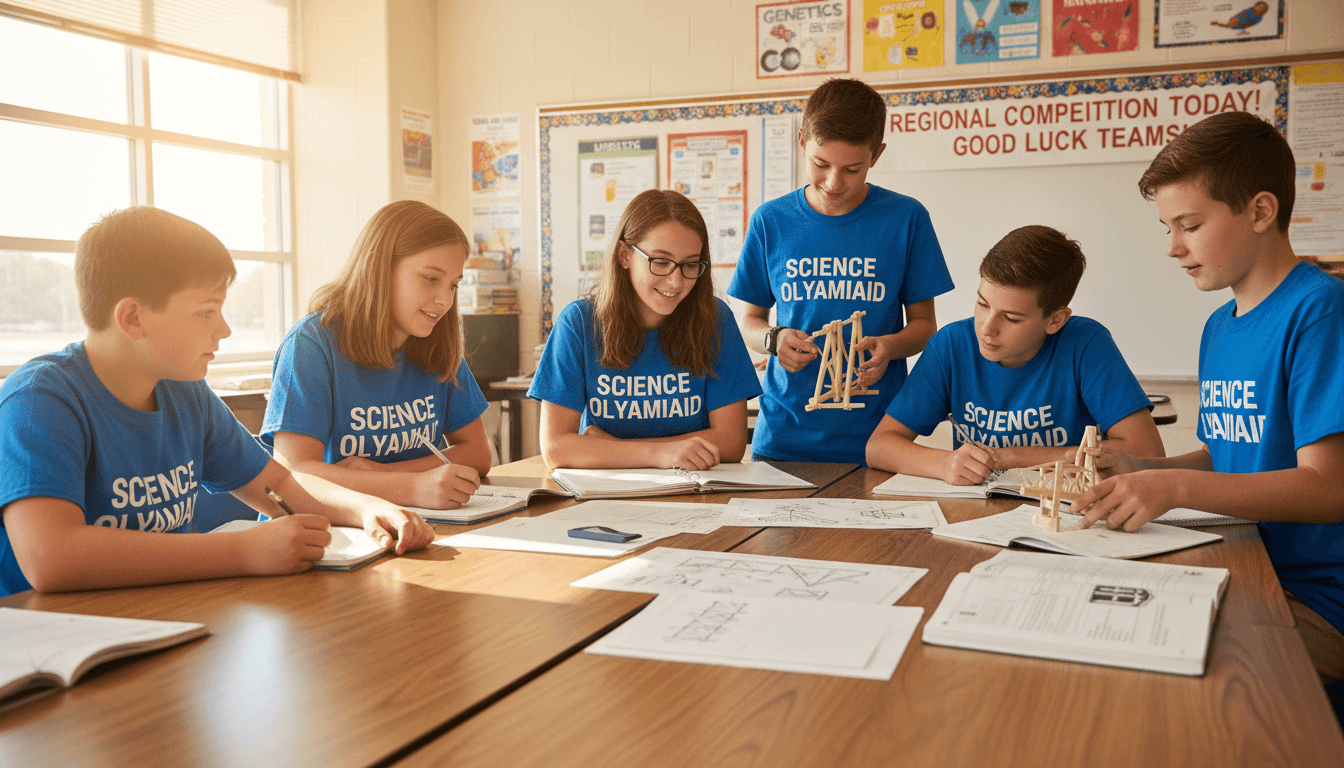
Middle School Science Olympiad Newsletter: What Families Need to Know
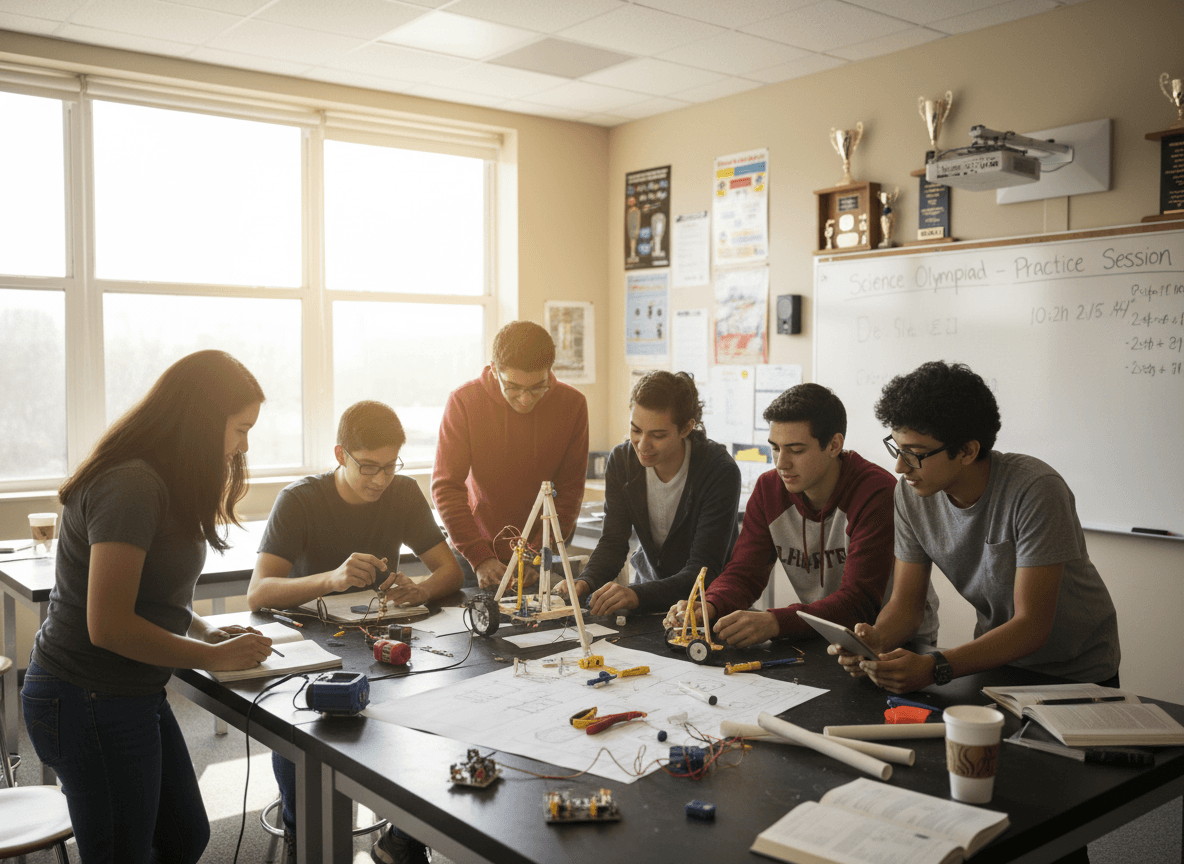
Science Olympiad is one of the most academically demanding and rewarding extracurricular programs available to middle school students. It is also one of the most misunderstood by families who have not been involved before. A good Science Olympiad newsletter closes that gap: it explains what the competition actually is, describes the season structure, and tells families what their role looks like.
This guide covers what to include in a middle school Science Olympiad newsletter for both recruitment and ongoing communication with team families.
Explain Science Olympiad Before Describing Your Team
Families who have not heard of Science Olympiad before will not know what to picture. Start with a brief explanation of the competition before describing your school's team.
Science Olympiad teams consist of 15 members who compete together in 23 events. Events span biology, chemistry, physics, earth science, and engineering. Some events are knowledge-based tests where pairs of students demonstrate mastery of a studied topic. Others are lab practicals where students apply science skills on the day of competition. Build events require teams to design, construct, and test physical devices. Competition includes invitational tournaments, a regional or invitational, and for top finishers, a state tournament.
That overview, two to three sentences, is enough to give families the right mental model before you describe the specifics of your school's program.
Describe the Team Selection Process
Team selection is one of the first questions families will have. Be transparent about how it works at your school.
Some teams hold open tryouts where students demonstrate knowledge in their preferred event areas. Others use a sign-up process for interested students and then assign events based on strengths and interests. If your school uses a combination, explain it. Include the timeline: when interest meetings happen, when tryouts or sign-ups close, and when the roster will be announced.
If you have more interested students than spots, tell families what to do if their student is not selected. Alternate rosters, future-year priority, or practice team arrangements are all worth mentioning so families do not feel the door closes permanently.
Cover How Events Are Assigned
Once on the team, students are typically assigned to specific events based on their interests and strengths. Each student usually covers three to five events across the season. Explain briefly how assignment works: whether students choose their events, whether coaches assign them based on content area strengths, or whether it is a combination.
Also explain what studying for an event looks like. Knowledge events have defined content lists released by Science Olympiad, and students use those lists to study throughout the season. Build events require design and construction work outside of practice. Families who understand the independent study component can help create the time and space for it at home.
Lay Out the Practice and Competition Schedule
Science Olympiad is a season with a real calendar. Give families the key dates early.
Include regular practice days and times, any invitational tournaments you plan to attend (with dates and locations), the regional or qualifying tournament, and the state tournament date. For each competition, note whether students need parent transportation and whether families are welcome to attend as spectators.
Be clear about the overall season length. Science Olympiad typically runs from fall through spring, which is a significant commitment. Families who see the full calendar at the start can plan accordingly rather than discovering conflicts mid-season.
Describe Build Event Materials and Costs
Build events can require materials that cost money. Be transparent about what is expected. If the school provides a budget for supplies, describe it. If students or families are expected to contribute materials, list what is typically needed and a rough cost estimate.
Many families are willing to help with materials once they understand what is needed. A specific ask ("we need balsa wood, fishing line, and a kitchen scale") is more useful than a general request for donations.
Explain What Invitational Tournaments Look Like
Families who attend their first Science Olympiad invitational often describe it as nothing like what they expected. Prepare them.
A Science Olympiad invitational is a full day at a hosting school. Students move between event rooms throughout the day for their assigned events. Some events run simultaneously, so the team is scattered across campus most of the day. There is typically a waiting period between events and a final awards ceremony. Families who come to watch spend a lot of time waiting and then watching a 30-minute awards ceremony, which is still worth attending for the experience it creates for students.
Tell Families How to Support Their Student
The most effective parent support for Science Olympiad is creating the conditions for independent study. Help families understand what that means.
Ask them to ensure their student has quiet study time for event content review. For build events, help them understand that their job is to provide materials and a workspace, not to take over the design. Encourage them to ask their student to explain their events to them in plain language, which reinforces the student's own understanding.
Close by telling families how to stay in contact with the coach throughout the season and what communication to expect. Families who feel connected to the program are its best advocates at home.
Get one newsletter idea every week.
Free. For teachers. No spam.
Frequently asked questions
What is Science Olympiad and how does it differ from a science fair?
Science Olympiad is a team competition where students compete in 23 events across biology, chemistry, physics, earth science, and engineering. Events are divided into three types: knowledge tests (where teams study a topic and answer questions), lab practicals (where students perform experiments or analyze data), and build events (where teams construct devices that are tested for performance). A science fair is an individual or small-group project. Science Olympiad is a team sport with a season, practice, and competitive invitational and championship structure.
How are students selected for the Science Olympiad team?
Most middle school Science Olympiad teams have 15 members (the official tournament roster). Selection processes vary: some coaches hold open tryouts where students demonstrate content knowledge in specific event areas, others use teacher recommendations and interest surveys, and some have first-come-first-served sign-ups. The newsletter should describe the specific process your school uses, including the timeline and what students can do to prepare if tryouts are involved.
How much time does Science Olympiad require from students?
Science Olympiad is one of the more time-intensive academic competitions. During the season, students typically practice two to four times per week, with each session lasting one to two hours. Students are also expected to study their assigned events independently at home, which adds several hours per week. Build events require additional time to construct and test devices. Families should expect a meaningful time commitment from September or October through the state tournament in the spring.
How can parents support Science Olympiad without doing the work for their student?
The best parent support is logistical and emotional: driving to invitationals, helping source materials for build events at reasonable cost, asking curious questions about what your student is studying, and celebrating participation and effort alongside results. Some parents with science or engineering backgrounds offer to review content with students if the student wants that help. What to avoid is taking over build events or quizzing students in ways that feel like pressure rather than support.
What newsletter tool works best for communicating Science Olympiad updates to families?
Daystage is well suited for this because you can send structured updates with event assignments, competition schedules, and supply lists directly to team families. You can send the general recruitment newsletter to all middle school families and then switch to targeted team-only newsletters once the roster is set. The ability to see who opened the newsletter helps coaches identify families who may not be getting communications and follow up by phone or in person.

Adi Ackerman
Author
Adi Ackerman is a former classroom teacher and curriculum writer with 8 years in K-8 schools. She writes about school communication, parent engagement, and what actually works in real classrooms.
More for Middle School
Ready to send your first newsletter?
3 newsletters free. No credit card. First one ready in under 5 minutes.
Get started free