

Maryland Middle School Newsletter Guide for Teachers
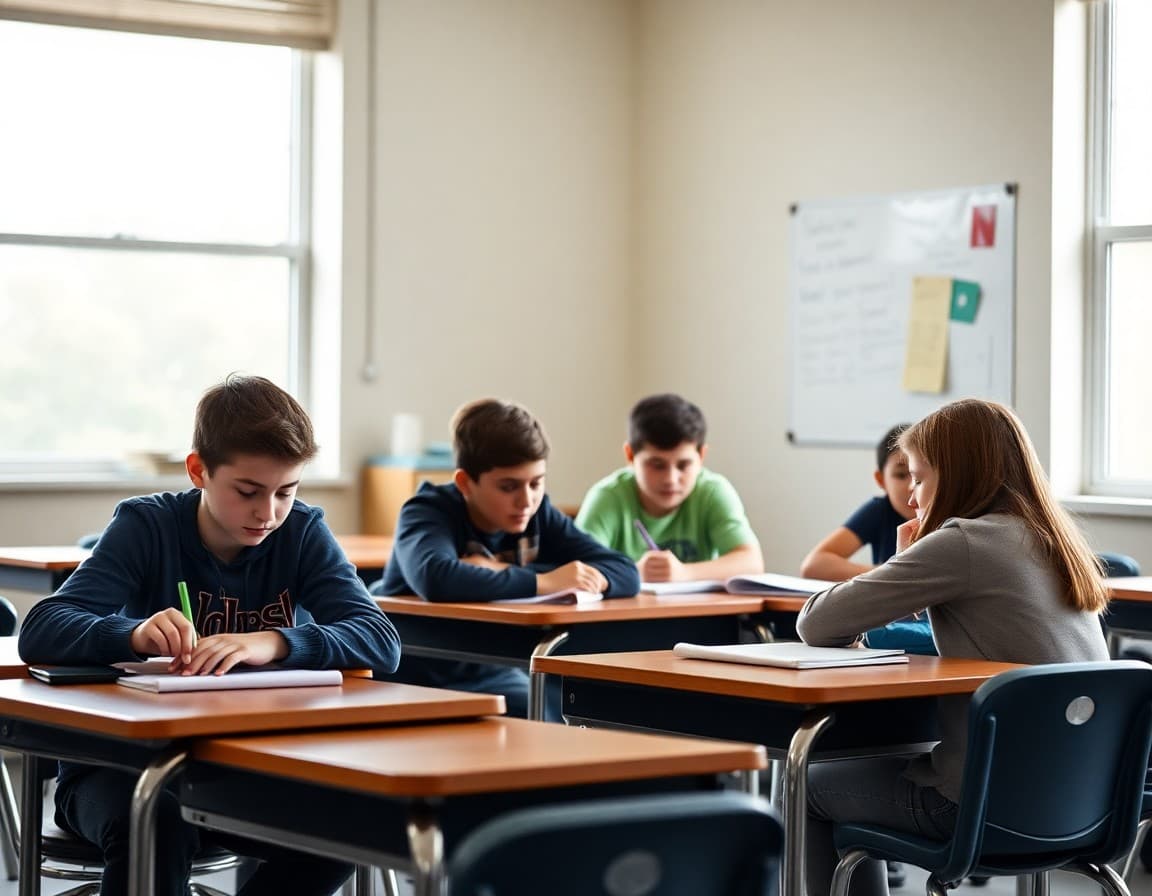
Maryland middle school teachers face a real challenge: families who were deeply involved in elementary school often pull back in middle school, just when students face their most significant academic and social transitions. A consistent newsletter does not replace family involvement, but it creates a channel that keeps communication open when students themselves are less forthcoming about what is happening at school.
Why Middle School Communication Matters More Than It Seems
Research from the National Middle School Association consistently shows that family engagement in middle school is one of the strongest predictors of high school success. Maryland's large and diverse middle school population, particularly in Prince George's County, Montgomery County, and Baltimore City, includes many families who want to stay involved but do not know how. A newsletter gives them a structured way in.
Students at this age do not always share what is happening at school. A parent who reads in the newsletter that their child's class is presenting projects next week can ask specific questions at dinner instead of getting a shrug in response to "how was school today?"
What Maryland Middle School Families Need From Newsletters
Families with middle schoolers in Maryland need four things from school newsletters: academic updates, deadline reminders, social-emotional context, and post-secondary previews. Academic updates keep families informed about what students are learning without requiring the student to narrate everything. Deadline reminders cover field trips, project due dates, and activity registration. Social-emotional context helps families understand age-appropriate developmental shifts. Post-secondary previews plant seeds for the conversations about high school and beyond.
Maryland's middle schools also deal with cyberbullying and social media issues at significant rates. Newsletters that occasionally address digital citizenship and school resources for social-emotional support give families language and tools they otherwise lack.
Structuring the Newsletter for Busy Families
Middle school parents read newsletters during commutes, lunch breaks, or late at night. Keep the reading time under four minutes. Use four sections: What We Are Learning This Month, Upcoming Deadlines, News From the Grade Level, and one recurring Family Resource item. Subjects who teach the same students can collaborate on a shared newsletter, which distributes the writing load and gives families a unified view of their child's academic week.
Grade-level team newsletters are more valuable than individual classroom newsletters at the middle school level because they give families a complete picture rather than a fragment.
A Template Excerpt for Maryland Middle School Newsletters
Here is a section that works well for sixth grade:
"In social studies, we finished our unit on ancient civilizations and started exploring the Middle Ages. Students wrote comparison essays this week, which ties directly to the MCAP informational writing tasks they will see in the spring. A reminder: the essay rough draft is due Thursday, and students should bring their graphic organizer to class. If your student is struggling with the essay structure, I am available Tuesday mornings before school for help sessions."
That paragraph gives academic context, connects to a major assessment, names a deadline, and offers concrete support. It is 75 words and covers everything the family needs.
Maryland Assessment Communication
Maryland's MCAP tests run in March through May for grades 6 through 8. Newsletters before and during testing windows should include specific dates, what subjects are tested at each grade level, and how families can support their student at home. Reminders about sleep, breakfast, and reducing test-day stress are genuinely useful and signal that you care about the whole student, not just the score.
After testing, a brief note acknowledging that students worked hard and that results will be shared when available closes the loop for families who are anxious about outcomes.
Extracurricular and Activity Communication
Maryland middle schoolers have access to sports, arts, academic clubs, and other activities that require family coordination. Newsletters are the most efficient place to communicate tryout dates, activity fair information, and deadline for sports physicals. Many Maryland middle schools have 60 to 80 percent of students in at least one activity, so this information reaches almost every family.
Include a brief spotlight on one extracurricular activity each month. This introduces families to opportunities their student may not have mentioned and can prompt conversations that lead to involvement.
Keeping Communication Professional During Difficult Periods
Middle school years include disciplinary issues, social conflicts, and sometimes mental health crises. Newsletters should not address individual student situations, but they can point families toward resources: the school counselor, the school's mental health support plan, and community resources in Maryland like the Mental Health Association of Maryland's school programs.
When a school-wide event requires communication, such as a safety drill, a policy change, or a community crisis, the newsletter can confirm what happened and reinforce the school's response. Clear, factual communication reduces the misinformation that spreads on parent social media groups.
Sustaining the Practice All Year
The hardest part of middle school newsletters is not writing the first one. It is writing the fourteenth. To sustain consistency, keep a running list of newsletter topics throughout the month. When something happens in class, a good student question, a surprising result on a quiz, a field trip observation, note it down. By the time you sit down to write, you will have more material than you need.
Block 25 minutes on your calendar every other Thursday. Treat it as non-negotiable. Families in Maryland who receive a bi-weekly newsletter for a full school year show measurably higher conference attendance, higher volunteer rates, and more positive responses on family climate surveys.
Get one newsletter idea every week.
Free. For teachers. No spam.
Frequently asked questions
Why do Maryland middle school families disengage from school communication?
Middle school is when family engagement often drops, and Maryland is no exception. Students become more private about school life, and parents may assume their child no longer needs as much oversight. Newsletters counter this by giving parents a consistent, low-pressure way to stay informed without relying on their 12-year-old to relay information accurately. A reliable newsletter can maintain the family connection through grades 6 to 8.
What content works best for Maryland middle school newsletters?
Maryland middle school families respond well to content about academic expectations, grade-level transitions, extracurricular opportunities, and upcoming assessments. Maryland's MCAP assessment affects 6th through 8th grade students, so testing information matters. Families also want to know about elective offerings, sports tryout dates, and any changes to schedules that affect after-school pickup or activities.
How often should Maryland middle school teachers send newsletters?
Bi-weekly is the right frequency for most Maryland middle school newsletters. Weekly can feel like too much for families of older students, but monthly means families miss time-sensitive information. Bi-weekly gives enough space between issues to have new content while keeping families consistently informed. During testing season or schedule change periods, increase to weekly.
How can middle school newsletters support the transition to high school?
Starting in 7th grade, newsletters can include occasional content about high school course planning, career exploration resources, and the Maryland Completes College initiative. Families who receive consistent information about the path ahead are better positioned to support their students' planning. Eighth grade newsletters should include specific information about high school orientation, course selection timelines, and any placement testing.
What tools make middle school newsletters easier to manage?
Middle school teachers juggle multiple classes and often communicate with 90 to 150 families. A tool like Daystage lets you create professional newsletters in under 30 minutes, with mobile-friendly formatting that works for Maryland families who read everything on their phones. Templates save time, and scheduling features mean you can write the newsletter on Thursday and send it Friday morning automatically.

Adi Ackerman
Author
Adi Ackerman is a former classroom teacher and curriculum writer with 8 years in K-8 schools. She writes about school communication, parent engagement, and what actually works in real classrooms.
More for Middle School
Middle School Back-to-School Newsletter: What Families Need to Know Before Day One
Middle School · 7 min read
Middle School Counselor Newsletter: What to Include and How to Reach Families
Middle School · 7 min read
5th to 6th Grade Transition Newsletter: How to Prepare Families for Middle School
Middle School · 7 min read
Ready to send your first newsletter?
3 newsletters free. No credit card. First one ready in under 5 minutes.
Get started free