

Georgia Middle School Newsletter Guide for Teachers
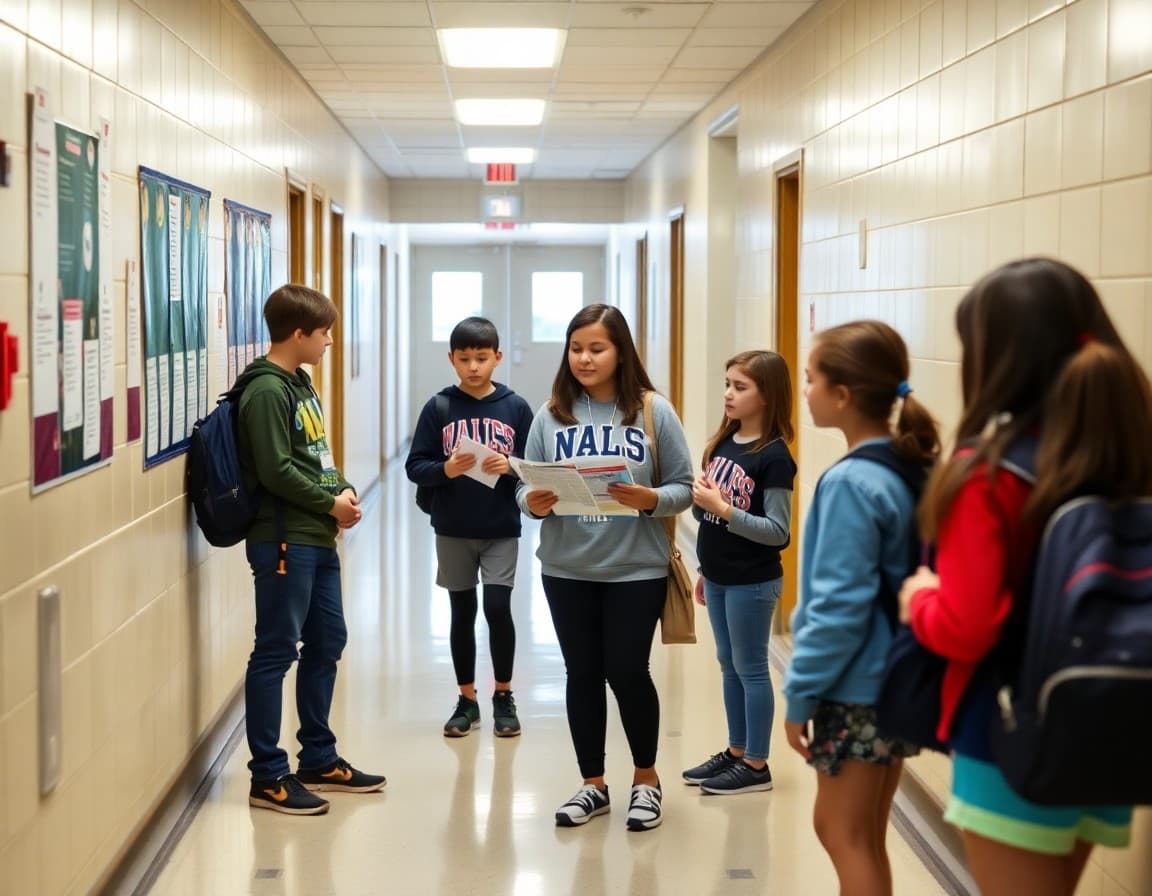
Middle school is where family engagement often drops off. Students are more independent, homework assignments are less clearly visible, and the school structure feels less personal than elementary. A well-written Georgia middle school newsletter counters that drift. It keeps families in the loop on what 6th, 7th, and 8th graders are actually doing in class, what support options exist, and what the school expects from both students and families.
Georgia Middle School Academic Standards: What to Cover
Georgia's Standards of Excellence (GSE) give middle school teachers a clear foundation for newsletter content. Each month, one paragraph on the primary standard each core class is working toward helps families understand what assignments are building toward. "This month in 7th grade ELA, students are analyzing how authors develop themes across different genres. At home, asking 'what is this book really about beyond the plot?' is the kind of question that builds that skill." That type of parent-facing explanation translates a state standard into something families can participate in.
Georgia Milestones EOG: Preparing Families Month by Month
The Georgia Milestones End-of-Grade assessments in grades 6-8 are high-stakes tests that families hear about mostly through last-minute reminders. A newsletter that begins addressing Milestones in January -- with the test window typically in April or May -- gives families a six-week runway to adjust routines and understand what is being assessed. One page of the February newsletter explaining the difference between the ELA and Math Milestones sections, and what a proficiency score means for grade promotion, is more valuable than a flyer sent home a week before testing begins.
Advisory and Homeroom: The Human Side of Middle School
Georgia middle schools often use advisory or homeroom periods to address SEL goals, school culture, and student wellness. This content rarely makes it into newsletters, but families value it. A short section on what advisory is covering this month -- conflict resolution skills, study strategy workshops, or a service learning project -- gives families visibility into a part of school they rarely hear about. It also signals that your school sees students as whole people, not just test scores.
Template Excerpt: November Georgia 7th Grade Newsletter
A sample opening section:
"November is a strong academic month before the December break. In math, we move into proportional relationships this week -- a Georgia Standards of Excellence anchor standard that students will see again on Milestones in the spring. In ELA, we are finishing our first full novel study of the year and moving into analytical writing. Study hall is available Tuesday and Thursday mornings from 7:45 to 8:15 in Room 214. No sign-up needed. Attendance records are updated in ParentVUE every Friday -- please check in with your student if you see any patterns."
Communicating MTSS and Academic Interventions
Georgia's Multi-Tiered System of Supports is active in most middle schools, but families rarely understand what it means in practice. A newsletter section called "Academic Support at Our School" that explains the three tiers in plain language, lists available supports (tutoring, small group re-teaching, reading intervention), and tells families how to request additional help serves the full range of students on your roster. Students in Tier 2 or 3 supports should receive individual communication about their specific progress, not group newsletter updates.
Engaging Families of 8th Graders in Transition Planning
Georgia 8th graders and their families are making decisions that affect high school coursework: which math pathway, whether to pursue AP coursework, which electives to request, and in some districts, whether to apply to magnet or pathway programs. Your fall newsletter should begin addressing the high school transition timeline by November. What decisions need to be made by January? When do course selection sheets go home? What does a student's 8th grade Milestones score mean for 9th grade placement? These are the questions families of 8th graders are quietly anxious about.
Making Middle School Newsletters Families Actually Read
Middle school parents read newsletters when the content is specific to their child's grade level, written without jargon, and short enough to finish in three minutes. Avoid administrative boilerplate like "as per our district policy" or "as we approach this exciting time of year." Write the way you would explain something to a neighbor. Use bullet points for dates and a clear subject line that names the grade level: "7th Grade: November Update + Milestones Prep Timeline." That combination -- relevant, plain, brief -- is what gets middle school newsletters opened and read.
Get one newsletter idea every week.
Free. For teachers. No spam.
Frequently asked questions
What topics should a Georgia middle school newsletter cover?
Georgia middle school newsletters should cover current academic units, upcoming Georgia Milestones EOG dates, club and extracurricular updates, advisory or homeroom news, and any school-wide initiatives around behavior or attendance. Secondary-level newsletters also benefit from a section on study skills and homework expectations, since middle school is where academic habits either solidify or fall apart.
How does the Georgia middle school newsletter differ from elementary?
Middle school families often receive less communication than elementary families, even though the academic and social demands on students increase significantly. A good Georgia middle school newsletter addresses that gap by being specific about what students are expected to do independently, what support is available at school, and what warning signs families should watch for. Vague updates like 'we are doing great' do not serve 6th, 7th, or 8th grade families the way concrete grade-level updates do.
Should Georgia middle school teachers coordinate newsletters across departments?
Yes, especially in schools where families receive separate newsletters from ELA, math, science, social studies, and elective teachers. The result is families opening 5 separate emails a week and eventually ignoring all of them. A grade-level team newsletter that combines updates from all core teachers reduces inbox clutter and models the collaborative teaching approach that Georgia's middle grades philosophy promotes.
How do I communicate MTSS or academic support in a middle school newsletter?
Keep MTSS communication at the program level in a group newsletter -- mention that academic support resources are available and how to access them, without identifying specific students. If a student is receiving Tier 2 or Tier 3 interventions, communicate that through individual channels. A newsletter section called 'Academic Support' that lists tutoring hours, study hall availability, and teacher office hours serves families without exposing any student's status.
What tool helps Georgia middle school teams send newsletters efficiently?
Daystage works well for grade-level teams because multiple teachers can contribute content to a single newsletter. That solves the coordination problem without requiring one teacher to do all the work. Georgia middle schools using a team-based newsletter approach report higher family open rates than schools where each teacher sends separately.

Adi Ackerman
Author
Adi Ackerman is a former classroom teacher and curriculum writer with 8 years in K-8 schools. She writes about school communication, parent engagement, and what actually works in real classrooms.
More for Middle School
Middle School Back-to-School Newsletter: What Families Need to Know Before Day One
Middle School · 7 min read
Middle School Counselor Newsletter: What to Include and How to Reach Families
Middle School · 7 min read
5th to 6th Grade Transition Newsletter: How to Prepare Families for Middle School
Middle School · 7 min read
Ready to send your first newsletter?
3 newsletters free. No credit card. First one ready in under 5 minutes.
Get started free