
Environmental Science Unit Newsletter for Parents: Middle School Guide

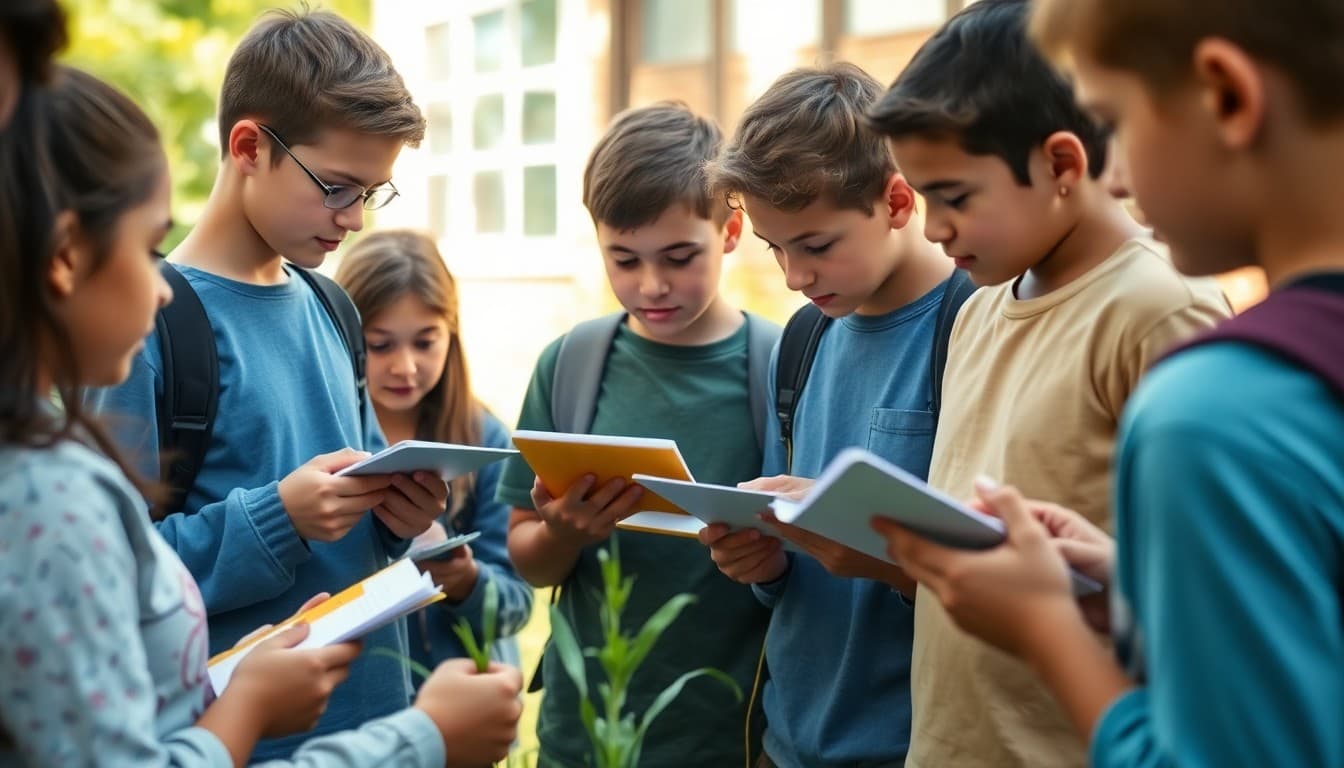
Middle school environmental science shifts from observation to analysis. Students aren't just identifying what lives where; they're studying why ecosystems are structured the way they are, how human activity changes those structures, and what happens when a key piece of an ecosystem is removed or altered. A unit newsletter helps parents understand this analytical shift and gives them ways to connect the curriculum to things their student sees in the news and in their local environment.
What Changes Between Elementary and Middle School Environmental Science
Parents whose students learned environmental science in elementary school may expect a similar curriculum. Middle school is different. The questions get harder: not "what does this organism eat?" but "what happens to the population of prey species when a predator is removed?" Not "what is the water cycle?" but "how does human water use affect aquifer levels and downstream ecosystems?"
Your newsletter can acknowledge this shift: "Middle school environmental science builds on what your student observed and explored in earlier grades, but now we're asking more analytical questions about why systems work the way they do and what happens when they're disrupted."
What to Include in a Unit Newsletter
Cover the unit focus and the key analytical questions students are investigating, three to five key concepts, a connection to a local or current event, and two to three home activities appropriate for the analytical level of a 6th, 7th, or 8th grader. Include a vocabulary list of five to eight terms. Keep the newsletter to 250 to 350 words.
Template Excerpt: Ecosystems and Human Impact
"This week we're starting our Human Impact on Ecosystems unit. Students will investigate how human activities (land use change, pollution, resource extraction, urban development) affect ecosystem structure and biodiversity. They'll analyze case studies of real ecosystems that have been altered and evaluate what changed as a result.
Key concepts: biodiversity, keystone species, habitat fragmentation, invasive species, trophic cascade.
At home: look up a local environmental news story about land use, water quality, or wildlife habitat near your city or region. Ask your student to identify which ecosystem concept from our unit applies to the situation. That connection is exactly the analytical thinking we're building in class."
Connecting to Local Environmental Issues
Middle school environmental science is most engaging when it connects to environmental issues students can observe or research locally. Whether it's water quality in a nearby river, habitat loss in a local green space, or the spread of an invasive species, local examples make the curriculum feel relevant rather than abstract. Your newsletter can encourage parents to point out local environmental stories and use them as discussion starters.
Handling Climate Science in the Newsletter
Climate science appears in most middle school environmental curricula. A newsletter that describes it accurately and non-politically is usually well-received by parents across perspectives. "We're studying how scientists measure changes in climate systems and what those measurements show about the relationship between human activities and atmospheric conditions" is accurate, educational, and non-partisan. That framing lets you address the content honestly without generating controversy.
Why This Content Matters at This Age
Close the newsletter with a brief statement about why middle school is a valuable time for environmental science. Students are forming views about the world and their relationship to it. They're starting to make decisions with real environmental consequences: what to eat, how to get around, how to think about resource use. Environmental science at this level gives them the conceptual tools to make those decisions with understanding rather than habit. That's worth naming for parents.
Daystage makes it straightforward to send these unit newsletters at the start of each topic and maintain the communication consistency that builds parent engagement across the full year.
Get one newsletter idea every week.
Free. For teachers. No spam.
Frequently asked questions
What environmental science topics do middle schoolers typically study?
Middle school environmental science covers ecology (energy flow, food webs, population dynamics), Earth's systems (water cycle, rock cycle, atmosphere, geosphere), human impact on the environment, conservation and sustainability, climate science, and often local or regional environmental issues. At this level, students move from observation to analysis: not just what's there, but why, and what happens when conditions change.
How do I write an environmental science newsletter that engages middle school parents?
Connect the unit content to something families experience in their daily lives and connect it to current events at the local or regional level. A water cycle unit connects to local water quality or recent drought news. An ecosystems unit connects to a local park, river, or habitat. Middle school parents respond to newsletters that frame science as relevant to real decisions, not just as academic content.
Should middle school environmental science newsletters address climate change?
Yes, but carefully. Climate science is part of the middle school curriculum in most states. Present it as the scientific content it is: evidence-based, measurable, and studied through observable data. Avoid political framing. 'We're studying how scientists measure changes in climate systems over time and what that data shows' is accurate and informative without being advocacy-oriented.
What home activities reinforce middle school environmental science?
Middle schoolers are ready for more analytical outdoor activities than elementary students. Ask them to calculate the carbon footprint of a typical school lunch, identify a local ecosystem and describe its energy flow, research one local environmental issue and explain the science behind it, or track local weather data for a week and compare it to historical averages. These activities practice the analytical thinking middle school environmental science requires.
Does Daystage work well for middle school science newsletters?
Yes. Daystage is suitable for any grade level or subject. Middle school science teachers who use it consistently find that the template system saves significant time across a year of unit newsletters, and that parents engage more reliably with formatted, professional-looking newsletters than with plain emails.

Adi Ackerman
Author
Adi Ackerman is a former classroom teacher and curriculum writer with 8 years in K-8 schools. She writes about school communication, parent engagement, and what actually works in real classrooms.
More for Middle School
Alaska Middle School Newsletter Guide: What to Include for Families
Middle School · 8 min read
Middle School Back-to-School Newsletter: What Families Need to Know Before Day One
Middle School · 7 min read
Middle School Counselor Newsletter: What to Include and How to Reach Families
Middle School · 7 min read
Ready to send your first newsletter?
3 newsletters free. No credit card. First one ready in under 5 minutes.
Get started free