
8th Grade Social Studies Newsletter: Connecting Curriculum to Current Events
Social studies is one of the subjects where parent communication matters most, not just for the logistical reasons that apply to every class, but because the content itself regularly touches on topics that come up at home. History, government, economics, and current events all have a way of following students from the classroom to the dinner table.
A well-written 8th grade social studies newsletter gives families context before that conversation happens. When parents know what their student is studying and why, they are more likely to engage in a way that reinforces the learning rather than undermines it.
Set the Stage for the Unit
Open with a brief description of the unit in language that does not require a history degree to understand. What time period or topic are students exploring? What essential questions are driving the unit? What do you want students to understand or be able to do by the end?
For example, a unit on the Constitutional Convention might be introduced as: "Over the next three weeks, students will examine how the founders of the United States designed a government meant to prevent the concentration of power. We will look at the debates that shaped the Constitution, the compromises that were made, and the arguments about what the document actually means, arguments that are still happening today."
That kind of framing tells parents what the intellectual work of the unit is, not just the chapter numbers.
Connect to Current Events Thoughtfully
Eighth grade social studies often maps naturally onto what is happening in the news. That connection is an asset to your teaching, but it requires some care in how you communicate it to families.
The key is to frame current events as illustrations of historical patterns, not as political positions. If students are studying how civil rights legislation passed, a mention that debates about voting access are still happening today gives the history immediate relevance without turning your newsletter into political commentary.
If a topic in your unit is likely to generate strong feelings from some families, a brief heads-up is more effective than silence. A sentence like "Students will be analyzing primary sources from multiple perspectives on this issue; we will focus on evidence and reasoning rather than reaching a predetermined conclusion" goes a long way toward preemptive reassurance.
Highlight Primary Source Work
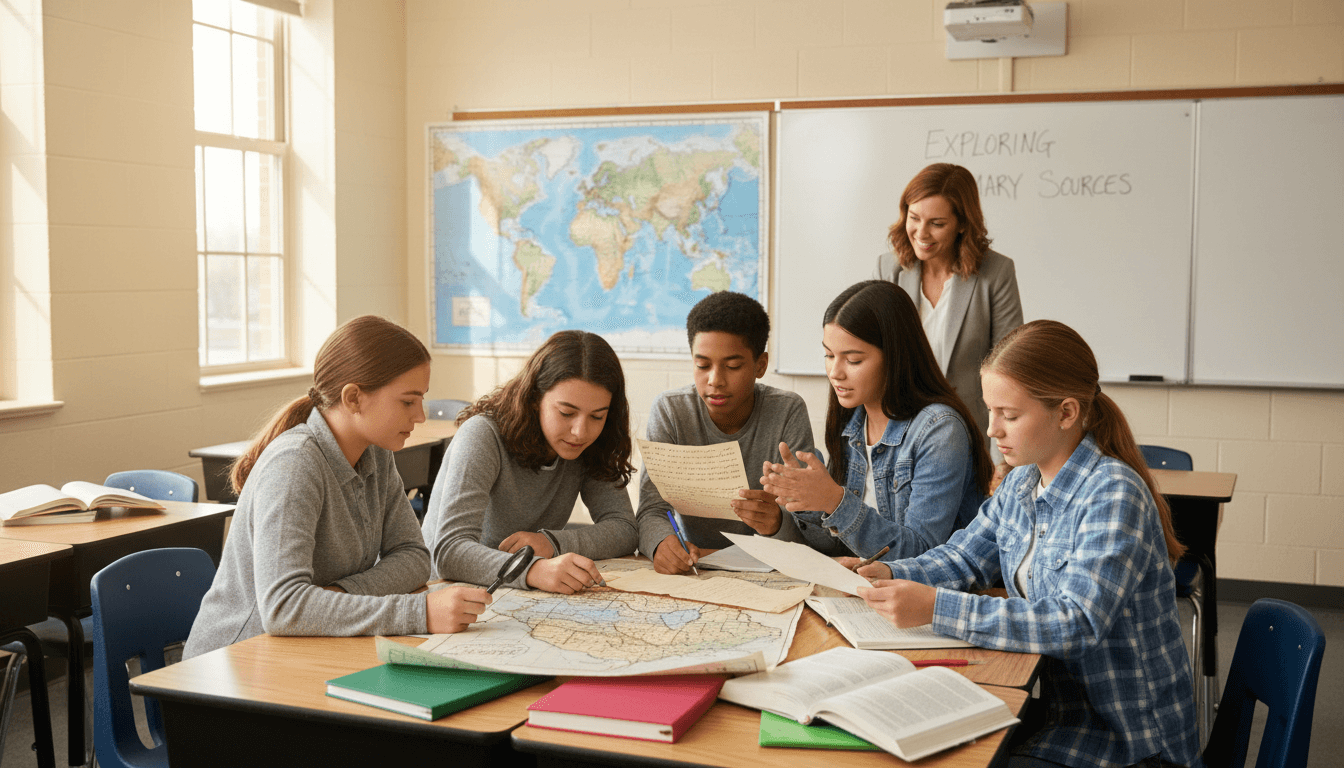
One of the most distinctive features of social studies at the 8th grade level is the emphasis on primary sources. When families understand that their student is reading original speeches, letters, legislation, and firsthand accounts rather than just a textbook summary, they tend to take the subject more seriously.
Include a brief mention of the primary sources students will work with this unit. If you have a short, accessible excerpt, consider including one in the newsletter. It gives parents a taste of what their student is engaging with and makes the content feel immediate rather than abstract.
Projects, Assessments, and Deadlines
Cover any major work products in the unit: a research paper, a debate, a presentation, a document-based question essay. For each one, include the approximate due date and a brief description of what students are expected to produce.
Eighth grade social studies projects often require research beyond the classroom. If students will need library access, internet research time, or materials from home, mention that. If the project is collaborative, explain whether groups will be assigned or self-selected.
Parents who receive this information early are in a much better position to help their student plan their time. Social studies projects are notorious for turning into last-minute crises when the scope is not clear until the week they are due.
Discussion Prompts for Home
Social studies is uniquely well-suited to at-home conversation, more so than most subjects. Include two or three open questions families can use to continue the discussion at home. Make them genuinely open rather than quiz questions.
Questions like "What do you think the biggest compromise was in writing the Constitution?" or "Do you think the Industrial Revolution was mostly good or mostly bad for workers?" invite genuine conversation rather than a recitation of facts. They also signal to students that what they are learning is worth discussing, not just memorizing.
Recommended Resources
Offer two or three optional resources for families who want to explore the topic further. A documentary, a podcast episode, a reputable historical website, or a relevant book for students who want to read more. Keep this list short and include a one-sentence description of each so families can choose what fits.
If you are using any textbook or online platform in class, remind families where to find it and how to log in. Many parents want to look at what their student is reading but do not know where to find it.
Preparing for High School Humanities Courses
Close the newsletter with a brief connection to what comes next. The skills students are practicing in 8th grade social studies, reading critically, evaluating evidence, constructing arguments from primary sources, are exactly the skills that matter most in high school English and history courses.
When parents understand that the writing and analysis work their student does this year is direct preparation for high school expectations, they are more likely to take it seriously and encourage their student to do the same.
Get one newsletter idea every week.
Free. For teachers. No spam.
Frequently asked questions
What topics should an 8th grade social studies newsletter cover?
The newsletter should explain the current unit topic in accessible terms, preview any major projects or assessments, describe how current events connect to what students are studying, and offer families one or two ways to continue the conversation at home. For many 8th grade social studies classes, this includes topics like constitutional history, civil rights, the Industrial Revolution, or U.S. government depending on your curriculum sequence.
How do I handle politically sensitive topics in a social studies newsletter?
Focus on what students are learning rather than taking any position yourself. A newsletter can explain that students are studying the history of voting rights legislation and the arguments made on different sides of the debate without the newsletter itself becoming an advocacy document. Describe the inquiry skills students are practicing, such as reading primary sources and evaluating evidence, rather than the conclusions you want them to reach.
How do I connect current events to the 8th grade social studies curriculum without alienating families?
Frame current events as examples or applications of historical patterns rather than political commentary. If students are studying checks and balances, you might note that news stories about executive orders and congressional responses are real-world examples of the exact system they are analyzing. That framing invites intellectual curiosity rather than political debate.
Should the social studies newsletter include primary source excerpts?
A short excerpt can be effective when it illustrates what students are working with. A paragraph from a speech, a few lines from a historical document, or a brief quote from a first-person account gives families a window into the actual work students are doing. Keep it short and include a sentence of context so the excerpt is meaningful without requiring background knowledge.
What tool helps 8th grade social studies teachers send newsletters to families?
Daystage is designed for school newsletters and makes it easy to include formatted sections for unit overviews, upcoming assessments, and home discussion prompts. Because it sends as a clean email rather than an attachment, families are more likely to actually read it, which matters when your content involves sensitive historical topics that benefit from a heads-up at home.

Adi Ackerman
Author
Adi Ackerman is a former classroom teacher and curriculum writer with 8 years in K-8 schools. She writes about school communication, parent engagement, and what actually works in real classrooms.
More for Middle School
8th Grade Curriculum Overview Newsletter: What Your Child Will Learn in Their Final Middle School Year
Middle School · 7 min read
8th Grade Classroom Newsletter Ideas: What to Send Parents of 8th Graders All Year
Middle School · 8 min read
Eighth Grade ELA Newsletter: What to Tell Families About Reading and Writing in 8th Grade
Middle School · 7 min read
Ready to send your first newsletter?
3 newsletters free. No credit card. First one ready in under 5 minutes.
Get started free