
8th Grade Classroom Newsletter Ideas: What to Send Parents of 8th Graders All Year

Eighth grade is unlike every other year in middle school. Students are finishing something and starting something at the same time. Parents are managing a complicated mix of pride, logistics, and worry. If there was ever a year to stay in consistent communication with families, this is it.
Here is a month-by-month guide to what your 8th grade newsletters should cover, and why.
August and September: Frame the year from day one
Your first newsletter should do two things: establish that this is a significant year, and tell families what they can expect from you in terms of communication. Introduce yourself, explain your course or homeroom, and name the big milestones on the horizon: high school course selection, state assessments, promotion ceremony.
Include a note about any 8th grade-specific requirements: promotion requirements, mandatory testing windows, or prerequisite courses that affect high school placement. Do not assume parents know the promotion criteria. Many do not until the spring, which is too late.
Keep the tone warm and forward-looking. "This year matters and we are going to make it count" is the right register.
October: High school course selection is closer than families think
In most districts, high school course selection for 8th graders happens in late winter or early spring. October seems early to bring it up, but it is not. Families who are thinking ahead appreciate the lead time. Families who are not thinking about it yet need the nudge.
In October, plant the seed. "High school course selection typically opens in February. Now is a good time to begin thinking about your child's interests, strengths, and goals. I will send more detailed information as we get closer." That one paragraph prevents the last-minute scramble that happens when families hear about course selection for the first time in January.
November: Academic habits that will matter in high school
By November, you have a read on your class. Use your newsletter to share what you are noticing and connect it to high school readiness. Are students turning in work on time? Managing longer assignments? Reading independently?
Tell families which habits matter most for the transition and what they can do at home to reinforce them. "Students who struggle most in 9th grade are usually the ones who relied heavily on reminders and last-minute support in 8th grade. If your child is doing that now, let us work on it together before the transition."
December: Semester check-in and mid-year reset
December is a natural moment to do a mid-year check-in. How is the class doing on the big academic goals? What has surprised you? What do you want families to watch for in the second semester?
This is also a good place to share any updated information about spring testing dates or high school selection timelines. Things change from fall to winter and families who thought they knew the schedule need to know about those changes.
January and February: Course selection and placement guidance
These two months carry more weight for 8th grade families than any other time of year. High school course selection opens. Placement tests may be scheduled. Families are making decisions that will shape the next four years of their child's education.
Your newsletters in January and February should be practical and specific. Explain what courses are available and what prerequisites matter. Describe how course selection works at your school and what the timeline is. If there is a placement test, tell families when it is, how to prepare, and what the results determine.
If your school has an honors or AP pathway, explain what it takes to succeed in those courses, not just how to get into them.
March: State testing is coming
State assessments for 8th graders are often high-stakes, both for students and for school accountability. Give families a clear picture of what is coming: the tests being administered, the dates, what the results are used for, and how families can support their child in preparing without creating anxiety.
A sentence about test-taking logistics matters here too. "Students should arrive on time and bring a charged device. Testing runs from approximately 8:00 to 10:30. Please avoid scheduling appointments during these windows." The practical details prevent unnecessary complications.
April and May: Promotion planning and end-of-year logistics
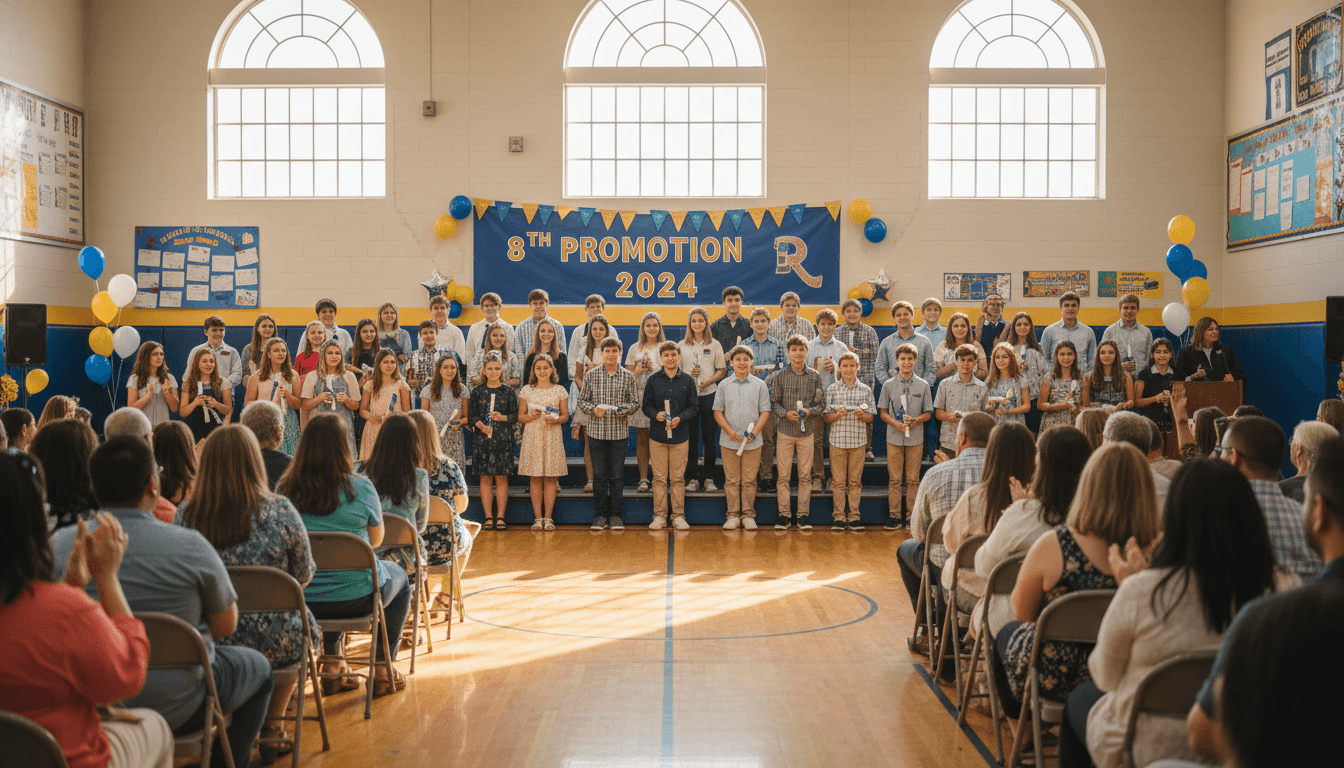
By April, families are thinking about promotion. Communicate the ceremony details as early as possible. When is it? Where? How many tickets do families receive? What should students wear? What needs to happen for a student to walk?
Families of 8th graders invest emotionally in promotion in a way that is different from any other middle school milestone. The more information you give them early, the better the event goes for everyone.
May newsletters should also address the end-of-year logistics: finals schedules, last day of school, textbook returns, and any senior activities or celebrations. Keep this information coming in steady updates rather than one overwhelming last-minute email.
June: Close the year with intention
Your final newsletter of the year is worth spending time on. Thank families for their partnership. Share a reflection on what the class accomplished. Give families something useful for the summer, whether that is a reading recommendation, advice on orienting to high school, or a simple note about what their child should be proud of.
This newsletter will be remembered. Some families save it. Write it like it matters, because for a lot of families, it genuinely does.
Get one newsletter idea every week.
Free. For teachers. No spam.
Frequently asked questions
How is an 8th grade newsletter different from other middle school grade newsletters?
Eighth grade is the transition year. Almost every newsletter you send has a high school lens on it, even when the immediate topic is a unit test or a class trip. Parents of 8th graders are simultaneously managing the emotional weight of their child's last year of middle school and the practical logistics of high school registration, placement tests, and orientation. Acknowledging both layers makes your newsletter feel relevant rather than generic.
When should 8th grade newsletters start addressing high school preparation?
From the very first newsletter. You do not need to go deep in August, but a single sentence in your introduction sets the tone: this is a big year and we will stay connected through all of it. By October, course selection and high school placement information should be front and center. By spring, newsletters should be helping families prepare for promotion, orientation, and the summer before 9th grade.
What should an 8th grade back-to-school newsletter include that lower grade newsletters do not?
Three things that are specific to 8th grade: the timeline for high school course selection, any high school credit opportunities that exist in 8th grade (such as earning Algebra 1 credit or foreign language credit), and a note about promotion requirements so families know early what their child needs to graduate middle school. Starting with this information shows families you understand the stakes of this particular year.
How do you handle the emotional side of 8th grade in a classroom newsletter?
Lightly but genuinely. Eighth graders often feel a mix of excitement about high school and grief about leaving. Parents feel it too. You do not need a therapy session in your newsletter, but acknowledging the emotional reality once or twice during the year, especially near the end of the year, makes families feel seen. Something like: this is a year of lasts for your child and we are committed to making it a great one.
What newsletter tool works best for 8th grade teachers managing a transition year?
Daystage is a strong fit for 8th grade because the transition year generates a lot of content: high school logistics, testing updates, promotion planning, end-of-year events. Daystage lets you organize and send all of that in one place without juggling multiple platforms. You can add RSVPs for promotion events, include photo galleries from senior activities, and keep families in the loop from August through June in a consistent format.

Adi Ackerman
Author
Adi Ackerman is a former classroom teacher and curriculum writer with 8 years in K-8 schools. She writes about school communication, parent engagement, and what actually works in real classrooms.
More for Middle School
Ready to send your first newsletter?
3 newsletters free. No credit card. First one ready in under 5 minutes.
Get started free