

8th Grade Science Fair Newsletter for Families
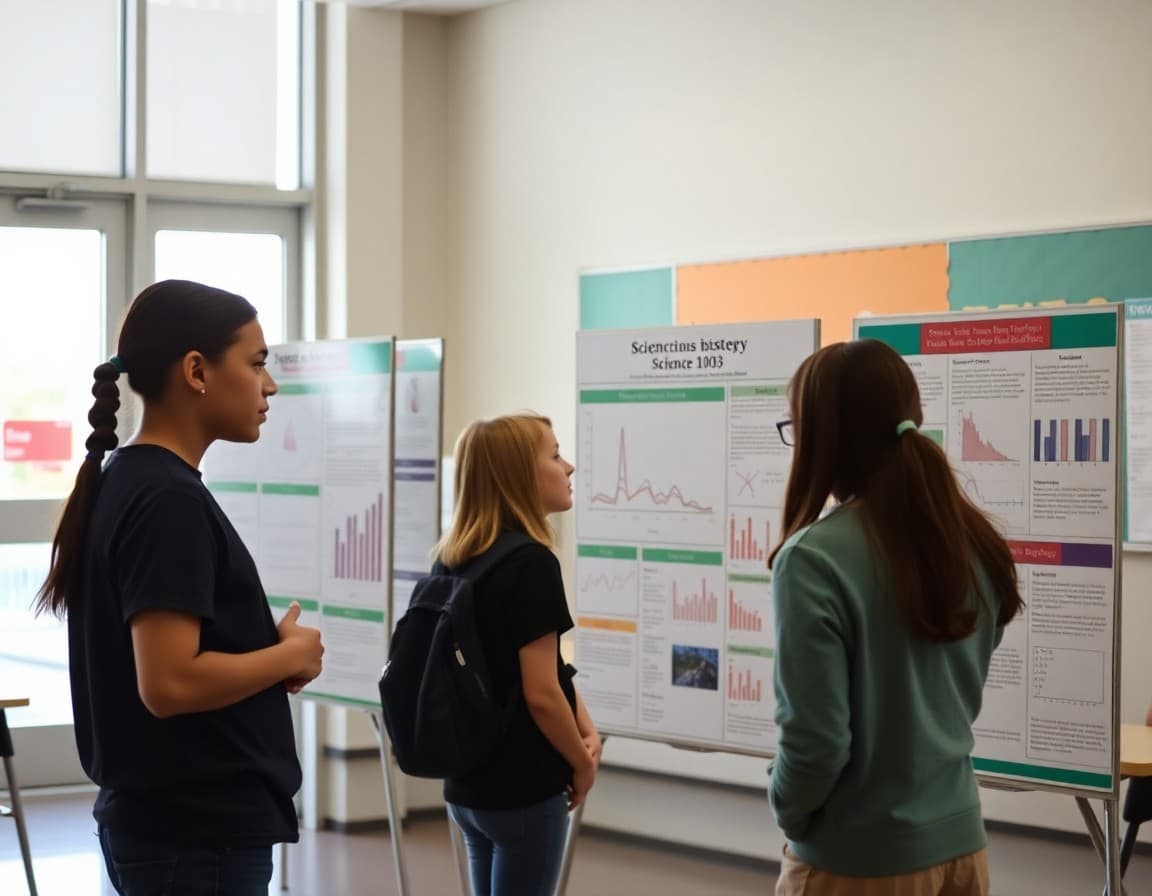
The 8th grade science fair is often the most substantial independent research project students have completed in their academic lives to this point. What they produce this year will give them a real sense of whether they are ready for high school science, and many students find the experience genuinely transformative. A clear, detailed newsletter ensures families understand what the project actually requires and how to support without overriding the student's ownership of the work.
Open With the Scope of the Project
Tell families upfront that this is not a poster project or a demonstration. This is a multi-week research investigation that requires original data, a written report, and the ability to explain and defend every aspect of the work to a panel of judges. Setting that expectation at the start prevents families from discovering it too late to support properly.
Post the Full Timeline
List every phase with specific dates: topic selection deadline, research and literature review phase, hypothesis and proposal approval, experiment and data collection window, analysis and written report deadline, display board submission, and judging day. For a fair in April, most of these phases fall between January and March. A family who has the full timeline at the start can help their child work steadily rather than in a last-minute sprint.
Describe the Written Report Requirements
Eighth grade fairs typically require a multi-section written report. Your newsletter should list the required sections: abstract, introduction and background research, hypothesis, materials and methods, results, discussion, and references. Explain what each section should contain in two to three sentences. Families who understand the written component can track their child's progress through it rather than discovering it is incomplete the night before the deadline.
Explain the Judging Criteria
Share the rubric breakdown. Most 8th grade fairs weight scientific rigor, quality of data analysis, student knowledge during the interview, display clarity, and written report quality. Tell families which category carries the most points. A student who knows that 40% of the score comes from the interview will prioritize understanding their own work, not just presenting it.
A Sample Parent Support Guide
Here is how to frame the parent's role in your newsletter:
"At the 8th grade level, appropriate support includes: driving to collect materials or use equipment, reading and giving general feedback on the written report (not rewriting it), asking your child to explain their experiment to you as if you know nothing about the topic. What is not appropriate: conducting any part of the experiment, analyzing data, writing any section of the report, or suggesting a hypothesis. Judges conduct thorough interviews. A student who cannot explain their methodology has an immediate problem."
Address Research and Source Citation
By 8th grade, students are expected to cite credible sources and distinguish between peer-reviewed research, reliable informational sources, and low-quality websites. Your newsletter can explain what counts as a credible source, how you expect citations to be formatted, and the minimum number of sources required. Families who know this can remind their child to collect source information as they research rather than reconstructing it the night before the report is due.
Mention Regional Competition Pathways
If top-scoring projects at your school fair are eligible to advance to a district or regional competition, mention this in the newsletter. Students who know the pathway exists sometimes raise the quality of their work. Families who understand the opportunity are in a position to encourage their child to pursue it rather than discovering after the fact that a pathway was available.
Cover Judging Day Logistics
Tell families when judging happens, when family viewing is available, where to go, and what the schedule looks like. If you need volunteers for setup, scoring, or crowd management, this is the right place to ask. Daystage makes it easy to embed a volunteer sign-up link directly in the newsletter so families can commit without a separate email chain.
Get one newsletter idea every week.
Free. For teachers. No spam.
Frequently asked questions
What makes 8th grade science fair the most demanding of middle school?
By 8th grade, students are expected to produce research-level work. This includes a complete written report with an abstract, a literature review that cites credible sources, a methodology section detailed enough that someone else could replicate it, quantitative data analysis, and a discussion that connects findings to existing research. Judges evaluate both the science and the student's depth of understanding during interviews.
What should an 8th grade science fair newsletter tell families?
Cover the complete timeline with deadlines for every phase, the judging rubric and how it is weighted, what distinguishes a top-scoring project from an average one, parent support boundaries, and what happens on judging day. For 8th grade, also mention any pathway to regional or state competitions if your school participates.
How do 8th grade science fair judges evaluate projects?
Judges assess scientific rigor, quality of data and analysis, student knowledge during the interview, clarity of the display board, and originality of the research question. A project that asks a genuinely interesting question and answers it rigorously scores better than an impressive-looking project with thin data. Judges expect students to explain every decision they made in their methodology.
Can 8th graders get help from mentors outside of school on their science fair projects?
Many schools allow outside mentors, particularly for advanced projects involving equipment or expertise not available at school. If mentors are permitted, your newsletter should clarify the rules: mentors may advise, but all data collection, analysis, and writing must be done by the student. Mention that this must be disclosed on the project paperwork.
What tool makes 8th grade science fair communication with families easier?
Daystage works well for complex project communications because you can organize the timeline, rubric, volunteer needs, and judging day logistics all in one newsletter that stays accessible throughout the project. Families who need to revisit the requirements do not have to dig through old emails.

Adi Ackerman
Author
Adi Ackerman is a former classroom teacher and curriculum writer with 8 years in K-8 schools. She writes about school communication, parent engagement, and what actually works in real classrooms.
More for Middle School
Ready to send your first newsletter?
3 newsletters free. No credit card. First one ready in under 5 minutes.
Get started free