
8th Grade ELL Support Newsletter: Communicating With English Language Learner Families
Communicating with English Language Learner families is one of the most important things a middle school can do, and one of the places where communication most often falls short. Newsletters that land in the inboxes of families who cannot fully read them are not communication. They are checkbox compliance.
An 8th grade ELL support newsletter that actually works takes a bit more effort to produce, but it builds the kind of family trust that pays off throughout the year and especially during the critical transition to high school.
Start With Accessibility
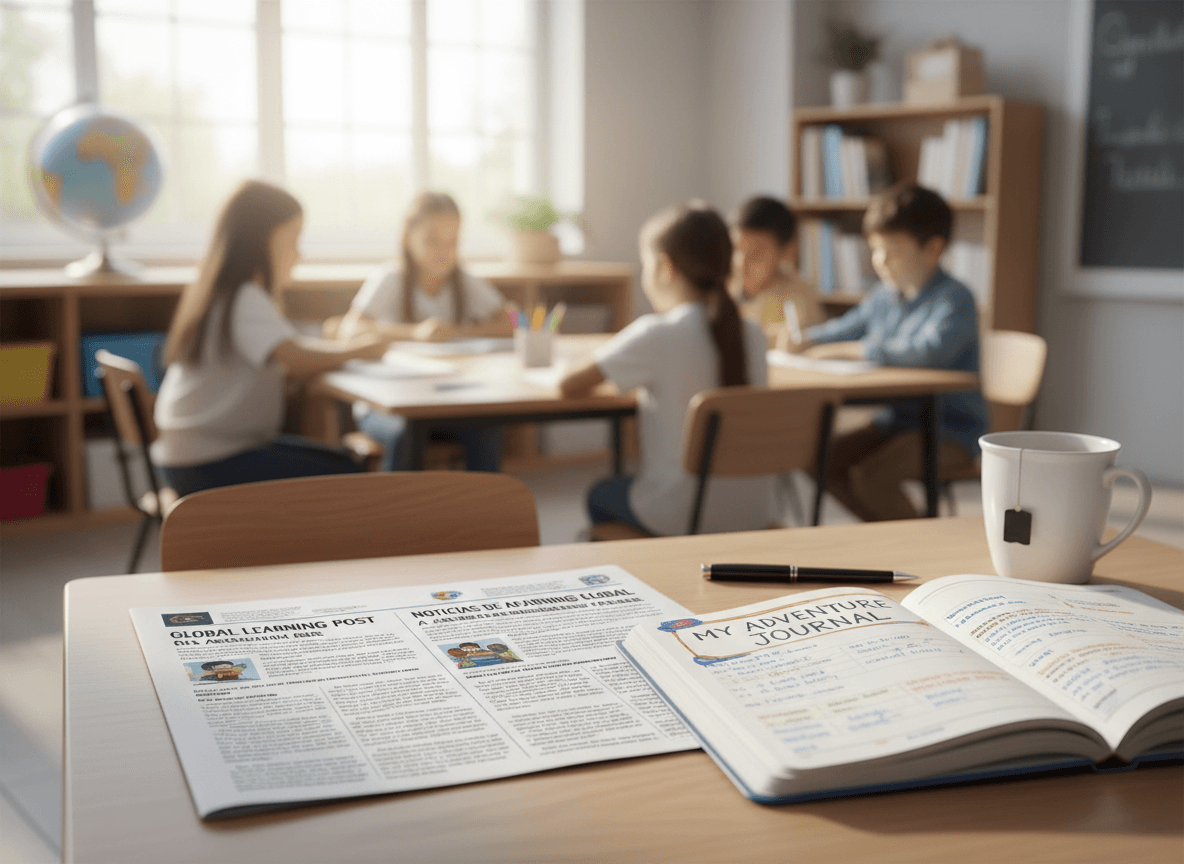
Before you write a word of content, decide how you will make the newsletter accessible to families with limited English proficiency. At minimum, this means a key summary paragraph in the family's home language. If you have bilingual support staff, a fully translated version is ideal.
Many districts have translation services available for exactly this purpose. If your district does not, a bilingual staff member reviewing a machine translation takes less time than you might think and produces a result far more trustworthy than sending an English-only document to families who struggle to read it.
Plain English matters too, even in the English portions. Short sentences, common words, and clear structure make newsletters more accessible to families at every level of English proficiency.
Explain the Support Services Clearly
Many ELL families do not fully understand what services their student receives, how those services are decided, or what the goals are. A newsletter that explains this clearly builds confidence and reduces the sense that decisions are being made about their child without their understanding.
Describe the service model in concrete terms. How many times per week does the student receive ELL support? Is it pull-out, push-in, or sheltered instruction? Who is the ELL teacher and how can the family reach them? What is the general focus of the support work right now?
Families who understand the structure of their student's support are more likely to reinforce it at home and more likely to reach out when they have concerns rather than waiting until a problem escalates.
Proficiency Progress in Human Terms
WIDA levels, ELPAC scores, and similar proficiency metrics are useful for teachers and administrators, but they communicate very little to most families. A newsletter is not the place for detailed assessment data, but it is a good place to describe progress in plain language.
Describe what your student is working toward in terms families can visualize. Academic writing, content-area vocabulary, reading complex informational texts, participating in class discussions. Give families a picture of what growth looks like at the 8th grade level and where their student is in that picture.
High School Transition for ELL Students
The high school transition looks different for ELL students than it does for their general education peers, and 8th grade families deserve to understand how. A dedicated section in at least one newsletter this year should address:
Whether language support continues. ELL services transfer to high school for students who still qualify. Explain the reclassification criteria and where your student currently stands in relation to them.
What reclassification means. Many families hear "reclassified" and assume their student will no longer receive support. Explain the monitoring period that follows reclassification and the process for requesting services if concerns arise.
High school course placement. ELL students sometimes face placement in lower-level courses based on English proficiency rather than academic ability. Families have the right to advocate for appropriate placement, and they can only do that if they understand the process.
Self-advocacy skills. In high school, students see many more teachers each day, and individual support looks different. Students who can ask for help, explain their needs, and seek out resources independently are better positioned. Describe what you are doing to build those skills in 8th grade and how families can reinforce them at home.
Supporting Language Development at Home
Many ELL families ask whether they should be speaking English at home to help their student. The research is clear: strong home language development supports English acquisition rather than competing with it. Say so directly in your newsletter.
Give families specific ways to support their student in the home language: talking through what they learned at school, reading together, discussing news or current events, supporting homework by asking questions rather than translating everything. That kind of engagement benefits both language development and content learning.
Cultural Asset Framing
A newsletter that talks only about what ELL students are working toward can inadvertently communicate a deficit view: that the student is behind and needs fixing. Counter that by acknowledging the assets multilingual students bring.
Bilingualism and multilingualism are significant cognitive and professional advantages. Students who maintain and develop their home language alongside English are building skills that will serve them well beyond 8th grade. That framing is accurate and it changes how families, and students, see the work ahead.
Making Contact Easy
Close every ELL newsletter with clear contact information and an explicit invitation to reach out. If you have a bilingual support person who can facilitate communication with families who are not comfortable in English, include that contact as well.
Families who know how to reach someone who speaks their language are far more likely to stay engaged than families who avoid contact because they are uncertain whether the communication will be accessible.
Get one newsletter idea every week.
Free. For teachers. No spam.
Frequently asked questions
Should an ELL newsletter be translated into students' home languages?
Yes, whenever possible. Legal requirements under Title III and many state statutes require that schools communicate meaningfully with families who have limited English proficiency. A translated newsletter, or at minimum a translated summary, satisfies both the legal requirement and the practical goal of actually reaching families. Most school districts have translation resources available; if yours does not, tools like Google Translate can produce an accessible version that a bilingual staff member can review for accuracy.
What should an 8th grade ELL teacher include in a newsletter that a general classroom teacher would not?
Explain the specific support services your student receives, the proficiency level system your district uses and where the student currently stands, what reclassification looks like and when it might apply, and the specific transition concerns for ELL students moving to high school, including how language support services change in 9th grade.
How do I communicate about English proficiency levels without making families feel like their student is being labeled?
Focus on progress and trajectory rather than the level number or label. Instead of 'your child is at level 2,' try 'your child has made significant progress in academic vocabulary and is building the independent reading skills that will carry them into high school.' Levels are administrative categories. What families want to know is whether their child is moving forward and what you are doing to support that.
What should the high school transition section of an ELL newsletter cover?
Cover what happens to language support services in high school, whether the student's ELL designation transfers, what the reclassification criteria are, how families can advocate for continued support if they believe it is still needed, and what the RBIS or ELPAC monitoring period looks like for recently reclassified students. Many ELL families are not aware that their student may move off a caseload and that there is a follow-up monitoring period required by law.
What tool works for sending ELL newsletters to multilingual 8th grade families?
Daystage lets you write and format your newsletter cleanly, and you can include translated content as a second section or a separate linked document. Since Daystage sends as email, families can use their own browser's translation tools on the web version as well. The key advantage for ELL communication is that clean formatting and clear structure make auto-translation more accurate than a text-heavy, poorly formatted document.

Adi Ackerman
Author
Adi Ackerman is a former classroom teacher and curriculum writer with 8 years in K-8 schools. She writes about school communication, parent engagement, and what actually works in real classrooms.
More for Middle School
8th Grade Special Education Newsletter: Communicating with Families During the Transition Year
Middle School · 7 min read
8th Grade Classroom Newsletter Ideas: What to Send Parents of 8th Graders All Year
Middle School · 8 min read
8th Grade Curriculum Overview Newsletter: What Your Child Will Learn in Their Final Middle School Year
Middle School · 7 min read
Ready to send your first newsletter?
3 newsletters free. No credit card. First one ready in under 5 minutes.
Get started free