
Earth Science Middle School Newsletter: Learning Updates for Parents

Earth science is the science that surrounds students every time they step outside. Weather, rocks, the night sky, the water they drink. Few subjects have more real-world connection points available for family learning, which makes a well-timed earth science newsletter unusually useful. Families who know what their child is studying can find that unit in the world around them, and that kind of spontaneous real-world encounter is some of the most powerful science learning available.
Name the Current Unit
Your newsletter should open with the specific unit students are working on and what it covers. If students are studying plate tectonics, tell families: we are learning why earthquakes happen, how mountains form, and why the continents look the way they do. That level of specificity is far more useful than "we are working on earth science." It also gives families the vocabulary to have a real conversation with their child.
Describe the Lab Work
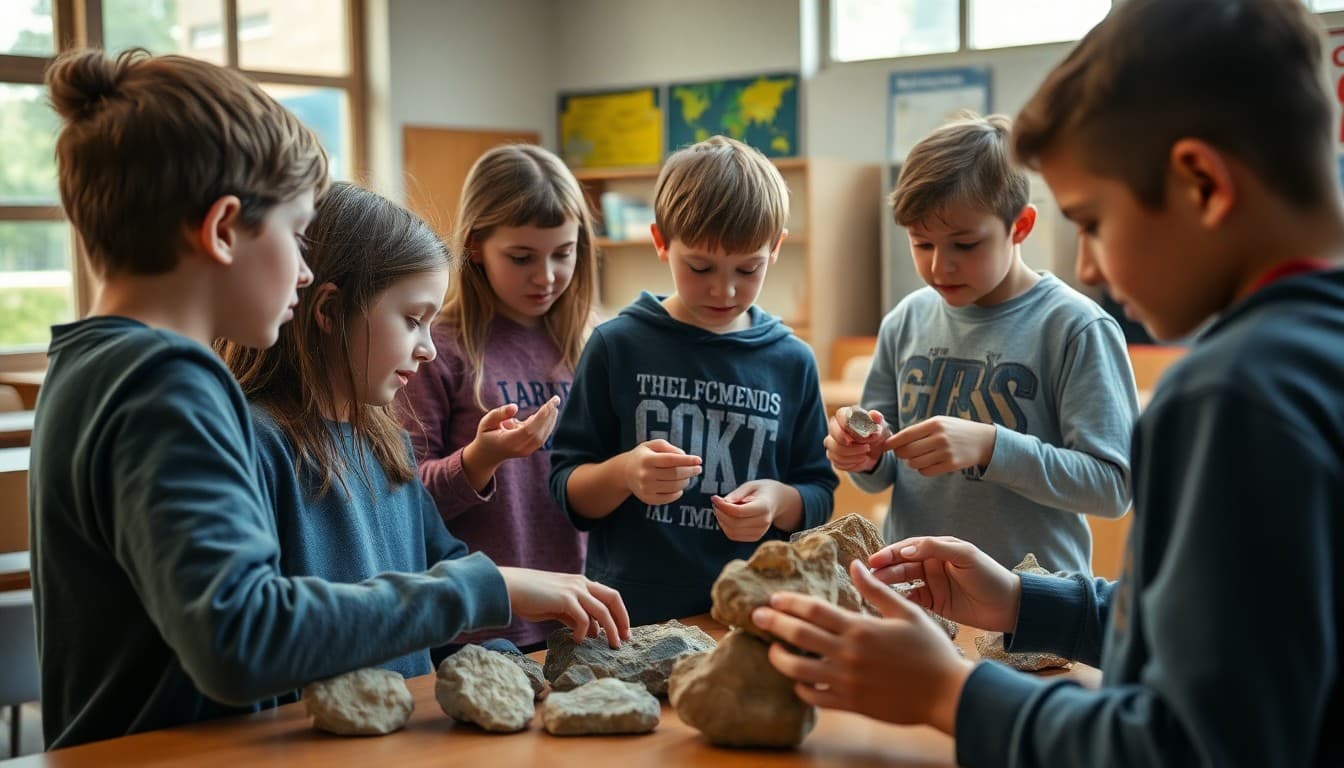
Middle school science labs are often memorable experiences that students do not fully explain at home. When you describe the lab in the newsletter, families hear about it from both directions. "This week students simulated tectonic plate movement using crackers and frosting to model how divergent and convergent plates create different landforms." That description makes the learning visible and often prompts a real conversation at dinner.
Offer a Real-World Extension
Every earth science unit has a direct real-world connection. Here is how you might frame one:
"Extension idea this week: before bed, go outside and look at the moon. Note whether you can see it, what shape it appears to be, and where it is in the sky. Do this three nights in a row and compare. Ask your child to explain the pattern you are seeing using what they learned about the Earth-Moon-Sun system this week. You can also use a free moon phase app to track the current phase if visibility is limited."
Explain Key Vocabulary
Earth science introduces high volumes of specialized vocabulary. Your newsletter can briefly define the three to five most important terms from the current unit. When a student hears their parent use "subduction zone" correctly at dinner, it is memorable. When a parent does not know what the word means, the dinner conversation goes nowhere. A short vocabulary section in the newsletter solves this.
Address Common Misconceptions
Earth science has persistent misconceptions that do not go away without direct attention. Seasons are caused by Earth's distance from the sun (wrong: they are caused by axial tilt). The Great Wall of China is visible from space (wrong: it is far too narrow). Earthquakes are becoming more common (actually, detection technology has improved). Your newsletter can name the misconception being addressed this unit and explain the accurate concept. Families who have the correct information can reinforce it at home.
Connect to Current Events
Earth science connects to the news regularly: a volcanic eruption, an unusual weather event, a new climate report, or an earthquake in a region students have been studying. When you mention current events in your newsletter and connect them to the classroom unit, families see science as alive rather than abstract. "You may have seen coverage of the recent Icelandic volcanic activity. That is directly connected to the divergent plate boundary concept we are studying this week."
Preview Upcoming Assessments
Tell families when assessments are coming and what format they will take. A lab practical tests different skills than a written test. A model-building project assesses spatial understanding differently than a multiple-choice quiz. Families who know what is coming can help their child prepare in the right direction.
End With Wonder
Earth science, more than most subjects, lends itself to the kind of closing that reminds families why any of this matters. Close your newsletter with a single question that captures the intellectual excitement of what students are discovering: how did the dinosaurs go extinct, and why are we confident about it? What will the continents look like in 250 million years? What would happen to Earth if the moon disappeared tomorrow? Daystage makes it easy to end your newsletter with a question that sends families to the dinner table curious rather than just informed.
Get one newsletter idea every week.
Free. For teachers. No spam.
Frequently asked questions
What topics are typically covered in middle school earth science?
Middle school earth science covers plate tectonics, the rock cycle, weathering and erosion, weather and climate systems, the water cycle, astronomy including Earth-Moon-Sun relationships, and often an introduction to environmental science. The progression is from Earth's interior outward to the atmosphere and then to space.
How can families extend earth science learning outside of school?
Earth science is unusually accessible through everyday observation. Watching weather patterns, identifying rock types, noticing erosion on a hiking trail, or tracking moon phases over a month all reinforce classroom learning. A family newsletter that names what is being studied this week makes those connections explicit.
What earth science concepts do middle schoolers typically struggle with?
Deep time, the geological scale of millions and billions of years, is consistently difficult for students to grasp intuitively. Plate tectonics as an explanation for earthquakes and volcanic activity is often understood procedurally before it is understood conceptually. Weather prediction versus climate is another frequent confusion. Naming these in your newsletter helps families ask better questions.
How does earth science connect to other middle school subjects?
Earth science connects directly to geography in social studies (landform and climate regions), physics (wave behavior in seismic activity), chemistry (mineral and rock composition), and math (calculating rates of erosion or tectonic movement). A newsletter that draws these connections helps students see their learning as connected rather than siloed.
What tool can I use to send earth science newsletter updates to middle school families?
Daystage works well for science newsletters because you can include unit summaries, lab updates, real-world extension suggestions, and upcoming assessment information in one organized newsletter that families can reference throughout the unit.

Adi Ackerman
Author
Adi Ackerman is a former classroom teacher and curriculum writer with 8 years in K-8 schools. She writes about school communication, parent engagement, and what actually works in real classrooms.
More for Middle School
Ready to send your first newsletter?
3 newsletters free. No credit card. First one ready in under 5 minutes.
Get started free