

Civics Newsletter Examples That Work: Middle School Guide
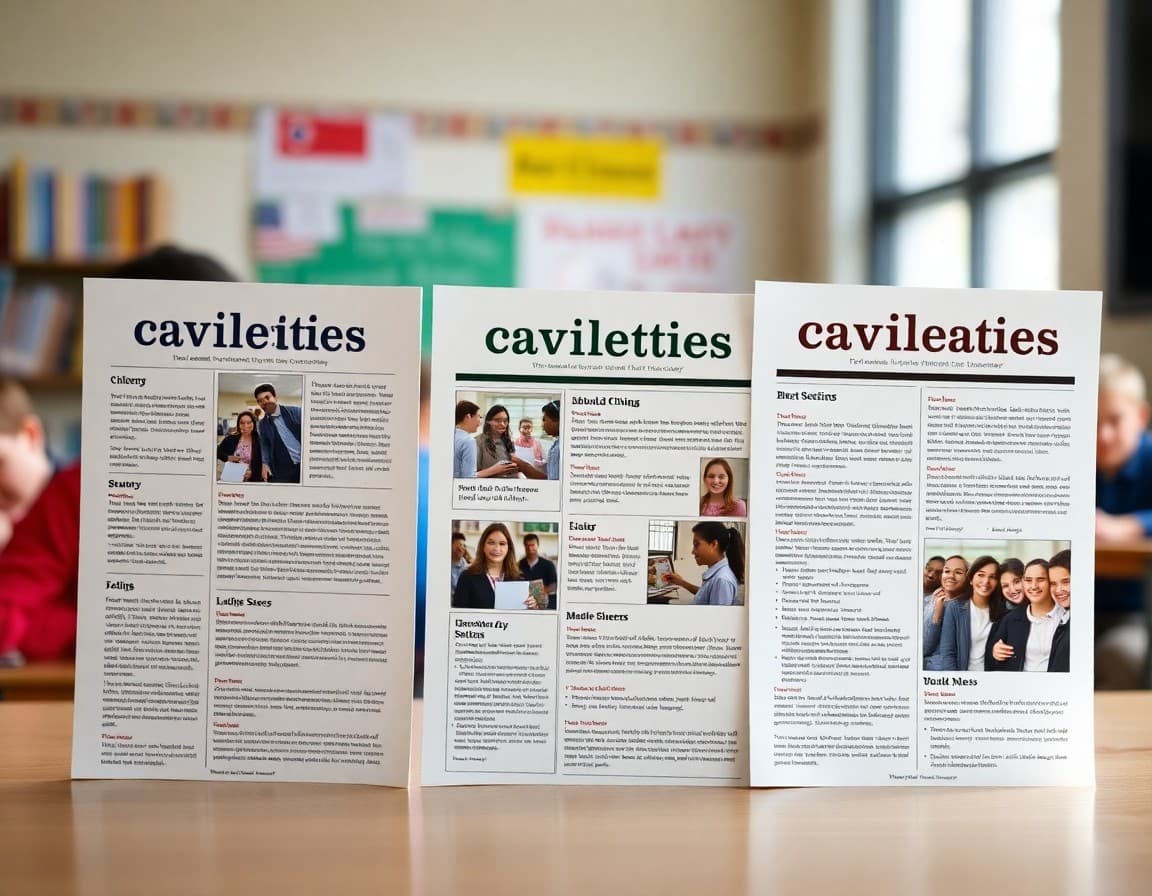
The best middle school civics newsletters connect what students are learning in class to what they can observe in the world around them. These examples show what that connection looks like across three different newsletter types, with enough detail to adapt for your own units.
Example 1: Unit Kickoff (The Three Branches)
"We're starting our Three Branches of Government unit this week. Students will learn what each branch does, how they're structured, and why the founders designed the system to distribute power this way.
Key concepts: legislative branch (Congress makes laws), executive branch (president enforces laws), judicial branch (courts interpret laws), separation of powers, checks and balances.
At home: ask your student to name the three branches and what each one does. Then ask: 'Can you think of one example from the news recently where two branches interacted?' Any example works. Thinking of one is the exercise."
Example 2: Test Prep (Constitutional Rights)
"The Civics Assessment on [DATE] covers Constitutional Rights, specifically the Bill of Rights and key amendments. Format: 20 multiple choice, 3 short-answer, and one document analysis question. Students may use a vocabulary sheet.
Focus areas: First Amendment rights (and their limits), due process, equal protection, the amendment process. Best preparation: ask your student to explain one amendment to you as if you know nothing about it. If they can do that clearly for three amendments, they're ready for the test.
Vocabulary to review: amendment, ratification, enumerated rights, due process, equal protection."
Example 3: Parent Home Support (Civic Participation)
"This week we're studying civic participation: how citizens influence government decisions through voting, advocacy, and civic engagement.
At home: ask your student to name three ways a citizen can influence a law or government decision. (Examples: voting, contacting a representative, peaceful protest, organizing a community group.) Then ask: 'Which of these do you think is most powerful and why?' That conversation practices the exact analysis we're doing in class.
If your family votes, consider telling your student about it the next time an election comes up. Knowing that their family participates in civic life makes the concept real in a way no textbook can."
What These Examples Have in Common
Each example uses specific vocabulary, names a concrete activity, and connects to a relevant current event or family experience. None require political positions from parents. Each one can be read in two minutes and acted on in five to ten. That combination is what makes them consistently useful across the parent population.
Adapting for Your Own Curriculum
Take the structure from these examples and fill in your own unit-specific content. The vocabulary list, the home activity prompts, the current events connection, and the test format section all follow the same pattern regardless of which civics unit you're covering. Once the structure is established, each newsletter takes about 10 minutes to write.
Get one newsletter idea every week.
Free. For teachers. No spam.
Frequently asked questions
What makes a middle school civics newsletter effective?
Specificity and current relevance. A newsletter that names the exact concepts being studied, connects them to something happening in the news, and gives parents process-focused conversation prompts is far more useful than a general description of the curriculum. Middle school parents respond to newsletters that treat them as engaged partners, not just notification recipients.
How do I handle the current events component of civics newsletters without appearing partisan?
Describe current events structurally rather than editorially. 'A recent Supreme Court case is in the news this week, which connects to our judicial review unit' is a structural observation. 'The court made a controversial ruling this week' introduces an editorial judgment. The first invites civic analysis; the second invites opinion. Keep all current event references in the first category.
How do civics newsletters differ from other social studies subject newsletters?
Civics newsletters have a unique advantage: the subject is directly connected to events that are in the news all year. Every election cycle, every congressional hearing, every court decision is potential curriculum material. Newsletters that take advantage of this connection are more engaging than those that treat civics as purely abstract content. The subject comes alive when it's connected to real events your students can observe.
Can I use the same newsletter examples for different grade levels in middle school?
The structure transfers across 6th, 7th, and 8th grade, but the complexity of the examples and the vocabulary level should adjust. A 6th grade newsletter on local government uses simpler vocabulary and more concrete examples than an 8th grade newsletter on constitutional law. Keep the structure and adjust the content depth to match where your students are in the curriculum.
How does Daystage handle civics newsletters that include links to news resources?
Daystage supports links in newsletters, so you can include a link to a news story, a government website, or an age-appropriate current events source alongside your activity suggestions. This is particularly useful for civics, where pointing parents directly to a relevant news story is more efficient than describing it in the newsletter text.

Adi Ackerman
Author
Adi Ackerman is a former classroom teacher and curriculum writer with 8 years in K-8 schools. She writes about school communication, parent engagement, and what actually works in real classrooms.
More for Middle School
Alaska Middle School Newsletter Guide: What to Include for Families
Middle School · 8 min read
Middle School Back-to-School Newsletter: What Families Need to Know Before Day One
Middle School · 7 min read
Middle School Counselor Newsletter: What to Include and How to Reach Families
Middle School · 7 min read
Ready to send your first newsletter?
3 newsletters free. No credit card. First one ready in under 5 minutes.
Get started free