
Math Newsletter for a Place Value Unit: Five Things to Include
Place value is the foundation. Every later unit, addition with regrouping, subtraction, multiplication, division, decimals, all of it rests on whether the kid understands that the 3 in 34 means 3 tens. The math newsletter for a place value unit has a job that feels small but matters more than any other unit's note. Here are the five things to include every time.
1. The one-sentence definition
Open every place value newsletter with the same sentence: "In the number 34, the 3 is not really 3, it is 3 tens, which is 30. The 4 is 4 ones, which is 4. Together, that is 34." Put it in the first paragraph in big text. Parents who internalize this sentence can help with the whole unit. Parents who skip it will get confused by week two.
2. The trade-before-carry explanation
Week one or two, drop this paragraph in. "Your child is learning to trade ten ones for one ten. This is the picture behind 'carrying.' If your kid has 14 ones, they trade 10 of them for a ten and end up with 1 ten and 4 ones. That is what 'carry the 1' actually means. We are building the picture first so the rule makes sense later." Parents read this once and stop teaching the shortcut too early.
3. The pennies-and-dimes home activity
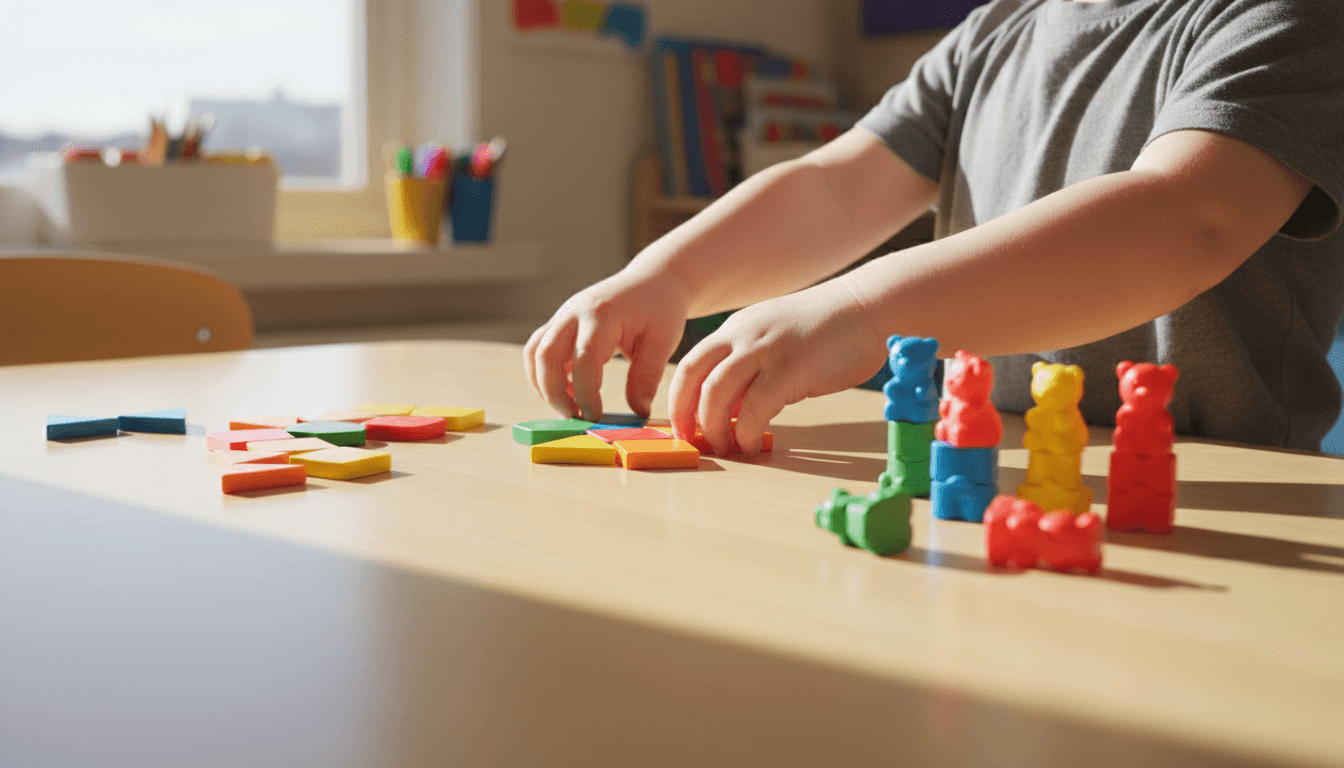
Every place value newsletter should suggest one home stand-in. "Base-ten blocks live at school. At home, pennies and dimes work the same way. Give your child 23 pennies and ask them to trade ten pennies for a dime. They should end up with 2 dimes and 3 pennies. That is the picture of 23. Or use Cheerios and rubber bands: ten Cheerios bundled is one 'ten'." Two minutes, no supplies beyond what is in the kitchen.
4. The worked example with real numbers
Pick one and run it. "This week your child solved problems like 28 plus 5. They started with 28, which is 2 tens and 8 ones. They added 5 more ones, getting 13 ones. They traded 10 of those ones for one ten, ending with 3 tens and 3 ones, which is 33. That whole story is what 'carry the 1' compresses into a shortcut." Parents read this and the homework page makes sense.
5. The heads-up about the quiz
Close with the date. "Quiz on the 10th covering two-digit place value and adding within 100 with regrouping. Review page came home Monday." Done. The heads-up is the date, not the study load.
What to leave out
Three things kill a place value newsletter. Standards codes. Three-digit numbers in a first grade context. The word 'regrouping' without an explanation. Parents who see 'regrouping' assume it means something complicated. It means trading. Use 'trading' in the newsletter and save 'regrouping' for the parent who asks.
How Daystage helps with the place value unit newsletter
Daystage holds the place value shell across the three to four weeks of the unit. The one-sentence definition lives in week one. The trade-before-carry paragraph stays through the regrouping weeks. The pennies-and-dimes activity recycles. Every Sunday you fill in the example and the quiz date and hit send. The first family on your roster and the fortieth get the same clean note, formatted for a phone screen, and the foundation of the year's math comes home in a form parents can actually use.
Get one newsletter idea every week.
Free. For teachers. No spam.
Frequently asked questions
Why do kids learn to trade before they learn to carry?
Because trading shows them what carrying actually is. When a kid trades ten ones for a single ten, they see why the 1 moves over a column when they later 'carry'. Carrying without the trading concept is a memorized rule. Trading first means the rule comes with a picture. Tell parents this in week one of the unit and they stop trying to teach the shortcut early.
What is the easiest home stand-in for base-ten blocks?
Pennies and dimes. Ten pennies trade for one dime, just like ten ones trade for one ten. If you do not have coins, use Cheerios and rubber bands (ten Cheerios in a rubber band is one 'ten'). Anything that comes in groups of ten works. The newsletter should name two or three options so parents have what is on hand.
How do I explain place value in one sentence?
Try this: 'In the number 34, the 3 is not really 3, it is 3 tens, which is 30. The 4 is 4 ones, which is 4. Together, that is 34.' That sentence in week one of the unit, in big text, is the whole foundation. Parents who get this one sentence can support the rest of the unit without help.
Should I include three-digit numbers in a first grade place value newsletter?
Only if it is on the homework. Most first grade place value is two-digit. Third grade is where hundreds get real attention. Stay in the grade level. A parent who reads about hundreds in a first grade newsletter starts pushing their kid into work they have not had yet, which creates problems later.
How do I send the place value newsletter in fifteen minutes?
Use a saved template. Daystage holds the shell across the unit, so the trading explainer, the pennies-and-dimes activity, and the heads-up are already in place. You fill in the example for the week and hit send. Every family on your roster gets the same clean note. Fifteen minutes from start to inbox.

Adi Ackerman
Author
Adi Ackerman is a former classroom teacher and curriculum writer with 8 years in K-8 schools. She writes about school communication, parent engagement, and what actually works in real classrooms.
More for Math Newsletter
Ready to send your first newsletter?
3 newsletters free. No credit card. First one ready in under 5 minutes.
Get started free