
Kindergarten Math Newsletter: A Template You Can Send Home

Kindergarten parents arrive with two opposite worries. The first is that their kid is behind. The second is, "is this really math?" A kindergarten math newsletter has to handle both. Yes, the math is real. No, your kid is not behind. Here is the template that does the work.
Open with what counting actually is
Start with one sentence parents can hold. "Counting is the foundation of everything else in math. Your kindergartener is learning to count to 20, recognize numbers without counting, and understand that the last number they say is the total." That is the whole intro. Parents now know counting is not a warm-up, it is the unit.
Name subitizing in plain English
Use the word and translate it immediately. "We use the word subitizing in class. It means recognizing how many are in a small group without counting. When your child sees three dots on a dice and says three without counting, that is subitizing. It is the bridge from counting to real number sense." One paragraph and parents have a new word and a new home activity (dice games).
Tell parents this is real math
Address the worry head-on. "Parents sometimes ask whether counting counts as math. Yes, and it is the hardest math your child will do this year. Number sense (knowing what numbers mean, not just saying them) is what makes second grade addition click two years from now. The work happening right now is the foundation for every math year that follows." That paragraph is the one parents quote at conferences.
Show one classroom moment, in motion
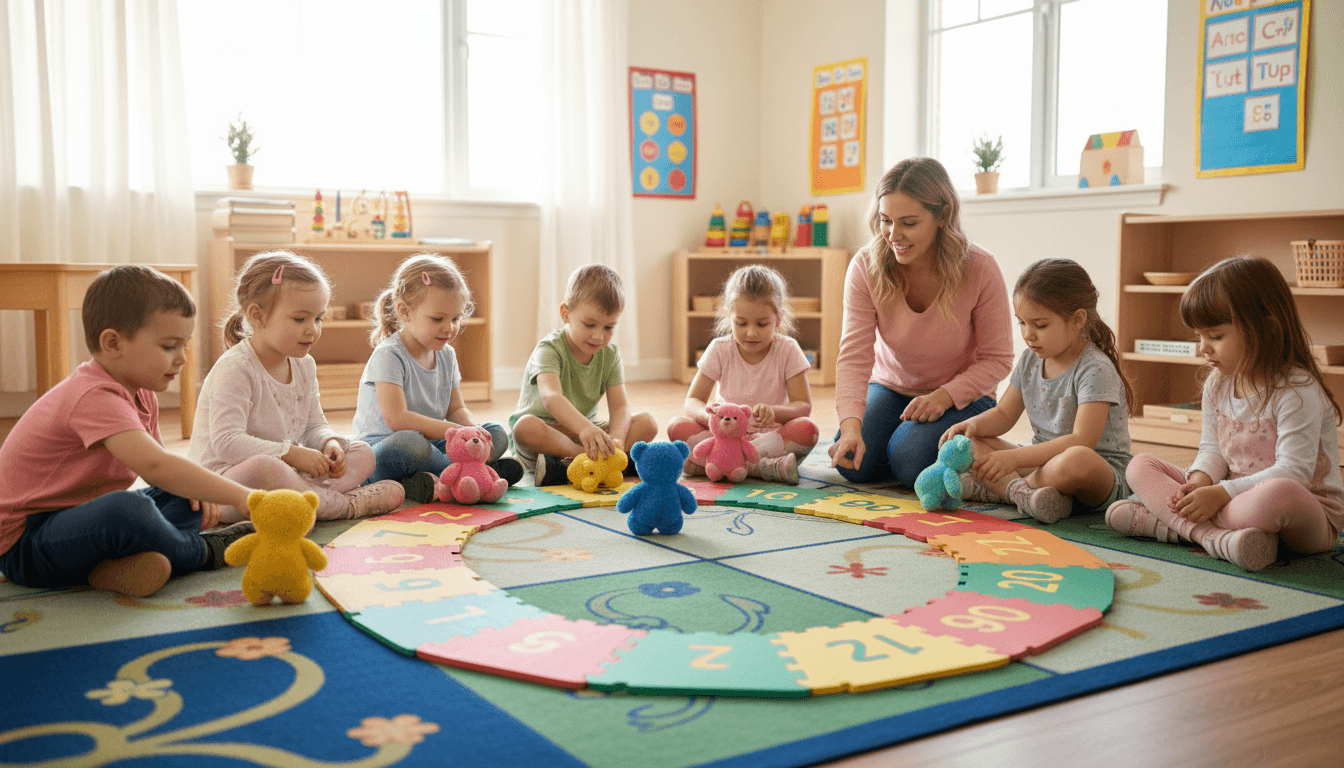
Give a real picture. "This week your child used counting bears to make groups of five. They lined up five bears, said five, added one more, and said six. They are building the idea that each number is one more than the last." Parents now have a movie of their kid doing real math.
Give one home activity, snack-based
Pick the easiest thing. "Two minutes of math at breakfast. 'How many cheerios are on your plate?' Then, 'If I take two away, how many are left?' That is counting and subtraction in plain English, with no worksheet. Three days a week of that beats anything you can print." Parents read this and start running it that morning.
Heads-up about the next two weeks
Close with one heads-up line. "Over the next two weeks we are moving from counting to 20 toward counting to 30, and starting to write numerals more carefully. Watch for messy fives and threes on the homework. That is normal." Parents now know what is coming and what to ignore on the homework page.
How Daystage helps with the kindergarten math newsletter
Daystage holds the template across the whole kindergarten year so each biweekly send is a swap, not a rewrite. The email reads cleanly on a phone, lands in every family inbox, and shows you who is opening it. That is the only way a kindergarten math newsletter survives a 22-kid class, a district observation, and a sick day in the same week.
Get one newsletter idea every week.
Free. For teachers. No spam.
Frequently asked questions
Parents keep asking if counting is really math. How do I answer?
Yes, and loudly. Counting is the foundation everything else sits on. A kid who counts confidently to 20, recognizes numbers without counting (subitizing), and understands that the last number you say is the total, is doing real math. Tell parents this in the newsletter. Put it in week one. Parents who get this stop apologizing for their kid being in kindergarten and start engaging with the math.
What is subitizing and why does the newsletter need to name it?
Subitizing is recognizing how many are in a small group without counting. Show three dots on a dice, the kid sees 'three' without counting. It is the bridge from counting to number sense. Parents have no word for it because they learned it without knowing it. Name it in the newsletter and parents start playing dice games at home as math practice instead of just family time.
What home activity works for kindergarten math?
Counting snacks at the table. 'How many cheerios are on your plate?' Then, 'If I take two away, how many are left?' That is two minutes of math during breakfast. Three days a week of that beats any worksheet. The kid is doing addition and subtraction without ever seeing a plus sign. Tell parents this and they exhale.
How long should a kindergarten math newsletter be?
Two short paragraphs and one home activity. If it does not fit on a phone screen, it is too long. Kindergarten parents are reading on the way to the car at pickup. The shorter, the more likely it gets read.
How often should I send a kindergarten math newsletter?
Every two weeks works better than weekly. Kindergarten math units are short and the development is gradual, so a weekly newsletter ends up repeating. Biweekly gives you a real shift to write about and parents are more likely to read it. Daystage holds the template so each biweekly send is a fifteen-minute swap, not a rewrite.

Adi Ackerman
Author
Adi Ackerman is a former classroom teacher and curriculum writer with 8 years in K-8 schools. She writes about school communication, parent engagement, and what actually works in real classrooms.
More for Math Newsletter
Ready to send your first newsletter?
3 newsletters free. No credit card. First one ready in under 5 minutes.
Get started free