
First Grade Math Newsletter: A Template With Examples
First grade is where most parents first see math that looks different from how they learned it. Number bonds. Ten frames. Kids decomposing 8 into 5 plus 3 before adding. A first grade math newsletter has to translate all of it in plain English, give one worked example, and offer one home activity that takes five minutes. Here is the template that works.
Open with what kids are doing this week
Start with the picture. "This week your first grader is adding within 20 using ten frames and number bonds. We are also practicing the strategy of making a ten, where 8 plus 7 becomes 10 plus 5 before they add." That sentence puts the homework folder in context before the parent opens it.
Name the number bond and translate it
Use the word and explain it in one sentence. "A number bond is a picture of a number split into two parts. An 8 in the middle with a 5 and a 3 on the sides. It shows your child that 8 is made of 5 and 3, which is the foundation for adding and subtracting." Parents now have a name for the diagrams on every homework page.
Explain the ten frame
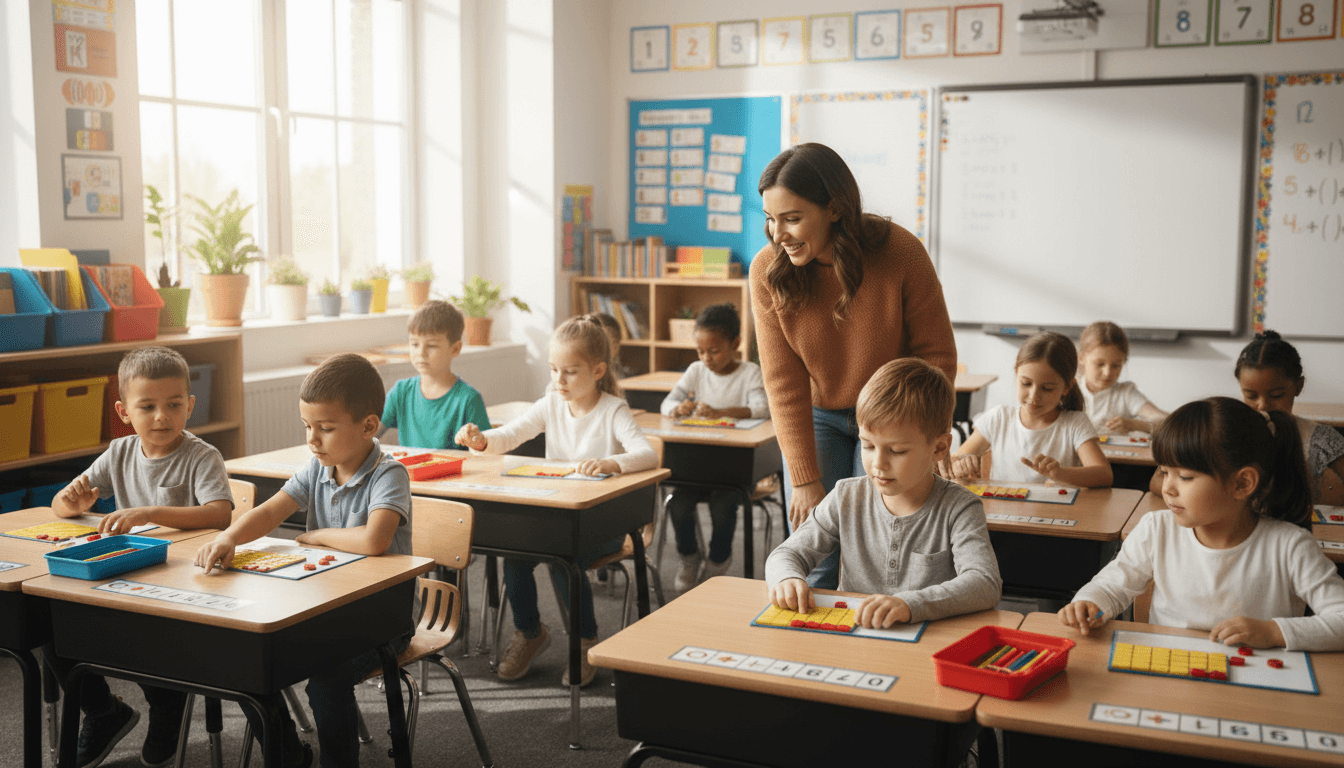
Same move. "A ten frame is a grid of ten boxes (two rows of five). Your child fills it with counters to show numbers. If they fill 8 boxes, the 2 empty boxes show the missing number to ten. We use ten frames because the brain sees groups of five and ten faster than it counts ones." That paragraph explains the entire homework page.
Show one worked example with real numbers
Walk through one. "Tonight your child will see a problem like 8 plus 7. They will break the 7 into 2 and 5, add the 2 to the 8 to make 10, then add the 5 to get 15. It looks like extra steps. It is actually faster than counting up by ones, and it builds the foundation for mental math next year." That single example ends the home homework arguments about the strategy.
Why decomposing numbers matters
This is the section that prevents the most parent confusion. "If you watched your child break 8 into 5 plus 3 and wondered why, this is why. Once kids see that every number can be broken into smaller numbers, addition and subtraction become flexible. They are not memorizing facts, they are seeing relationships. That flexibility is what makes second grade math click." One paragraph reframes the whole homework folder.
Give one home activity: card war
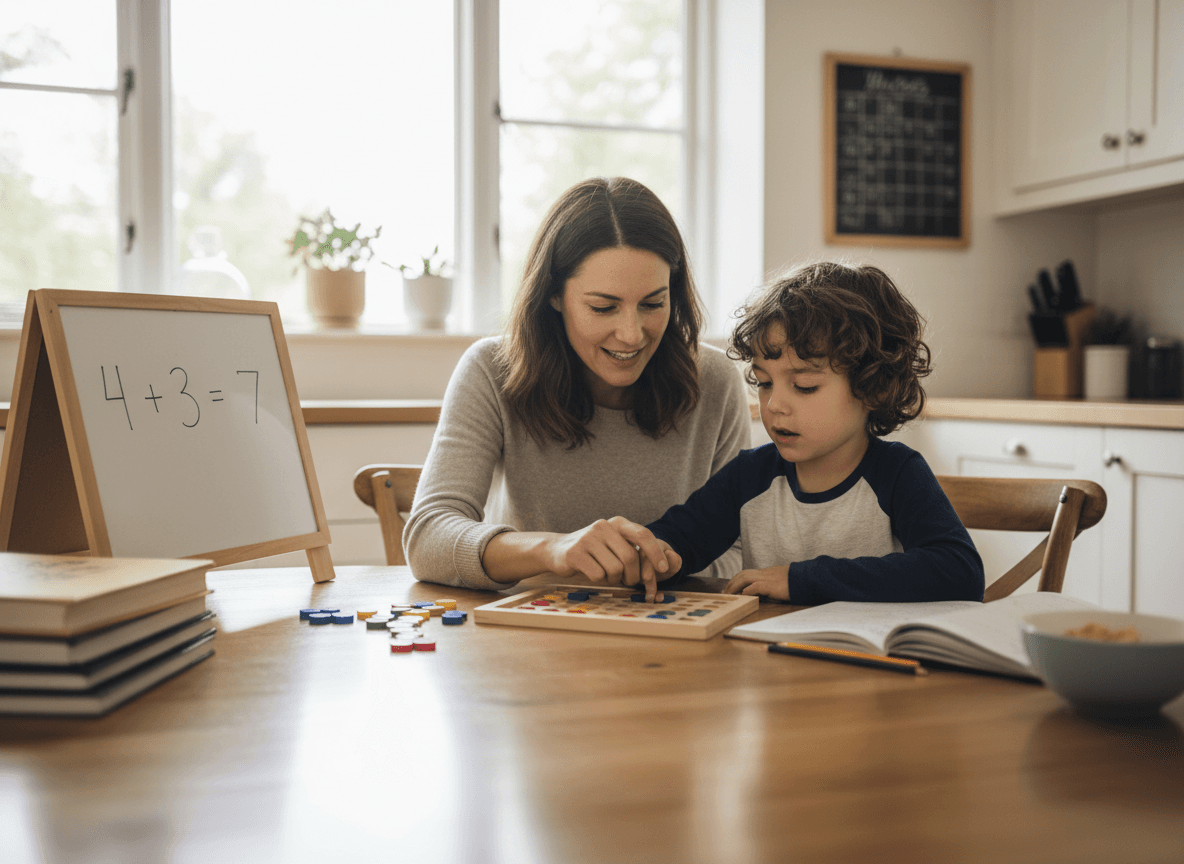
Make the activity easy. "Play card war at home. Each player flips two cards. Fastest to add the two cards wins both pairs. Aces are one, face cards are ten. Five minutes after dinner, three nights a week. Your child gets more math fact practice than any flashcard pack." That is the activity for the whole biweekly newsletter.
How Daystage helps with the first grade math newsletter
Daystage holds the template across the year so each biweekly send is a swap, not a rewrite. The email reads cleanly on a phone, lands in every family inbox the same way, and shows you who opened it. That is how a biweekly first grade newsletter stays a fifteen-minute Sunday job from September through May.
Get one newsletter idea every week.
Free. For teachers. No spam.
Frequently asked questions
Why does my child break 8 into 5 plus 3 before adding? It looks like extra work.
Because breaking 8 into 5 plus 3 makes the next step easier. If the problem is 8 plus 7, your child turns it into 5 plus 3 plus 7, then 5 plus 10, then 15. It looks like extra steps but it is faster than counting on by ones, and it builds the foundation for mental math in second and third grade. Tell parents this in the newsletter. Once they see why, they stop correcting the strategy away.
What is a number bond and why is it on every page of homework?
A number bond is a picture of a number split into two parts. The number 8 with a 5 on one side and a 3 on the other. It shows the relationship between a whole and its parts. First graders see number bonds before they see plus signs because the bond is more visual. Once they understand the bond, they understand both addition and subtraction at the same time.
What is a ten frame and how do I help my kid use one at home?
A ten frame is a two-row grid of five boxes per row, so ten boxes total. Kids fill it with counters to show numbers. If they fill 8 boxes, the empty 2 boxes are the missing number to ten. Draw a ten frame on paper at home with cheerios as counters. Two minutes of practice teaches more than a worksheet. Tell parents this and they have a math activity that costs nothing.
What home activity works for first grade math?
Card games. War with two cards each, fastest to add the two cards wins. That is mental addition under pressure. No worksheet. Five minutes after dinner. The kid is doing math facts without noticing. Tell parents this in the newsletter and they have a game that lasts the whole year.
How long should a first grade math newsletter be and how often?
Every two weeks, two short paragraphs, one example, one home activity, one heads-up. First grade units are short and the math moves in small steps, so a biweekly cadence keeps the newsletter from repeating. Daystage holds the template so each send is a fifteen-minute Sunday job through the whole year.

Adi Ackerman
Author
Adi Ackerman is a former classroom teacher and curriculum writer with 8 years in K-8 schools. She writes about school communication, parent engagement, and what actually works in real classrooms.
More for Math Newsletter
Ready to send your first newsletter?
3 newsletters free. No credit card. First one ready in under 5 minutes.
Get started free