
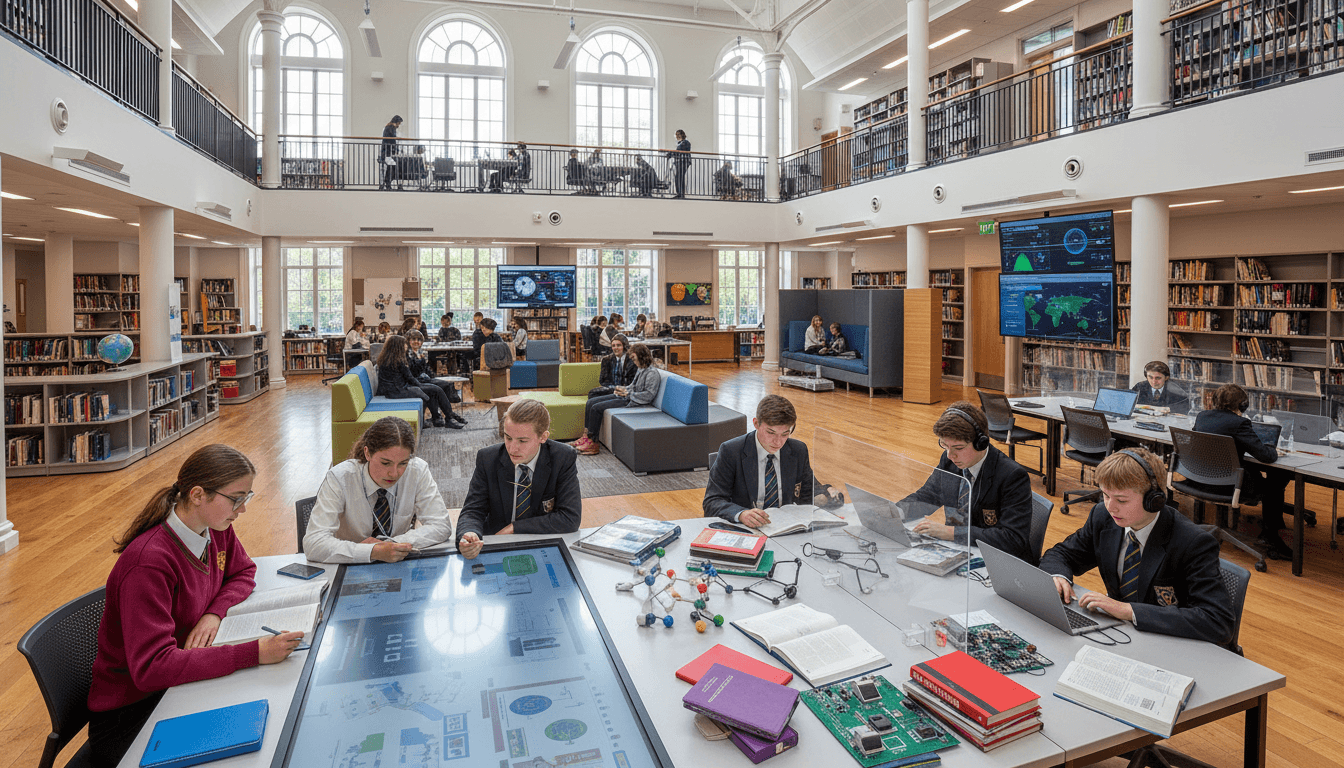
Magnet STEM Program Newsletter: Communicating Science, Technology, Engineering, and Math Learning
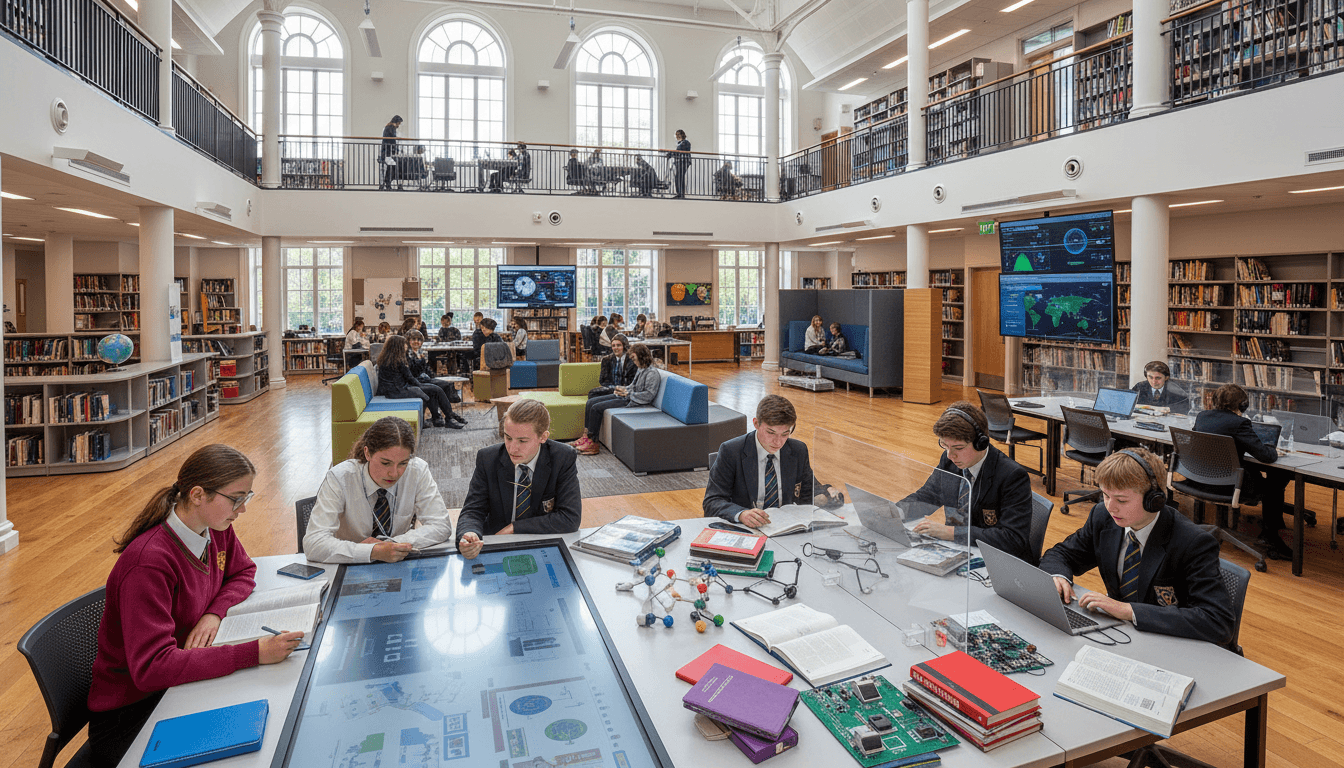
STEM magnet programs promise families something specific: an education that develops the scientific thinking, mathematical reasoning, engineering design skills, and technological fluency that prepare students for an increasingly technical world. Every newsletter should deliver evidence of that promise in action.
A STEM newsletter that describes what students are doing in concrete, specific terms builds family confidence and community pride. One that relies on vague claims about innovation and critical thinking without showing the actual work undermines the case for the program it is supposed to represent.
Showcasing the engineering design process
The engineering design process is the heart of most STEM magnet curricula: define, research, brainstorm, prototype, test, iterate. The newsletter is the right place to walk families through a project cycle and show what this process looks like in practice. "This week's bridge design challenge required students to use recycled materials to span a 30-centimeter gap while supporting increasing weight. Teams tested three designs before finding one that held 200 grams. The key insight most teams reached was that triangular reinforcement distributes force more efficiently than parallel supports."
This kind of description shows families what STEM thinking looks like from the inside. It is more valuable than any promotional statement about innovation or critical thinking.
Science investigation updates
Science in a STEM magnet goes beyond classroom observation to include genuine investigation. Update families on ongoing science projects: what question is being investigated, what methodology students are using, what results are emerging, and how the project connects to the broader curriculum unit. For multi-week investigations, each newsletter can provide a progress update that builds a narrative of scientific inquiry over time.
Math in context
STEM magnets integrate math into applied contexts that traditional math instruction rarely reaches. Show this integration in the newsletter: "Students calculated material costs for their building project using multiplication, unit rates, and estimation. The budget constraint was real: teams that exceeded their material allowance had to redesign within cost." This context gives families a picture of math learning that is more memorable than any worksheets.
Technology and coding program updates
If the program includes coding, robotics, or digital fabrication, these deserve their own newsletter section. Describe the platform or tools being used, the current project or challenge, and any student work that demonstrates technological skill development. Include any certifications, competition qualifications, or program milestones students reach.
Building toward career awareness
STEM magnets exist in part to introduce students to STEM careers early. Document career awareness activities in the newsletter: guest speakers, job shadows, college visits, and industry partnerships. "This month, an aerospace engineer visited our school and walked students through her actual work designing satellite components. Several students who had never considered aerospace as a career possibility are now asking about it." These career connections are among the most valuable outcomes of a well-run STEM program.
Get one newsletter idea every week.
Free. For teachers. No spam.
Frequently asked questions
What should a STEM magnet newsletter highlight each month?
Feature one major project or challenge in depth, cover competition news and upcoming events, mention any industry or university partnerships, and include a brief student spotlight showing authentic STEM thinking in action. Families who chose a STEM magnet specifically want to see the engineering and scientific thinking that differentiates the program.
How do you explain project-based STEM learning to families who expect traditional science and math instruction?
Show the standards alignment alongside the project description. 'Students are building water filtration systems to address a real community problem. This project meets state science standards on physical and chemical properties, earth science, and engineering design practices.' The project approach and the standards meet families where they are.
How do you communicate competition participation and results in the newsletter?
Announce competitions several weeks in advance so families can plan to attend or support participants. Follow up with results that acknowledge effort and learning, not just victories. 'Our team placed fifth at regionals. They redesigned their robot three times after the qualifying round and came away with a much stronger understanding of gear ratio than they arrived with.' Growth narratives are more compelling than trophy counts.
What industry or university partnership activities belong in the STEM newsletter?
Guest speakers, mentorship programs, university lab visits, industry job shadows, and curriculum partnerships all belong in the newsletter with enough context for families to understand their significance. A student who spent a day at a biomedical engineering lab needs that experience documented with detail, not just mentioned in passing.
How does Daystage help STEM magnet schools with newsletters?
Daystage supports image-rich newsletters that STEM programs use to showcase projects, experiments, and competition activities. Coordinators use it to build consistent communication that reinforces the program identity and keeps families engaged with the specialized learning their students are doing.

Adi Ackerman
Author
Adi Ackerman is a former classroom teacher and curriculum writer with 8 years in K-8 schools. She writes about school communication, parent engagement, and what actually works in real classrooms.
More for Magnet & IB
Magnet School Open House Newsletter: Attracting Prospective Families and Building Your Program Community
Magnet & IB · 5 min read
IB CAS Programme Newsletter: Communicating Creativity, Activity, and Service Requirements
Magnet & IB · 5 min read
IB Program End-of-Year Newsletter: Closing the Year with Reflection and Forward Planning
Magnet & IB · 5 min read
Ready to send your first newsletter?
3 newsletters free. No credit card. First one ready in under 5 minutes.
Get started free