
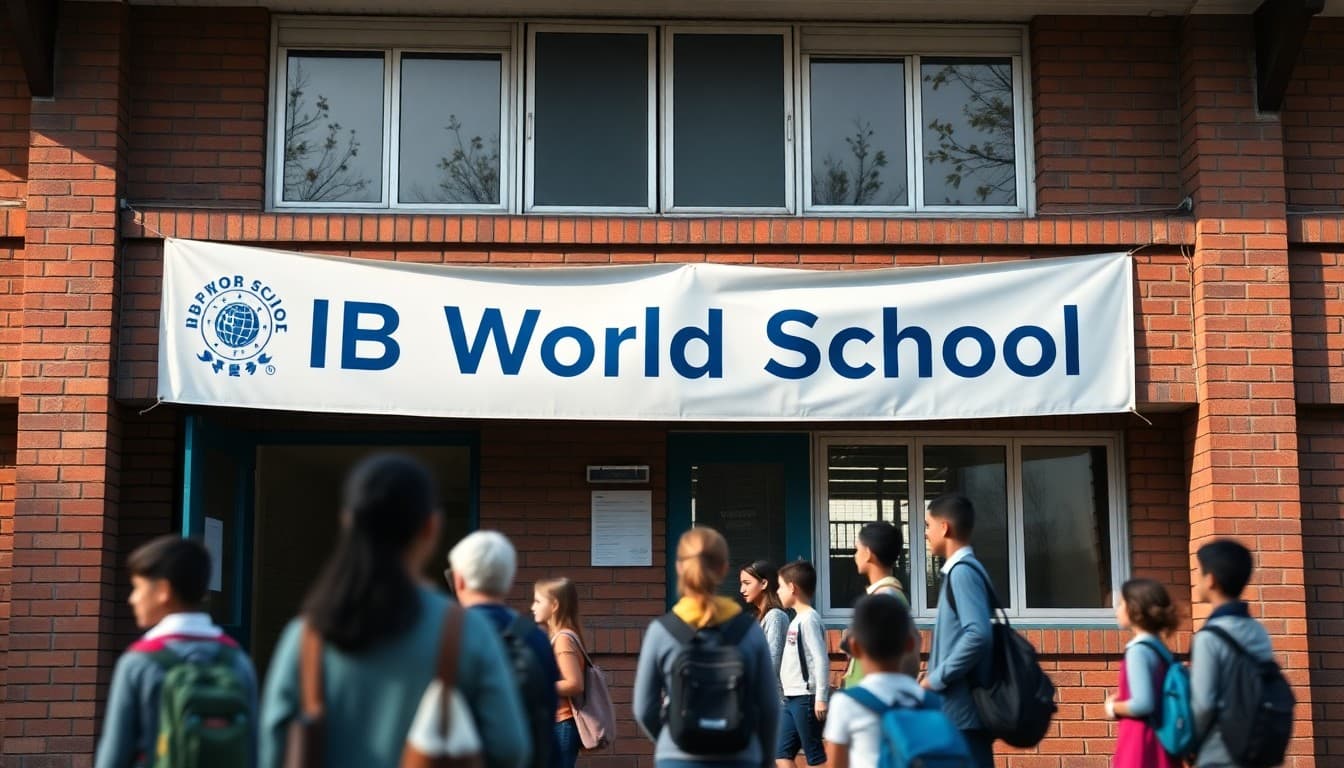
IB World School Newsletter: Authorization and Accreditation Updates

IB World School status is not permanent. It is earned through an initial authorization process and maintained through rigorous five-year Programme Evaluation cycles. Families who chose the school specifically because of its IB authorization have a direct stake in the school's status and in how well it maintains the standards that earned that status. A newsletter that communicates the authorization and evaluation process transparently gives families context for the school's work and confidence that the designation is being actively protected.
What Authorization Actually Means
Being an IB World School means the International Baccalaureate Organization reviewed the school's curriculum, instruction, assessment practices, leadership, and resources and determined that the school meets the IB's Standards and Practices. This is not a marketing designation. It is an operational certification that the school can deliver the IB programme in the way it was designed. Students at an authorized school receive genuine IB education with external assessment. Students at a school claiming IB affiliation without authorization receive something else, regardless of what materials are being used.
The IB Standards and Practices
The IB evaluates schools against a set of standards organized into five categories: international-mindedness, governance and leadership, learning community, teaching and learning, and community. Within each category are specific practices the school must implement consistently. Teachers must receive IB-specific professional development. The school must have policies on assessment, language, and inclusion that align with IB philosophy. Leadership must actively support the programme with adequate resources and time. These standards are public, and the newsletter can reference them when describing what the school's authorization signifies.
The Candidacy Phase
Schools pursuing IB authorization enter a Candidacy Phase that typically lasts two years. During this time, the school trains its teachers, develops curriculum aligned with the IB framework, and aligns its practices with IB standards. Families at a school in Candidacy should understand that their children are not yet enrolled in an authorized IB programme. They are at a school preparing for authorization. This distinction matters when families are choosing schools or when students are applying to colleges that recognize IB credentials. The newsletter should be clear about which status the school currently holds.
Programme Evaluation: The Five-Year Review
Every five years, each authorized IB programme undergoes Programme Evaluation. The process begins about 18 months before the site visit with a self-study in which the school reviews its practices against current IB standards. An IB consultant may visit for a consultation during this phase. The evaluation team visit, typically two to three days, involves classroom observations, document review, and interviews with administrators, teachers, students, and parents. The evaluation report includes commendations for strong practices and recommendations for areas needing development.
What Families Can Expect During an Evaluation Visit
Parents are often invited to participate in a brief interview or focus group during a Programme Evaluation visit. The newsletter should prepare families for this in advance: what the visit involves, what kinds of questions families might be asked, and why their honest feedback is valuable to the evaluation process. Families who understand the purpose of the visit are more likely to participate constructively. Note that the evaluation team is looking for honest, accurate reflection on the programme, not a coordinated positive presentation.
Post-Evaluation Outcomes
After the evaluation, the school receives a formal report. Most schools receive authorization continuation with commendations and recommendations. The newsletter should share the evaluation outcome with families, including a summary of commendations and the specific recommendations the school will address. This level of transparency is unusual and builds significant trust with the IB community. It also models for students what genuine reflection on performance looks like, which aligns directly with the IB learner profile attribute of being reflective.
When Authorization Is at Risk
Occasionally a school receives serious findings during Programme Evaluation that put its authorization at risk. If the IB determines that the school is not meeting core standards, it may place the school on a conditional authorization status with specific requirements for improvement. Families deserve to know if this occurs. A newsletter that acknowledges challenges and describes a specific remediation plan is more trustworthy than one that presents the evaluation as uniformly positive when the report says otherwise.
What Families Can Do
Families who want to support their school's IB authorization can participate in evaluation focus groups when invited, provide honest feedback to the IB evaluation team, advocate to district leadership for adequate resources for the IB programme, and stay informed about evaluation timelines. A well-informed parent community is one of the most valuable assets a school can have during a Programme Evaluation. The newsletter that keeps families informed throughout the authorization cycle is building that asset continuously.
Get one newsletter idea every week.
Free. For teachers. No spam.
Frequently asked questions
What does it mean to be an IB World School?
An IB World School is a school that has been authorized by the International Baccalaureate Organization to deliver one or more of its four programmes: the Primary Years Programme, the Middle Years Programme, the Diploma Programme, or the Career-related Programme. Authorization requires that the school meet specific IB standards and practices and is awarded only after a formal review process. Once authorized, schools must undergo Programme Evaluation every five years to maintain their status. The IB designation is not automatic and cannot be self-awarded.
How does a school become authorized as an IB World School?
The authorization process begins when a school submits an application to the IB expressing interest in a specific programme. The school then enters a Candidacy Phase during which it prepares for implementation by completing required training, developing curriculum, and aligning practices with IB standards. After the Candidacy Phase, an IB site visit team evaluates the school's readiness. If the school meets all standards, the IB grants authorization. The entire process from application to authorization typically takes two to three years.
What happens during Programme Evaluation?
Programme Evaluation is a five-year review cycle in which the school submits a self-study documenting its practices against current IB standards, receives an IB team visit to verify and expand on the self-study findings, and receives an evaluation report with commendations and recommendations. Schools are required to address any recommendations in subsequent years. Failing to maintain standards can result in the suspension or withdrawal of IB authorization, which would prevent the school from awarding IB credentials to students.
Does IB authorization affect how students' work is assessed?
Yes. Only authorized IB World Schools can submit student work for IB external assessment and award IB credentials. Students at a school that loses its IB authorization cannot receive IB Diplomas or certificates, regardless of their individual performance. This is why the authorization and evaluation process is significant for families, not just for administrators. Families should know their school's current authorization status and when the next Programme Evaluation is scheduled.
How can families stay informed about their school's IB authorization status?
The IB publishes a school directory at ibo.org/programmes/find-an-ib-school where families can verify a school's authorized programmes. The school's IB coordinator should also communicate authorization status and evaluation timelines through the school newsletter. Daystage helps IB coordinators send regular programme updates to families, including authorization news, evaluation preparation schedules, and post-evaluation report summaries.

Adi Ackerman
Author
Adi Ackerman is a former classroom teacher and curriculum writer with 8 years in K-8 schools. She writes about school communication, parent engagement, and what actually works in real classrooms.
More for Magnet & IB
Ready to send your first newsletter?
3 newsletters free. No credit card. First one ready in under 5 minutes.
Get started free