
IB Visual Arts Newsletter: Exhibition and Portfolio Updates

IB Visual Arts is a course where the most important work happens slowly, over months, in sketchbooks and studios that families never see. Your newsletter is the window into that process. A well-written update that includes images, names techniques, and explains what students are exploring does something important: it converts a year of invisible work into a visible narrative that families can follow, celebrate, and support.
The Three Assessment Components Explained Simply
IB Visual Arts has three assessment components, and families who do not understand all three tend to focus only on the exhibition, which they can see. In your first newsletter, explain all three in plain language. The comparative study is a research project analyzing artworks from different cultural traditions. The process portfolio is a documentation of the student's experimentation and reflection throughout the course. The exhibition is a curated display of finished works, each with a written curatorial statement. Knowing all three helps families understand why their student is spending time on research, reflection, and writing in what they assumed was an art class.
Monthly Studio Updates That Show Progress
The best monthly update answers: what medium or technique are students exploring, which artists or traditions are informing their work, and what decisions are students making about their own artistic direction? "This month students are experimenting with printmaking as part of their process portfolio. They are exploring how Katsushika Hokusai used line and negative space and testing those principles in their own work." That update is specific, educational, and shows families that the course has intellectual depth alongside technical skill.
Sharing Work in Progress
Visual arts newsletters should include images whenever possible. A photo of a student's process portfolio page, a work in progress on a studio wall, or a detail from a developing piece communicates more than any written description. Get standing permission from students at the start of the year to share their work in newsletters. Most students are proud to have their work featured, and a brief shout-out in the newsletter motivates continued effort.
Preparing Families for the Exhibition
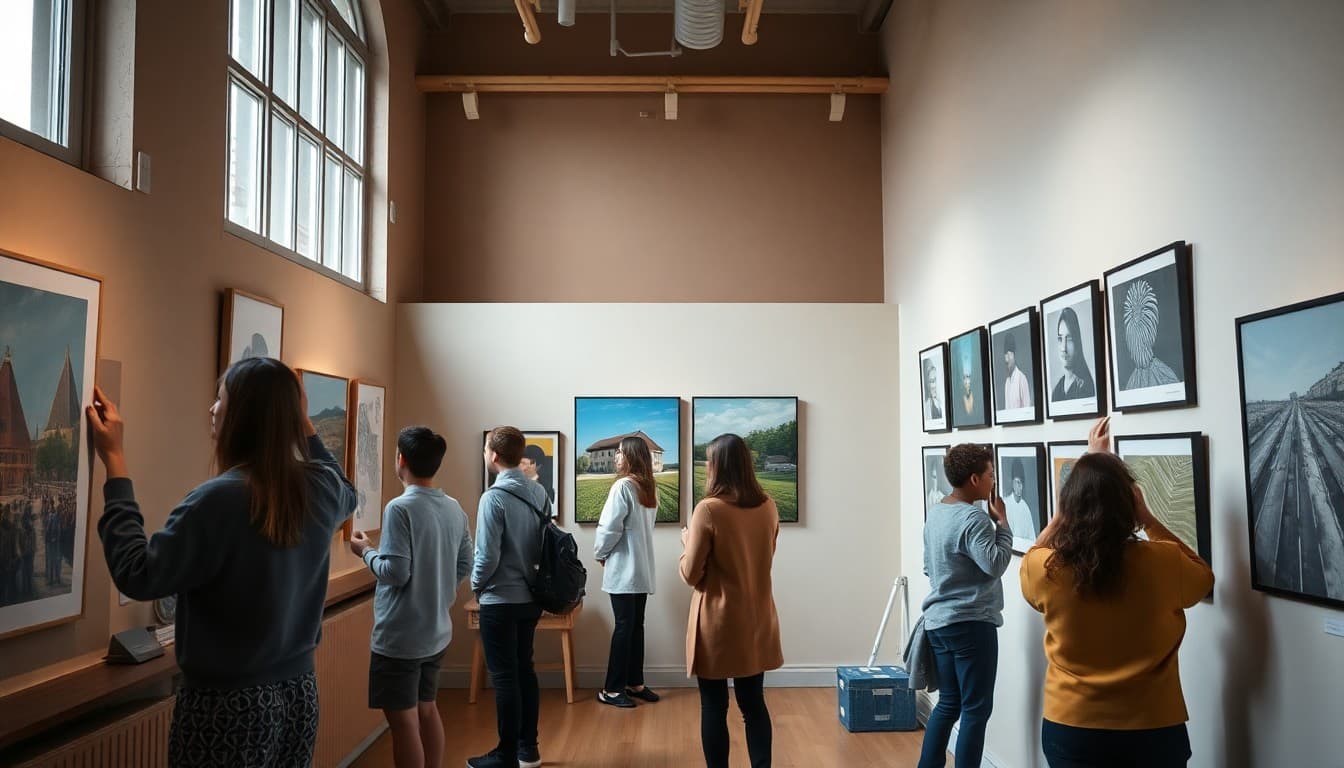
The IB Visual Arts exhibition is the most visible event of the year, and the most meaningful for students. Begin building toward it at least six weeks before it opens. Explain what families will see: each student curates a body of work that represents their artistic voice and demonstrates their development. Each piece has a written curatorial statement explaining the artist's intention. Families who arrive knowing this have a richer experience and ask better questions. Those who show up without context often leave not knowing what they saw.
In the weeks before the exhibition, update families on the setup process. "Students are making final decisions about which works to include and how to arrange them. Each student has allocated wall or floor space and is responsible for presenting their work professionally." That update makes the logistics tangible and signals the scope of what students are managing.
The Comparative Study as Hidden Depth
The comparative study is the least visible component to families and often the most intellectually demanding for students. When students are working on it, describe what it involves in your newsletter. "Students are completing their comparative study, which requires analyzing and comparing artworks from at least three different cultural traditions or time periods. They are building arguments about how context shapes artistic meaning." That framing shows families that IB Visual Arts is not just making art; it is understanding art, which is a college-level analytical skill.
Managing the Two-Year Arc
IB Visual Arts is a two-year course at most schools. Your newsletter should communicate the long arc of development, not just month-to-month progress. In year one, students are building skills, exploring media, and developing a personal aesthetic. In year two, they are refining their voice, making curatorial decisions, and preparing for assessment. Families who understand this arc are better prepared for the relative looseness of year one and the intensity of year two.
After the Exhibition
Send a follow-up newsletter after the exhibition closes. Include photos from the opening, quotes or reflections from students about what the process meant to them, and a note of thanks to families for their support. This is one of the most-shared newsletters of the year, and it builds program visibility in ways that matter for future enrollment.
Get one newsletter idea every week.
Free. For teachers. No spam.
Frequently asked questions
What should an IB visual arts newsletter explain to families?
The three assessment components and what they require. The comparative study involves students analyzing and comparing works from different artistic traditions. The process portfolio documents the student's development through experimentation, research, and reflection. The exhibition is a curated selection of the student's own artwork with written statements. Families who understand this structure can support their students' time management and preparation.
How do I build excitement for the IB visual arts exhibition in a newsletter?
Start building anticipation six to eight weeks before the exhibition. Describe what families will see: individual curatorial statements, a range of media and techniques, and works that demonstrate the artist's development over two years. Include photos from setup if possible. Give families a role, whether attending, sharing the event with neighbors, or simply being present for their student. The exhibition is the culmination of two years of sustained work, and families who arrive prepared to understand what they are seeing have a richer experience.
How do I explain the process portfolio to parents?
Describe it as a visual diary of the student's artistic thinking. It is not a finished product; it is a record of investigation, experiment, and reflection. Students document their sources of inspiration, their experiments with technique and materials, and their analysis of other artists' work. The portfolio shows how the student thinks and grows as an artist. Families sometimes worry when they see unfinished pages in the portfolio; reassure them that process and development are exactly what the IB is looking for.
How often should I send an IB visual arts newsletter?
Monthly or every six weeks works well. Visual arts projects develop slowly, and a monthly update that shares work in progress, names the techniques and artists students are exploring, and notes any upcoming assessment deadlines keeps families connected to a process that is largely invisible to them.
What newsletter platform works well for visual arts communication?
You need a platform that handles images well. Daystage supports full-resolution photos, which matters when you are sharing student artwork. Families who see their student's work in a beautifully formatted newsletter are more engaged, and students who know their work will be shared take it more seriously.

Adi Ackerman
Author
Adi Ackerman is a former classroom teacher and curriculum writer with 8 years in K-8 schools. She writes about school communication, parent engagement, and what actually works in real classrooms.
More for Magnet & IB
Ready to send your first newsletter?
3 newsletters free. No credit card. First one ready in under 5 minutes.
Get started free