
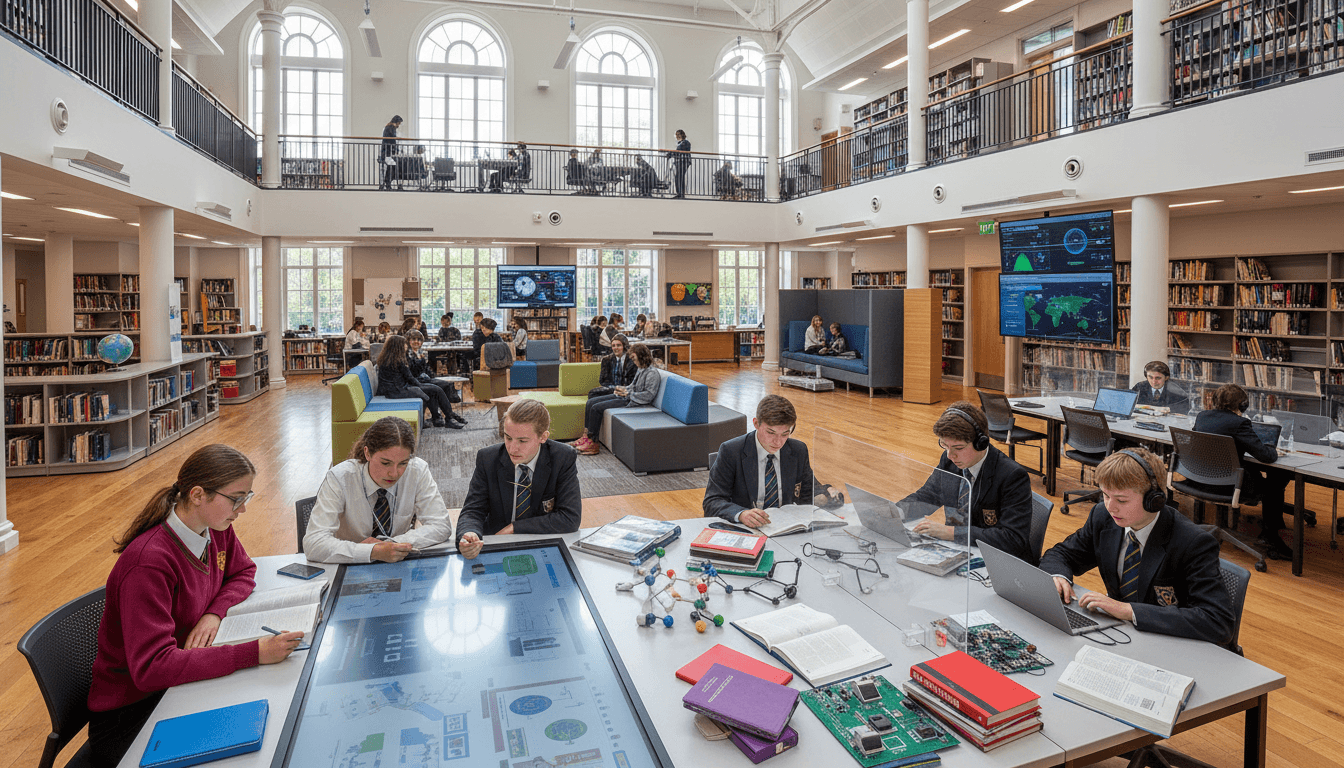
IB Middle Years Programme Newsletter: Communicating MYP Learning and Assessment to Families
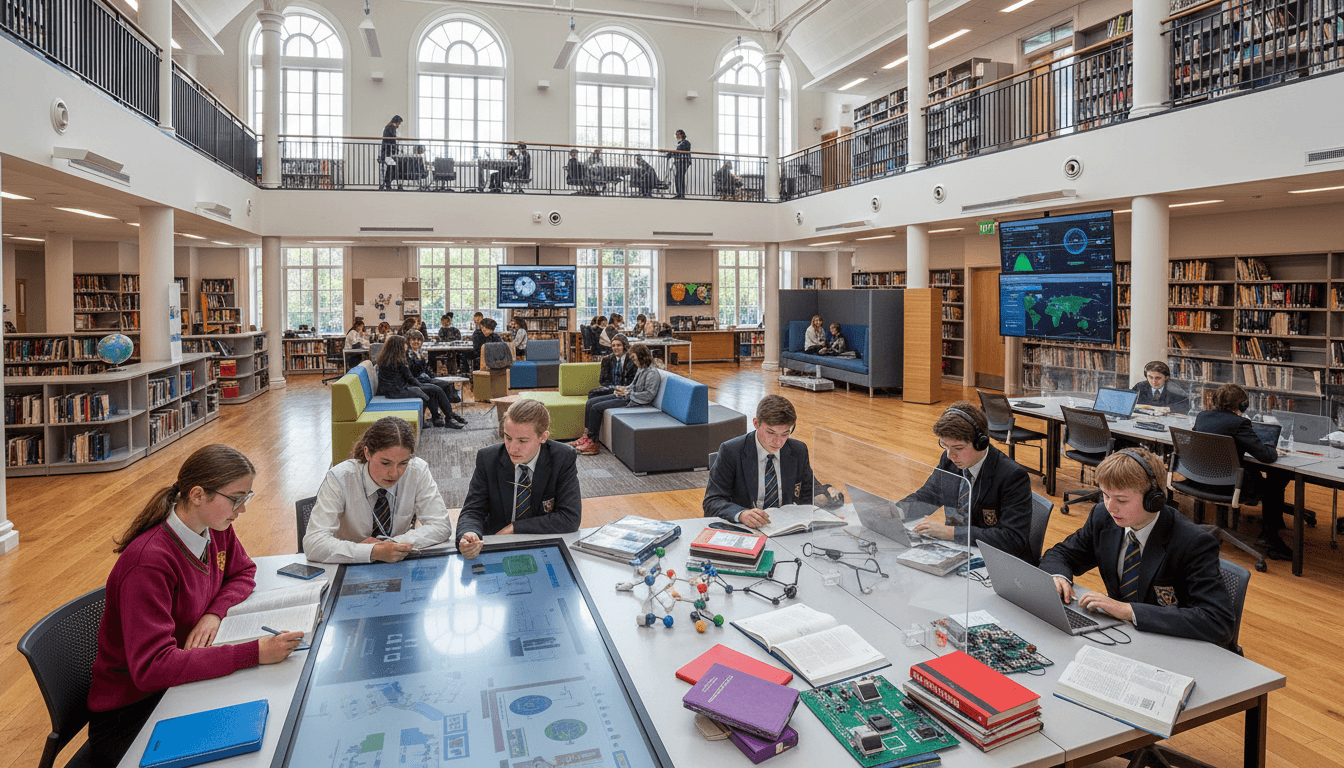
The Middle Years Programme covers five years of education from grade 6 through grade 10, bridging the Primary Years Programme and the Diploma Programme. For students entering MYP from a PYP school, the transition is a natural continuation. For students entering from outside the IB continuum, MYP introduces a new framework that requires deliberate explanation for both students and families.
The MYP newsletter is the primary tool for building family literacy in the programme across five years of continuous learning.
Introducing the eight subject groups
MYP organizes learning into eight subject groups: language and literature, language acquisition, individuals and societies, sciences, mathematics, arts, physical and health education, and design. The annual curriculum newsletter should map each of the student's courses to the appropriate subject group so families can see how the programme covers all areas. This mapping is especially useful for students whose schedules look different from a traditional middle school course list.
Global contexts and how to explain them
Each MYP unit is framed within one of six global contexts: identities and relationships, orientation in space and time, personal and cultural expression, scientific and technical innovation, globalization and sustainability, and fairness and development. The newsletter can explain the current global context for each subject's unit and why that framing matters for the learning. "This unit in individuals and societies is framed through the global context of fairness and development. Students are examining how access to clean water is distributed unequally globally and what political and economic systems explain those inequalities."
Interdisciplinary learning communication
MYP includes explicit interdisciplinary learning requirements. When teachers plan interdisciplinary units, describe them in the newsletter with enough detail that families understand how the subject connection creates learning that neither subject could achieve alone. "The current interdisciplinary unit connects mathematics and science through data analysis of real climate measurements. Students are applying statistical tools from their math class to interpret scientific data, which requires genuine competence in both subjects."
Personal project support communication
The personal project is the MYP's capstone experience, requiring Year 5 students to independently design, execute, and evaluate a significant project over approximately one academic year. The newsletter should communicate the timeline, requirements, and support available throughout the year. Regular progress check-in newsletters help families understand where their student should be in the process and what support is appropriate.
Preparing for the transition to the Diploma Programme
Year 10 families are beginning to think about DP subject selection and the transition to the rigorous two-year pre-university programme. The newsletter can begin addressing DP preparation in Year 10: what subject selection decisions need to be made and when, how MYP results inform DP subject readiness, and what the DP structure will look like for students who continue in the IB.
Get one newsletter idea every week.
Free. For teachers. No spam.
Frequently asked questions
What should an IB MYP newsletter explain to families new to the programme?
Introduce the eight subject groups, the concept-based learning approach, the global contexts that frame each unit, the assessment criteria system, and the personal project requirement for Year 5. New MYP families need to understand how the programme differs from traditional middle school instruction before they can make sense of their student's assignments and results.
How do you explain MYP assessment criteria to families accustomed to grades?
Explain that MYP uses criterion-referenced assessment on a scale of 0 to 8 for each subject, with four criteria per subject. A 6 out of 8 represents very strong performance against the criteria, not a C on a 10-point scale. Include a brief translation guide in the back-to-school newsletter and reference it whenever assessment results are communicated.
How do you communicate the personal project to Year 5 families?
Start personal project communication in Year 4 so families are not surprised by the Year 5 requirements. Explain what the project involves, how it is supervised, what the assessment criteria are, and what a successful project looks like from exemplars. Early communication gives students time to develop genuine project ideas rather than choosing topics under deadline pressure.
How do you address family concerns about MYP preparation for the IB Diploma?
Share data on MYP student outcomes in the Diploma Programme. Students who complete MYP with strong criterion results typically perform well in DP because the skills required overlap significantly. The newsletter can include this outcome information alongside current programme updates.
How does Daystage help IB MYP coordinators with newsletter communication?
Daystage supports the consistent communication that MYP coordinators need to send to Year 6 through Year 10 families separately. Coordinators use it to manage year-group subscriber lists and send relevant programme updates to the right families without broadcasting to the whole school.

Adi Ackerman
Author
Adi Ackerman is a former classroom teacher and curriculum writer with 8 years in K-8 schools. She writes about school communication, parent engagement, and what actually works in real classrooms.
More for Magnet & IB
Magnet School Application Newsletter: How to Communicate the Application Process Clearly
Magnet & IB · 5 min read
Magnet School Open House Newsletter: Attracting Prospective Families and Building Your Program Community
Magnet & IB · 5 min read
IB Career Programme Newsletter: Communicating Work-Based Learning and the CP Framework
Magnet & IB · 5 min read
Ready to send your first newsletter?
3 newsletters free. No credit card. First one ready in under 5 minutes.
Get started free