
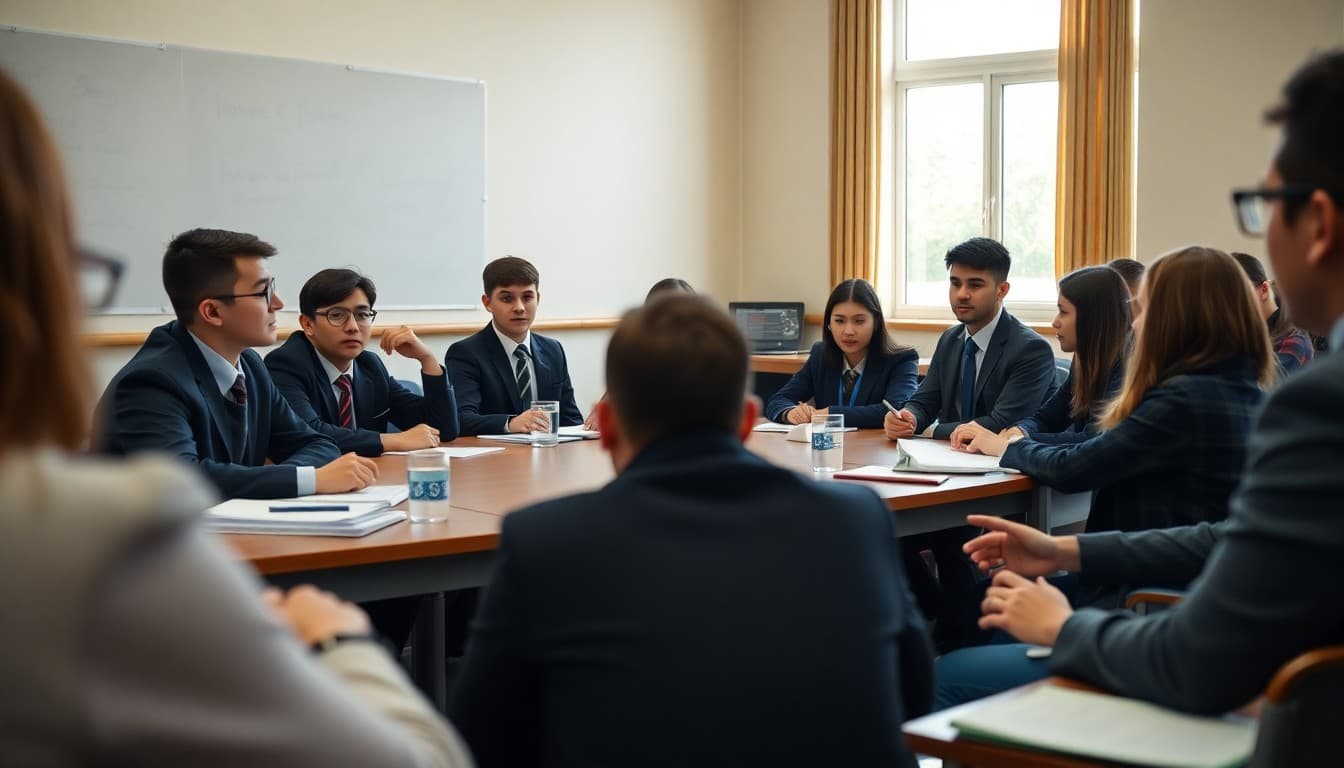
IB Global Politics Newsletter: Engaging Students in World Events

IB Global Politics is one of the most discussion-heavy courses in the Diploma Programme, and that creates a unique communication challenge. Parents want to know what their student is studying, but global politics is inherently contested territory. Your newsletter has to inform without appearing to advocate. The good news is that IB Global Politics gives you a ready-made framework for doing exactly that.
Use IB Concepts as Your Anchor
The IB Global Politics course is structured around four key concepts: power, sovereignty, human rights, and development. Every current event you bring into the classroom connects to one or more of these. In your newsletter, name the concept explicitly: "This month we are studying how sovereignty functions in practice, and students are analyzing how states respond when sovereignty claims conflict." That framing keeps your newsletter educational rather than editorial, and it gives parents a vocabulary for conversations with their students.
Connecting Current Events Without Taking Sides
The most effective approach is to describe what is happening, then explain which IB concept it illustrates. "The election in [country] offers a case study in how legitimacy is constructed and challenged. Students are analyzing three competing theories of political legitimacy from the course." You are not endorsing an outcome; you are teaching analysis. Parents across the political spectrum can read that without feeling their values are being attacked.
If you are concerned about a particular topic being sensitive in your community, acknowledge that briefly: "This is a topic where thoughtful people disagree. Our goal is to apply the IB frameworks to analyze the situation, not to reach a predetermined conclusion." That sentence disarms most objections before they are raised.
Explaining the Engagement Activity Early
The Engagement Activity is the assessment component that surprises families most. Students must engage directly with a real global politics issue. That means attending a city council meeting, participating in a political organization, interviewing a local official, or engaging in another direct way. In your fall newsletter, explain what this looks like concretely and ask families to flag local opportunities they know about. Parents who coach sports teams, serve on nonprofit boards, or work in government can be excellent resources for connecting students to engagement opportunities.
Monthly Current Events Digest
A brief list of three to five current events the class is tracking, with one sentence each explaining the IB connection, is one of the most-read sections of any IB global politics newsletter. It shows families that the course is alive and responsive to the world, not just working through a textbook. It also gives students a ready answer when someone asks what they are learning in school.
Previewing Summative Assessments
IB Global Politics has three assessment components: the Engagement Activity written analysis (30%), paper 1 on sources (40%), and paper 2 with extended response (30%). When each assessment is approaching, send a dedicated update. For the Engagement Activity, describe what students are preparing to submit. For the papers, explain the format and which topics are covered. This prevents last-minute surprises and gives families a chance to create space at home for focused work.
Simulation and Role-Play Updates
Many IB Global Politics teachers use simulations, including Model UN, mock Security Council sessions, or negotiations between fictional states. When you run one of these, describe it in your newsletter. "Students spent two class periods in a Security Council simulation debating a humanitarian intervention. Each student represented a different permanent member." These are the moments students talk about at home, and parents who hear about it from you feel included in the learning.
News Sources Worth Recommending
Your newsletter is a good place to recommend news sources that model the analytical approach you want students to develop. BBC World Service, The Economist, Council on Foreign Relations reports, and Foreign Policy are solid starting points. A short note about how to read a news source critically, looking for framing, sourcing, and perspective, turns a resource recommendation into a mini-lesson on media literacy.
Wrapping Up the Year
Before the May exam session, send a focused newsletter on exam preparation. Cover the format of each paper, the command terms students must recognize (evaluate, examine, compare, justify), and where to find past papers. A well-prepared student community means fewer anxious emails to you in April, and a better overall experience for everyone.
Get one newsletter idea every week.
Free. For teachers. No spam.
Frequently asked questions
How do I write about current events in an IB global politics newsletter without taking political sides?
Use the IB frameworks as your anchor. Instead of commenting on an event's outcome, explain how it illustrates a concept from the course: sovereignty, legitimacy, human rights, or global governance. For example, 'This month we used the ongoing conflict in [region] to examine how the UN Security Council's veto structure affects collective security.' The course content, not your opinion, drives the analysis. That approach is defensible and educationally grounded.
What should an IB global politics newsletter include each month?
Three things: the concept or topic the class is currently studying, one or two current events students are analyzing and why they are relevant to the course, and any assessment milestones coming up. If you add a fourth section, make it a resource recommendation, a news source students should follow, a documentary, or a podcast episode that connects to current coursework.
How do I explain the Engagement Activity to parents?
The Engagement Activity is a fieldwork component where students engage with a real global politics issue outside the classroom. It counts for 30% of the final grade at both SL and HL. Tell families this in plain terms: students attend a community meeting, interview a decision-maker, participate in a relevant organization, or engage in another direct way with a political issue. They then write a structured analysis. Parents who understand this can help students identify opportunities in their own communities.
How often should I send the IB global politics newsletter?
Monthly works well because global politics content is event-driven and changes quickly. If a significant world event occurs that directly connects to your current unit, a brief standalone update is worth sending. Students appreciate knowing that their teacher is connecting the news to their coursework in real time, and families appreciate the transparency.
What tools work well for an IB global politics newsletter?
Daystage works well because you can embed news links, videos, and images from current events directly in the newsletter. Families get a rich, visual update that they can explore further if they want to engage in dinner-table conversations about what their student is learning.

Adi Ackerman
Author
Adi Ackerman is a former classroom teacher and curriculum writer with 8 years in K-8 schools. She writes about school communication, parent engagement, and what actually works in real classrooms.
More for Magnet & IB
Ready to send your first newsletter?
3 newsletters free. No credit card. First one ready in under 5 minutes.
Get started free