
Kindergarten Sharing Newsletter: Social Skills at School and Home
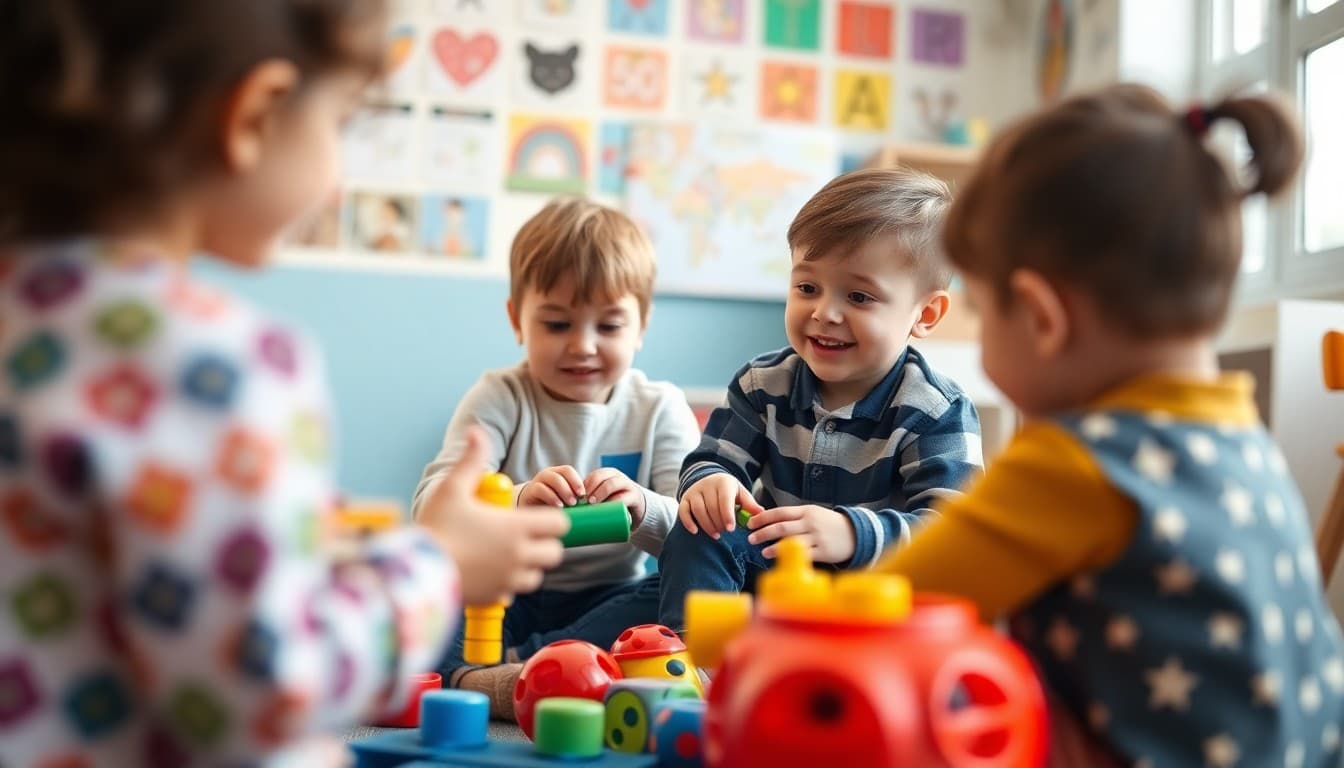
Sharing is one of the most socially demanded skills in a kindergarten classroom and one of the most developmentally complex for five-year-olds. Understanding where children actually are developmentally with sharing, and communicating that honestly to families, prevents the frustration that comes from expecting kindergartners to share like adults. Here is how to build that understanding through your newsletter.
Set Realistic Developmental Expectations
Open your newsletter by normalizing the sharing challenges families will see and hear about in the first weeks of school. Five-year-olds have brains that are still building the prefrontal capacity needed to delay gratification, consider another person's perspective, and voluntarily give up something they want. These are not character flaws. They are developmental realities.
A brief factual statement: "Most kindergartners need consistent adult coaching to share and take turns. This is normal. Our classroom will spend significant time in September and October practicing the language and routines of sharing. By mid-year, most children navigate these situations with much more independence. Your child is not behind if they struggle with this in September."
Teach the Language of Turn-Taking
Children who have the words to negotiate turn-taking do better than those who rely on physical solutions (grabbing, pushing) or adult intervention. Teach specific phrases families can practice at home: "Can I have a turn when you are done?" "I need one more minute, then you can have it." "We can take turns. I will go first, then you."
Practice this language explicitly in the weeks before school starts. During play at home, coach the phrasing: "Instead of grabbing, let's use words. Say: Can I have a turn?" Rehearsal in low-stakes situations at home means the language is available when stakes are higher in the classroom.
Describe the Classroom Turn-Taking System
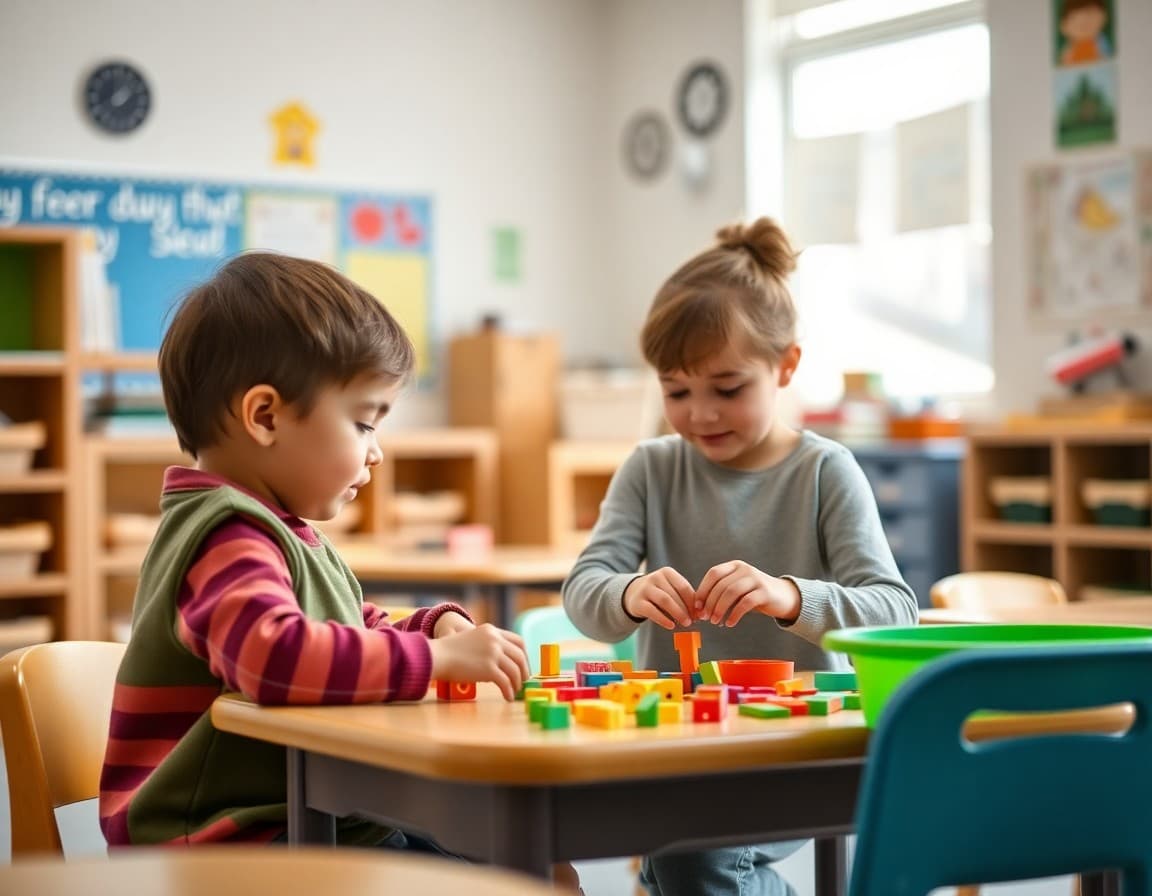
Families whose children understand how turn-taking works in the classroom have an easier time coaching at home. Describe your classroom system: do you use a visual timer so children can see how long a turn lasts? Do you have a waiting list system where children sign up for popular materials? Do you use a "talking piece" or "speaker stone" during discussions to clarify whose turn it is to speak?
A brief description of the classroom system with the vocabulary you use lets families mirror the same language at home. "In our classroom, we use a sand timer when two children want the same toy. When the sand runs out, the turn changes. You can try this at home with a kitchen timer."
Coach Problem-Solving Rather Than Arbitration
When sharing conflicts happen at home or at school, the fastest intervention is to declare a winner and move on. This feels efficient but teaches nothing. The more valuable response, at home and in the classroom, is to coach the children through a problem-solving process: state the problem, generate options, evaluate options, choose one, and try it.
Template for families: "Two children want the same block. What can we do? (Children generate options: take turns, share, find another block, ask for help). Which idea should we try? Let's try it." This process takes longer than just deciding. But after 20 repetitions, children internalize it and begin doing it independently. That independence is the goal.
Distinguish Between Classroom and Personal Property
One of the most important sharing distinctions for kindergartners is the difference between personal belongings (mine at home, mine to decide) and community materials (belong to the class, everyone takes turns). Establishing this distinction at home prevents the classroom conflict of a child refusing to share classroom crayons because they have learned that all crayons are private property.
Families can reinforce this with natural language: "This is our family's kitchen, so we all take care of it together. Your bedroom toys are yours, and you decide about sharing those. When you are at school, the classroom materials are for everyone." Clear categories reduce the cognitive confusion that makes sharing situations more fraught than they need to be.
What the Classroom Will Do When Sharing Conflicts Occur
Describe your classroom response to sharing conflicts so families can calibrate their expectations and reinforce the same approach. "When sharing conflicts come up in our classroom, I coach children to use words to state their needs and listen to the other person. I then help them generate solutions rather than imposing one. A child who is in genuine distress is separated for a short calm-down period before re-engaging."
Invite families to share information about triggers their child has around sharing: a specific type of toy they find particularly difficult to give up, a sibling dynamic at home that creates patterns, or a developmental sensitivity you should know about. This partnership information makes classroom coaching more effective.
Get one newsletter idea every week.
Free. For teachers. No spam.
Frequently asked questions
Is it developmentally normal for kindergartners to still struggle with sharing?
Yes. True understanding of sharing, where a child voluntarily gives up access to something they want for the benefit of another person without resentment, is a sophisticated social and emotional skill that develops gradually through the early elementary years. Five-year-olds are at the beginning of this developmental arc, not the end of it. Teachers expect sharing to be a source of classroom conflict in the early weeks and have consistent strategies for supporting it.
What is the difference between sharing and taking turns?
Sharing typically refers to using or dividing something simultaneously with another person (splitting a snack, co-building with blocks). Taking turns means one person uses something and then waits while the other person uses it. Both require delayed gratification and perspective-taking. Taking turns is generally more concrete and easier to teach because there is a clear sequence: I use it, then you use it, then me again. Many early childhood programs focus on turn-taking before moving to true sharing.
How should families handle sharing conflicts at home?
Resist resolving the conflict by simply declaring someone right and someone wrong. Instead, coach the process: 'It sounds like you both want the red block. Let's figure out how to solve this. What are some options?' Children who practice generating solutions to sharing conflicts develop the social problem-solving skills that kindergarten demands. Children who are always arbitrated learn to escalate to an adult rather than negotiate.
Should children be required to share their personal belongings?
There is a growing consensus in early childhood education that forcing children to share personal, sentimental items teaches the wrong lesson about ownership and consent. A child should not be required to share a beloved toy brought from home. School materials and classroom resources are different: those belong to the whole community and turn-taking expectations apply. Making this distinction explicit at home helps children understand context-specific sharing norms.
Can Daystage help send social skills newsletters to kindergarten families?
Yes. Daystage lets teachers send regular social-emotional learning newsletters home with specific language families can use to coach sharing and turn-taking, descriptions of the classroom strategies being used, and updates on the social dynamics the class is navigating each month. Families who understand what the classroom is working on can reinforce the same language and strategies at home.

Adi Ackerman
Author
Adi Ackerman is a former classroom teacher and curriculum writer with 8 years in K-8 schools. She writes about school communication, parent engagement, and what actually works in real classrooms.
More for Kindergarten Transition
Ready to send your first newsletter?
3 newsletters free. No credit card. First one ready in under 5 minutes.
Get started free