
Kindergarten Number Recognition Newsletter: Counting at Home
Number recognition is the bridge between spoken counting and written mathematics. A child who can count 7 apples out loud but does not connect that count to the written numeral 7 is missing the symbolic layer that all formal math relies on. Building this connection at home through daily interactions with numerals in context makes a measurable difference in early math achievement.
Counting Is Not the Same as Number Recognition
Many families assume that because their child can count to 20, they recognize written numerals. These are related but distinct skills. Counting is procedural: saying the number sequence in order. Number recognition is symbolic: seeing "13" and immediately knowing its name and quantity. Both need explicit practice.
A child might count to 20 perfectly but look at the written numeral 17 and say "twelve." This is not a sign of trouble. It is a sign that the symbolic layer has not yet been fully mapped to the verbal layer, which is where focused home practice makes a direct contribution.
Number Hunts Around the House
Numbers appear everywhere in the environment and families rarely leverage this. A number hunt takes 10 minutes: walk through the house or neighborhood and find as many written numerals as possible. The microwave clock, the thermostat, a house number, a street sign, a cereal box nutrition label. Each one is a number recognition opportunity in a real-world context.
Extend the hunt by asking the child to find the number that comes after or before: "You found 14 on the mailbox. What comes after 14? Can you find that number anywhere?" This bridges recognition to number sequence, which is the foundation of addition.
Magnetic Numbers: The Most Versatile Home Tool
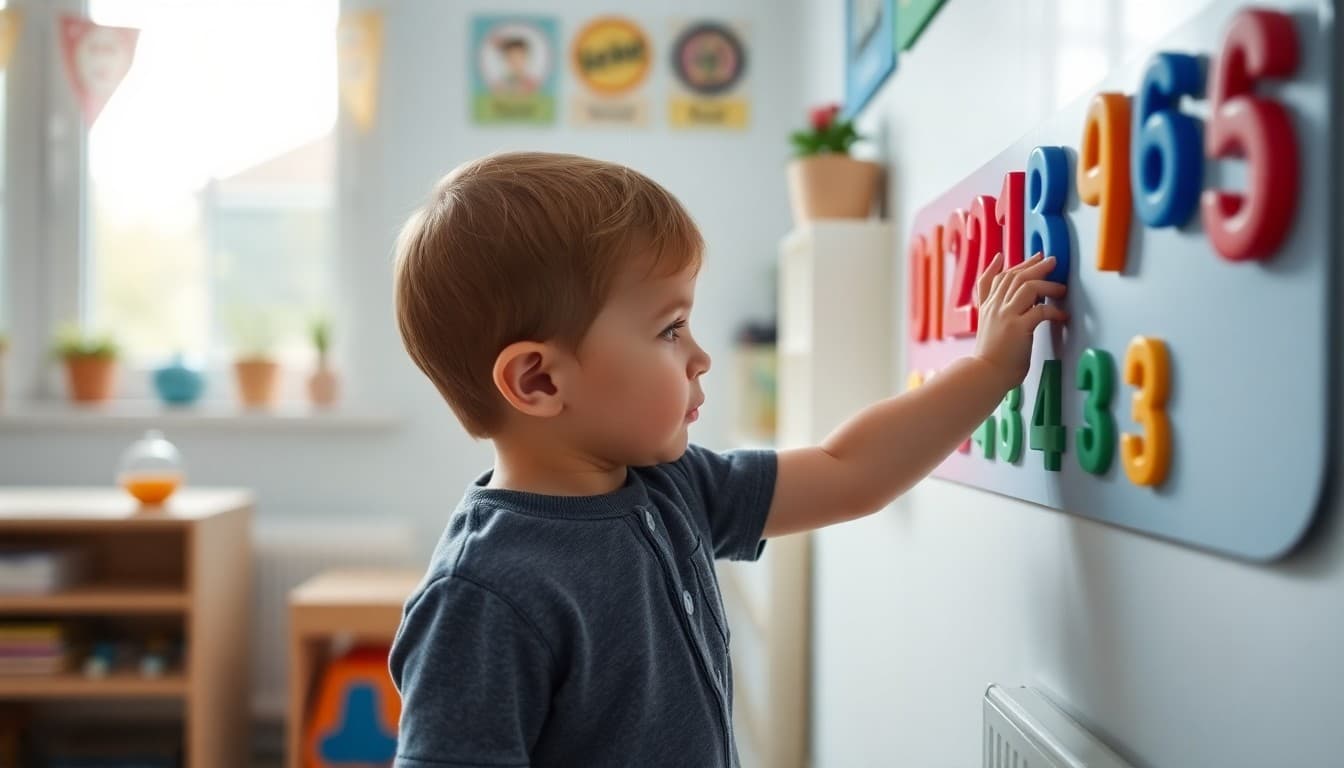
A set of magnetic numerals on the refrigerator is one of the most cost-effective math tools a family can purchase. They are physical, manipulable, and present at a child's eye level during multiple daily moments (breakfast, snack, homework time). Activities with magnetic numbers require no instruction or preparation: arrange them in order, mix them up and sort them back, put them in a line and count them, remove one and ask which is missing.
Specifically recommend in your newsletter that families use the magnetic numbers alongside counting objects: put 8 crackers on the table, find the numeral 8 and place it next to the crackers. This pairing of the quantity with the symbol is the most direct way to build the numeral-quantity connection.
Number Line Activities at Home
A number line posted at child height in the kitchen or bedroom is a daily reference tool that builds number sequence and number recognition simultaneously. Many schools send home number lines or they can be printed free from any educational website. A number line from 0 to 20 is appropriate for kindergarten.
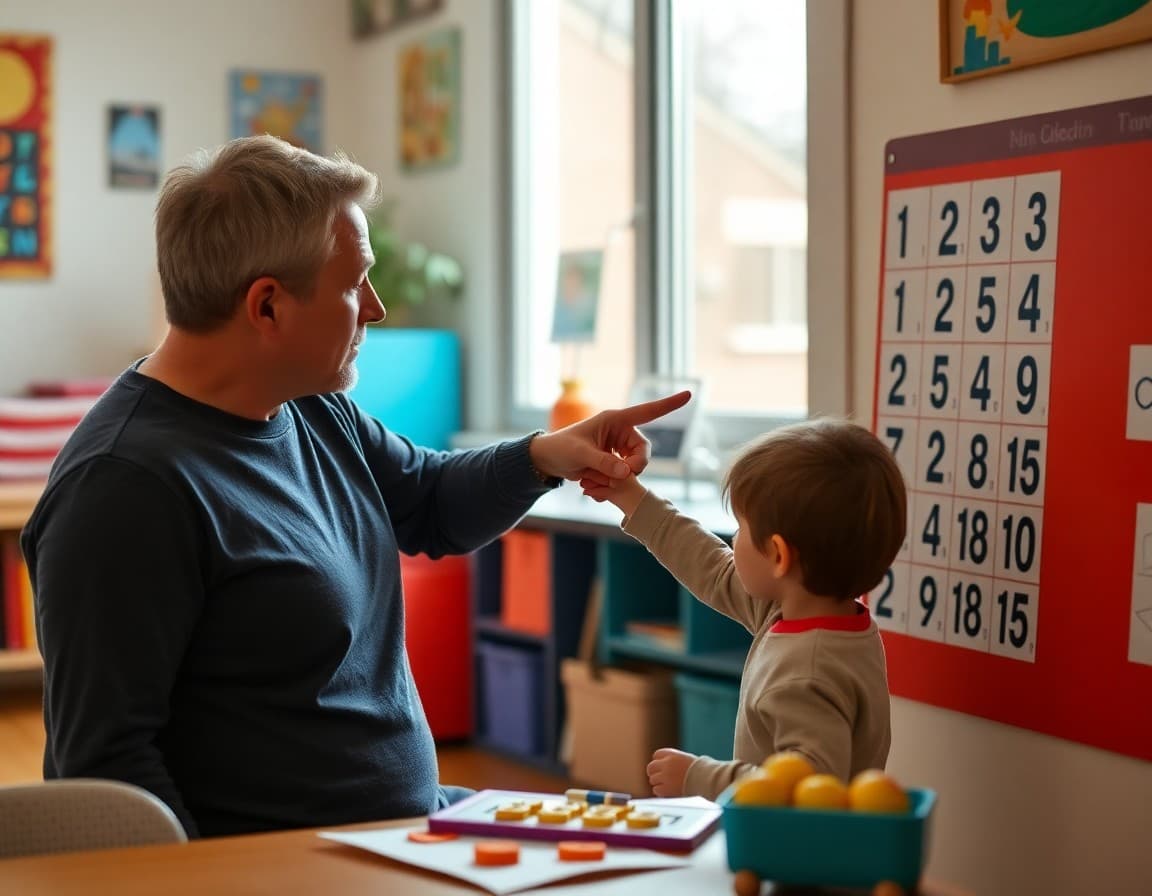
Activities with a home number line: point to a number and have the child name it, say a number and have the child point to it, ask "what is one more than 6?" and have the child slide their finger one space to the right, play "I am thinking of a number between 8 and 12, which one is it?" These games build both recognition and number sense simultaneously.
Connect Numerals to Meaningful Quantities
Abstract number recognition is strengthened by connecting numerals to quantities that matter to the child. How old are you? Show me that many fingers. Can you find that number? How many people are in our family? Write that number on paper. How many steps from the kitchen to the door? Count them and then write the number.
The personal connection between a numeral and a quantity the child cares about makes the abstract symbol concrete. A child who knows they are 5 and can see the numeral 5 as representing their actual age has a relationship with that numeral that purely academic practice cannot replicate.
Games That Build Number Recognition Without Feeling Like School
Any board game that uses a numbered die builds number recognition through play. The child sees a numeral, identifies it, and moves accordingly. This is pure number recognition practice in a context children choose willingly. Dominoes, numbered card games, and even Bingo with numerals rather than called letters are all effective.
For families without board games, a simple card game using index cards with numerals 1-10 works: draw a card, name the number, place it on the number line in the correct position. Played in 5-minute rounds, this builds recognition, sequencing, and motivation to play again the next day. That consistency is what drives progress over a school year.
Get one newsletter idea every week.
Free. For teachers. No spam.
Frequently asked questions
What number recognition skills do kindergartners need?
By end of kindergarten, children should reliably recognize and name numerals 0-20, connect each numeral to the quantity it represents, order numerals on a number line, and understand that each number name refers to a specific quantity. Many children enter kindergarten recognizing some numerals but not others, and often recognizing numerals without fully understanding the quantity relationship. Both skills develop through kindergarten instruction and home practice.
What is the difference between counting and number recognition?
Counting is the oral or tactile act of assigning number names to objects in sequence. Number recognition is the ability to see a written numeral and immediately identify what it is. Both skills are necessary but they develop somewhat independently. A child who can count to 20 accurately may not yet reliably identify the written numeral 13 by sight. Both skills need explicit attention, which is why home activities that connect spoken counting to written numerals are especially valuable.
What causes children to confuse numbers like 6 and 9 or 12 and 21?
Number reversals and transpositions are developmentally normal in kindergarten. The brain is still establishing directional consistency and the visual discrimination between similar-looking numerals. Children who confuse 6 and 9 are responding to their rotational similarity, which requires repeated exposure and targeted attention to the distinguishing feature (6 has a circle on the bottom; 9 has one on the top). These confusions typically resolve by mid-first grade without intervention.
How do we help a child who can count but does not yet recognize written numbers?
Connect the spoken count to the written numeral repeatedly. Count a group of objects aloud and then write the number on paper while saying it again. Use number tiles or magnetic numbers so the child physically handles the numeral while counting objects. A number line posted at child height where the child can point to each number while counting connects the oral sequence to the written form. Daily activities that pair counting objects with writing or pointing to the corresponding numeral build this connection.
Can Daystage help send a number recognition newsletter to kindergarten families?
Yes. Daystage makes it easy to include a number chart image in the newsletter, list specific home activities aligned to the current classroom focus, and share photos of the number activities the class is using. Families who see what classroom materials look like (ten frames, number lines, counting bears) can replicate similar activities at home with common household objects.

Adi Ackerman
Author
Adi Ackerman is a former classroom teacher and curriculum writer with 8 years in K-8 schools. She writes about school communication, parent engagement, and what actually works in real classrooms.
More for Kindergarten Transition
Ready to send your first newsletter?
3 newsletters free. No credit card. First one ready in under 5 minutes.
Get started free