
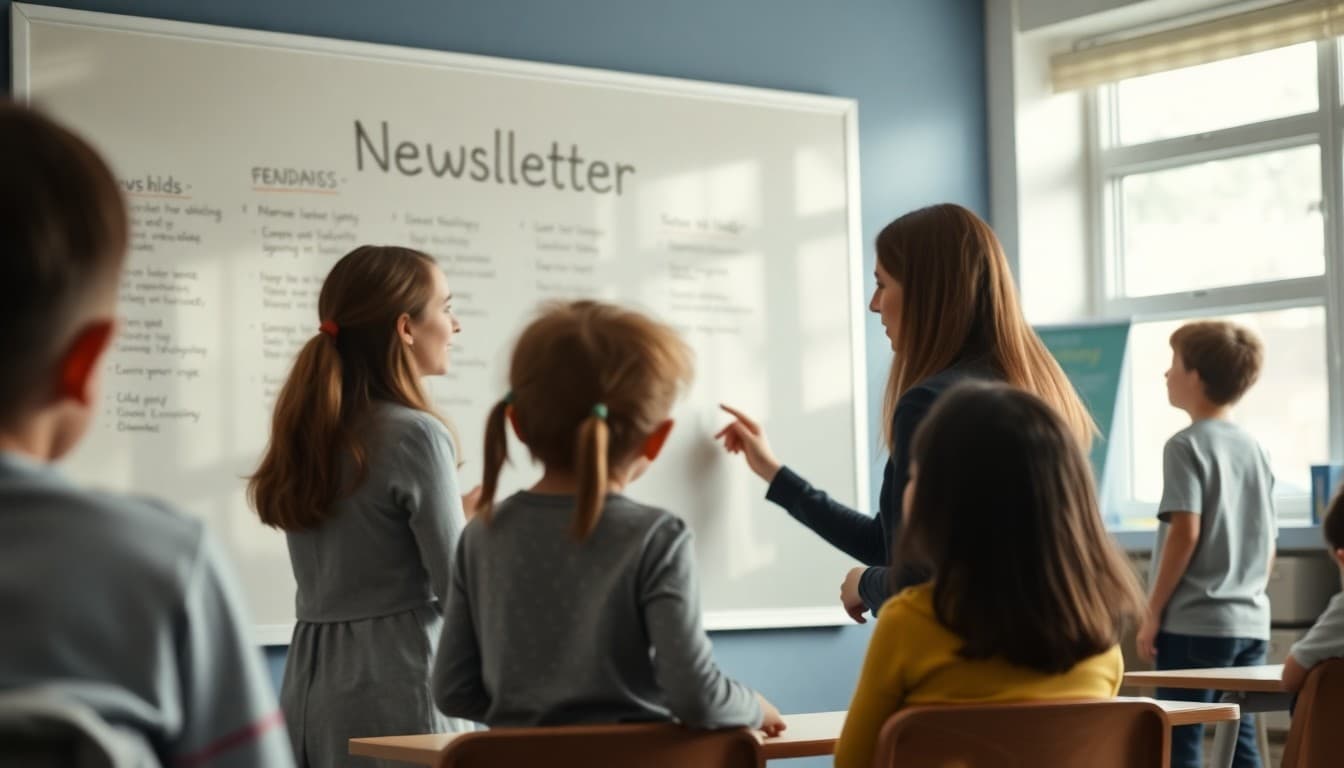
Kindergarten Classroom Newsletter Ideas for the Full Year
The hardest part of maintaining a consistent kindergarten newsletter is not the writing. It is knowing what to write about each time. A fresh classroom is full of content in September. By January, teachers often find themselves repeating themselves or sending bare-bones updates because they have run out of ideas.
This guide gives you a month-by-month framework of kindergarten newsletter content ideas that stay relevant, useful, and interesting to families throughout the year.
August and September: Foundations and Routines
The first month of kindergarten newsletters should focus on helping families understand the classroom structure. Good topics: the daily schedule with approximate times, the signal or transition procedures children are learning, what "centers" or activity rotations look like, and what children should bring or not bring in their backpacks.
Families with new kindergarteners are anxious and information-hungry in these first weeks. A brief "day in the life" section, walking through a typical kindergarten day from arrival to dismissal, is one of the highest-engagement pieces you can write all year.
October: Learning Milestones and Phonics
By October, most kindergarteners have settled in enough that you can begin reporting on academic progress. A good October newsletter covers what phonics concepts children are learning, approximately where most students are in letter and sound recognition, and two or three things families can do at home to reinforce phonemic awareness. Focus on things families can do at home without needing a worksheet, such as "practice segmenting the sounds in words you hear at the grocery store."
November: Building Number Sense
November is a natural time to focus on early math. Share what students are working on in number sense and counting, and describe one game or activity families can play at home. A simple dice game or counting objects during daily routines gives families a way to reinforce classroom math without feeling like formal homework. Include the language teachers are using so parents can mirror it: "When we count, we say 'one number for each object' - this is called one-to-one correspondence."
December: Reflecting on Growth
December newsletters work well as a progress reflection. What can students do now that they could not do in September? A brief before-and-after framing helps families see growth they might not notice in day-to-day life. "In September, most students knew about 10 letter sounds. Now most students know 20 or more and can read simple CVC words like 'cat' and 'hop.'"
January and February: Reading Takeoff
January through February is often when independent reading begins to click for many kindergarteners. Newsletter topics: how to support early readers at home, what "reading like a reader" looks like versus decoding every letter, and how to choose books at the right level for home reading. A concrete book list from your school library is one of the most useful things you can include in a February newsletter.
March and April: Writing Development
March is a good time to focus on writing development. Share what kindergarten writing looks like at this stage, including that inventive spelling is intentional and developmentally appropriate. Many families worry when they see their child spelling "kat" instead of "cat." A brief explanation of why teachers encourage phonetic writing before correcting spelling relieves common anxiety and builds confidence in the classroom approach.
May and June: Transition to First Grade
Closing newsletters should acknowledge the year's growth and help families prepare for the transition to first grade. Topics: what skills children will build in first grade and how kindergarten has prepared them, what a strong summer looks like in terms of maintaining skills without formal homework, and a list of five to ten books worth reading over the summer. A brief personal note from the teacher about the class's journey is the one place in the year where a warmer, more personal tone is entirely appropriate.
Get one newsletter idea every week.
Free. For teachers. No spam.
Frequently asked questions
How often should a kindergarten teacher send a classroom newsletter?
Biweekly is the most effective cadence for kindergarten newsletters. Families with new kindergarteners want regular updates during the first year, but weekly newsletters quickly become too much to keep up with. Biweekly gives you enough time between sends to have new content to share and keeps the newsletter from feeling like a burden to write or to read.
What kindergarten newsletter content do families actually read?
Families read content about their specific child's experience: what their child learned this week, what language or vocabulary words came home, and what they can do at home to reinforce the learning. Families skim or skip generic program descriptions. The closer the content is to the actual day-to-day of their child's classroom, the higher the engagement.
What is the right length for a kindergarten classroom newsletter?
Two to three sections with a total of 200 to 350 words. Kindergarten parents are busy, often have multiple young children, and read newsletters on their phones. A newsletter that fits on one scroll has a much higher read rate than a long newsletter with six sections and multiple attachments. Choose the three most useful pieces of information for each send.
Should the kindergarten newsletter include student photos?
Photos significantly increase engagement and the sense of connection for families. Always obtain photo permission through your school's standard photo release process before including identifiable student photos in any newsletter. If you do not have blanket permission, use photos of hands, artwork, or classroom scenes without identifiable faces, which still create warmth without privacy risk.
How can Daystage help kindergarten teachers send consistent newsletters?
Daystage makes it easy for teachers to build and send classroom newsletters directly to their class family list without going through an office coordinator. You can save your template and update it biweekly in under 20 minutes. The newsletter looks polished without requiring design skills.

Adi Ackerman
Author
Adi Ackerman is a former classroom teacher and curriculum writer with 8 years in K-8 schools. She writes about school communication, parent engagement, and what actually works in real classrooms.
More for Kindergarten Transition
Kindergarten Academic Expectations Newsletter: What Families Need to Know About What Their Child Will Learn
Kindergarten Transition · 5 min read
Kindergarten Back to School Newsletter Template (Free Download Guide)
Kindergarten Transition · 7 min read
Kindergarten Assessment Newsletter: How to Explain Assessments to Families Without Creating Test Anxiety
Kindergarten Transition · 5 min read
Ready to send your first newsletter?
3 newsletters free. No credit card. First one ready in under 5 minutes.
Get started free