

Unschooling Family Newsletter: Sharing Interest-Led Learning
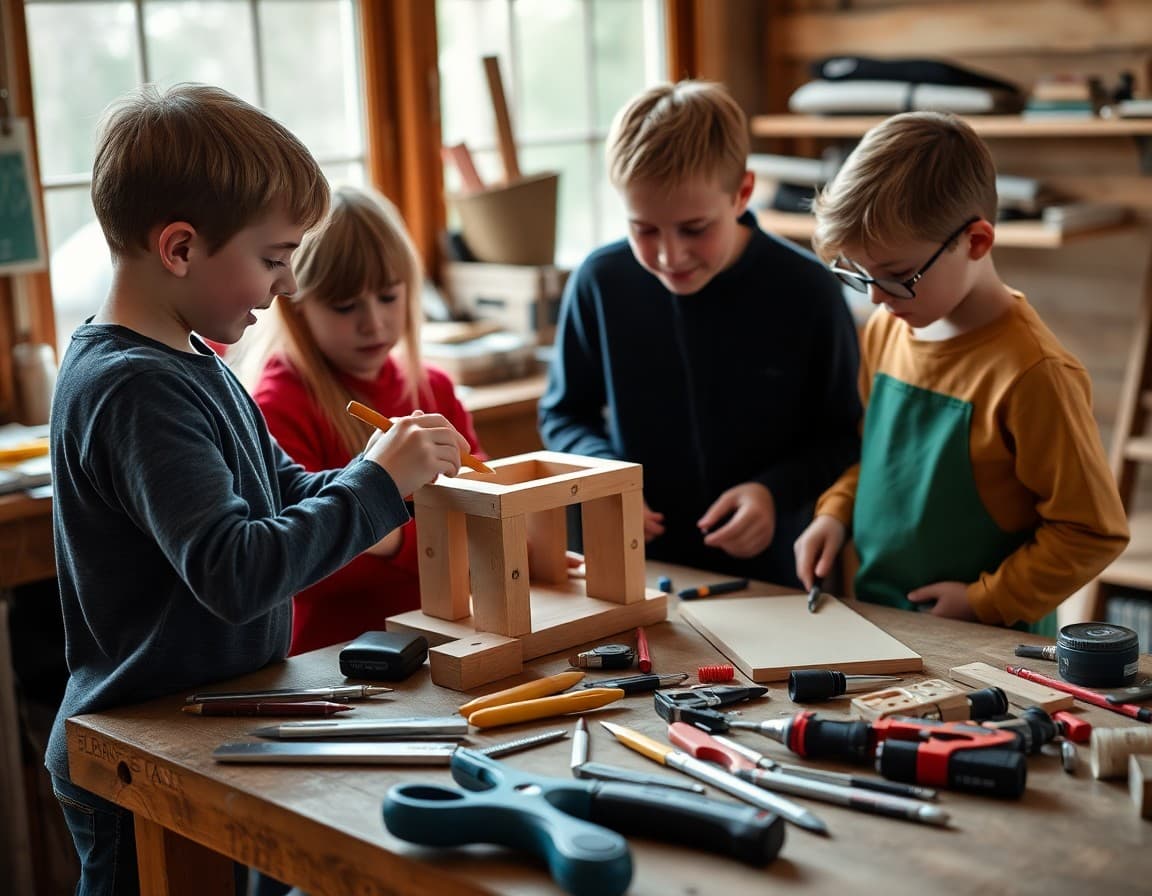
The unschooling family newsletter faces a challenge that structured homeschool newsletters do not: there is no curriculum checklist, no lesson plan, and no grade to report. What there is, if you look carefully, is a rich and often surprising record of what your child spent the last month thinking about, building, reading, and pursuing. The newsletter's job is to capture that clearly enough that anyone reading it can see the learning.
Lead with What Your Child Is Currently Obsessed With
The most compelling unschooling newsletter begins with the current deep interest. "This month, Emma became consumed by knot theory. It started with a YouTube video about the mathematics of Celtic knotwork and spiraled into the formal mathematics of topology, which led her to request three library books on mathematical knot theory, two of which are graduate-level texts she is determined to understand." That opening communicates self-directed learning, persistence, breadth, and real intellectual engagement.
Document the Project in Depth
Follow the obsession. What exactly did the child do? What did they read, watch, build, or investigate? Who did they talk to? What skills did they acquire in the process? "For the trebuchet project, Liam built three prototypes over six weeks, each one larger and more accurate than the last. He kept a measurement log. He calculated launch angles. He found a video of a physics professor explaining the mathematics of counterweight trebuchets and worked through the equations on a whiteboard." The depth of a single project communicates more about real learning than a list of subjects covered.
Name the Subjects That Emerged, Even if You Did Not Plan Them
One of the most useful things an unschooling newsletter can do for skeptical readers is map the interest to conventional academic subjects. "What looked like Liam's trebuchet obsession was also: history (medieval siege warfare and castle design), physics (projectile motion and counterweight mechanics), engineering (structural design and failure analysis), math (calculating launch distances and angles), and technical writing (his measurement log). I did not plan any of these. They came from following his question."
Be Honest About What Was Not Happening
Unschooling newsletters are more trustworthy when they acknowledge the periods of low visible productivity. "November was slower. Emma spent a lot of time reading novels and playing video games. She says she was resting after a particularly intense October. I am choosing to trust that." That honesty is more credible than a newsletter that makes every month sound like a triumph of self-directed learning.
Include the Social and Community Dimension
Unschooled children often have rich social lives built around their interests: community groups, online communities, local classes, and apprenticeship-style relationships with adults who share their passions. "Liam has been meeting monthly with our neighbor who is a retired structural engineer. They spend the afternoon in her garage. She says he asks better questions than most of her former colleagues. He is 11."
Address the Question Extended Family Always Asks
"But what about [grade level standard they might be behind in]?" Address it directly. "Yes, Emma does not know her multiplication tables as quickly as kids her age in school. She knows why multiplication works, and she uses it fluently in real situations. We will work on speed this winter, when the trebuchet obsession has passed, or possibly when she encounters a situation where speed matters. We are watching."
Send It Consistently
An unschooling newsletter sent monthly builds credibility over time in a way that a single detailed letter cannot. Families and community members who see consistent, specific, engaged reports over 12 months come to understand what interest-led learning actually looks like. Daystage makes it easy to send a consistent, well-formatted update to your list every month without the overhead of maintaining a blog or running a group email chain.
Get one newsletter idea every week.
Free. For teachers. No spam.
Frequently asked questions
What is unschooling and how do you describe it in a newsletter?
Unschooling is an approach to home education that follows the child's interests rather than a prescribed curriculum or schedule. Learning happens through real-life experiences, projects, conversations, and the child's own curiosity. An unschooling newsletter communicates this by describing what the child is currently curious about and what that curiosity has led to, rather than reporting which lessons were completed.
How do you write about unschooling in a way that skeptical extended family will understand?
Use specific examples of learning happening, not philosophical arguments about education theory. 'Liam spent the past three weeks obsessed with building a trebuchet. In the process he learned medieval siege warfare history, basic structural engineering, the physics of projectile motion, and why counterweights work. He read four library books and watched a dozen YouTube lectures.' That paragraph is more convincing than any explanation of unschooling principles.
How do you document learning in an unschooling newsletter without a curriculum to reference?
Document by interest and project, not by subject. Describe what the child investigated, what resources they used, what they made or created, and what questions they are still asking. The skills and subjects covered will be apparent to a reader without needing to list them explicitly.
Do unschoolers need to keep records, and how does a newsletter help?
Record-keeping requirements for unschoolers vary by state. Some states require only a declaration of homeschooling and no documentation of content. Others require portfolios or testing. In all cases, a regular newsletter serves as an informal but useful record of the learning that happened. It can be organized into a portfolio for states that require documentation.
What newsletter platform works well for unschooling family updates?
Daystage is used by homeschool families of all approaches to send community and family newsletters. For unschooling families, it is useful for sharing project-based updates with photos directly to extended family or a small community group without needing a blog or social media account.

Adi Ackerman
Author
Adi Ackerman is a former classroom teacher and curriculum writer with 8 years in K-8 schools. She writes about school communication, parent engagement, and what actually works in real classrooms.
More for Homeschool
Ready to send your first newsletter?
3 newsletters free. No credit card. First one ready in under 5 minutes.
Get started free