

Charlotte Mason Homeschool Newsletter Guide
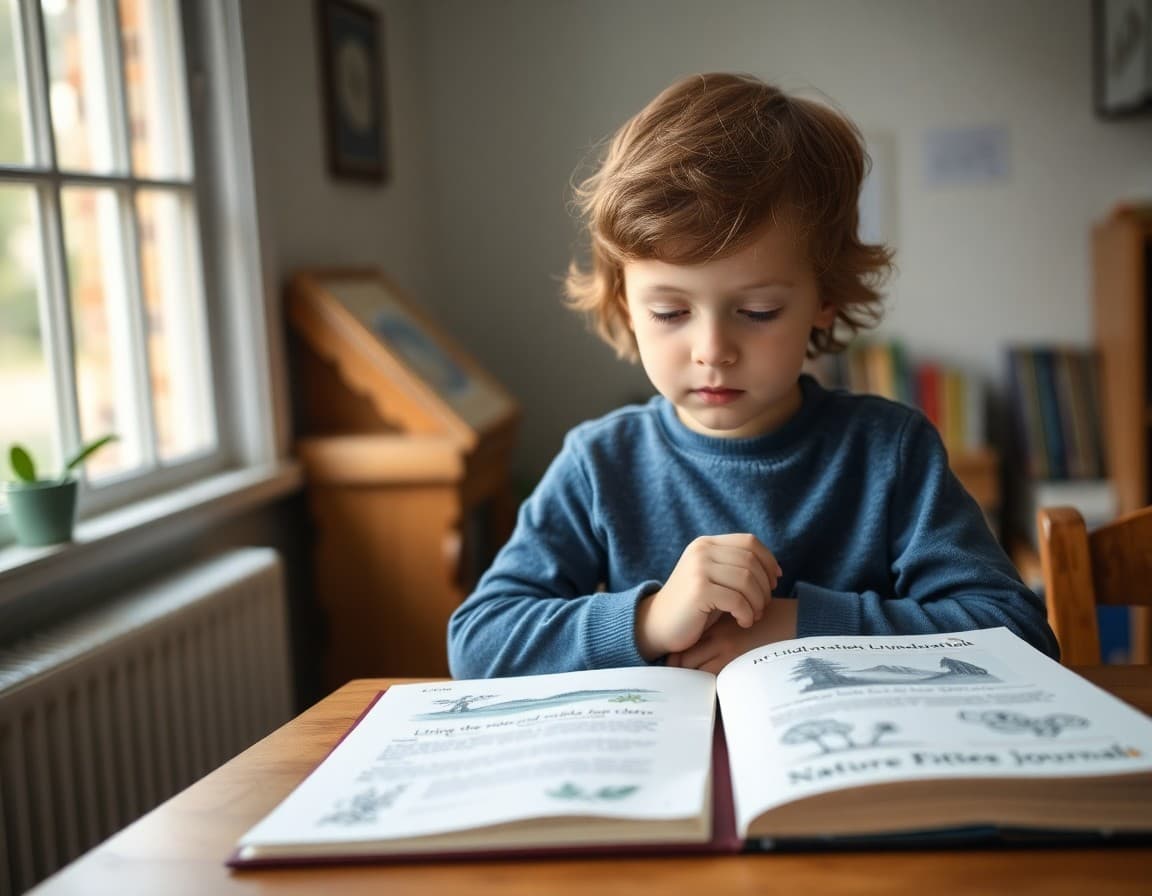
Charlotte Mason newsletters are, in a way, already built into the approach. CM education asks children to pay attention to the world and then put what they noticed into words. A family newsletter built on the CM approach asks the parent to do the same: observe what your child is learning, and tell it in your own words. Here is how to do that well.
Lead with the Nature Study
Nature study is one of the most distinctive and joyful aspects of CM education. Start your newsletter there. "This week's nature walk took us to the dry creek bed near the park. Emma spotted three species of lizards and added them to her nature journal with careful watercolor sketches. Liam found a coyote track in the soft sand and spent 20 minutes casting it in plaster for his nature collection." That paragraph communicates child-led discovery, careful observation, and the outdoor habit that Charlotte Mason considered essential.
Name the Living Books You Are Reading
Living books, Charlotte Mason's term for rich, narrative texts written by authors with genuine knowledge and love for their subject, are central to the CM approach. Name them specifically. "This month's morning time readings include The Story of the World Volume 3, the picture book version of Robin Hood illustrated by Walter Crane, and the first six chapters of The Wind in the Willows. Emma is reading Robinson Crusoe independently, which is her year 3 book."
Share a Narration Sample
Narration is the CM alternative to comprehension worksheets. The child retells what they heard or read in their own words. Including a brief narration sample in your newsletter shows your co-op community exactly what this practice looks like in action. "After the Robin Hood chapter, I asked Liam for a narration. He said: 'Robin Hood is in Sherwood Forest because the Sheriff is bad and took everything from the people, so Robin is stealing it back for them but only from the rich, not from the poor. He has a band of outlaws but they are loyal to him.' That is all his, no prompting."
Describe the Arts and Handicrafts
CM education places high value on handicrafts, art study, and music. Give these their own section. "We have been studying Monet this term using our Harmony Fine Arts Impressionism unit. Emma spent two sessions trying to recreate the Haystacks series in watercolor. She was frustrated at first by the light effects but eventually got close enough to be proud of it. Liam is learning to knit and has completed a 6-inch square he is calling 'practice for a scarf.'"
Report on Composer and Artist Study
Composer and artist study is a standing feature of CM education. "We are in week 4 of our Beethoven study. We have listened to the Fifth Symphony twice, the Moonlight Sonata, and this week started the Ode to Joy. Emma identified the main theme from the Fifth in a commercial last week and was unreasonably delighted. We are using Simply Charlotte Mason's composer study for the listening guide."
Include the Morning Time Schedule
Morning time, the CM practice of beginning the school day with poetry, hymn study, memory work, and read-alouds all together, is a touchstone for many CM families. Sharing your morning time routine helps other families design their own. "Our morning time this week includes: Psalm 23 recitation (both children almost have it), three poems from A Child's Garden of Verses, the fifth chapter of our current read-aloud (we are in The Merry Adventures of Robin Hood), and map drill on ancient Egypt."
Use Daystage for Your CM Co-op Newsletter
Charlotte Mason co-ops communicate a lot: book lists, nature study schedules, artist study materials, upcoming meetings. Daystage makes it easy to send a beautiful, well-formatted newsletter to all co-op families with photos of nature journals and handicrafts embedded directly in the email. It is the practical infrastructure that keeps your community connected between gathering days.
Get one newsletter idea every week.
Free. For teachers. No spam.
Frequently asked questions
What is Charlotte Mason homeschooling and how do you describe it in a newsletter?
Charlotte Mason is an educational philosophy developed by Charlotte Mason in the late 19th century that emphasizes living books (narrative, well-written texts rather than dry textbooks), nature study, narration (the child retelling what they learned), short lessons with full attention, and a broad, idea-rich curriculum called the feast. A newsletter for CM families should reflect these practices in specific, recognizable terms.
What should a Charlotte Mason newsletter include?
Nature study observations from the week, living books the family is reading aloud or independently, narration samples or highlights, any handicrafts or arts completed, composer or artist study updates, memory work, outdoor time and observations, and upcoming co-op activities. The newsletter should reflect the breadth of the CM feast.
What Charlotte Mason curricula or resources should a newsletter mention?
Ambleside Online (free, literature-based year books), Simply Charlotte Mason, A Mind in the Bloom: A Charlotte Mason Education, The Living Books Curriculum, Harmony Fine Arts, Morning Time plans, and various CM-aligned nature study resources like the Handbook of Nature Study. Naming the resource helps other CM families immediately understand your approach.
How do you share a narration sample in a homeschool newsletter?
Quote the child directly, briefly. 'After we read the chapter on the Nile River, I asked Emma to narrate. She said: The Nile floods every year when the rains come far to the south, and when it floods it leaves behind this rich black soil that makes it possible for people to grow crops in the middle of the desert. That is why all the cities and farms are right next to the river.' A direct quote is more compelling than a description.
What tool works well for Charlotte Mason homeschool group newsletters?
Daystage is used by homeschool communities including CM co-ops to send regular group newsletters. The platform supports formatted newsletters with photos of nature journals and handicrafts, delivered directly to family inboxes.

Adi Ackerman
Author
Adi Ackerman is a former classroom teacher and curriculum writer with 8 years in K-8 schools. She writes about school communication, parent engagement, and what actually works in real classrooms.
More for Homeschool
Ready to send your first newsletter?
3 newsletters free. No credit card. First one ready in under 5 minutes.
Get started free