
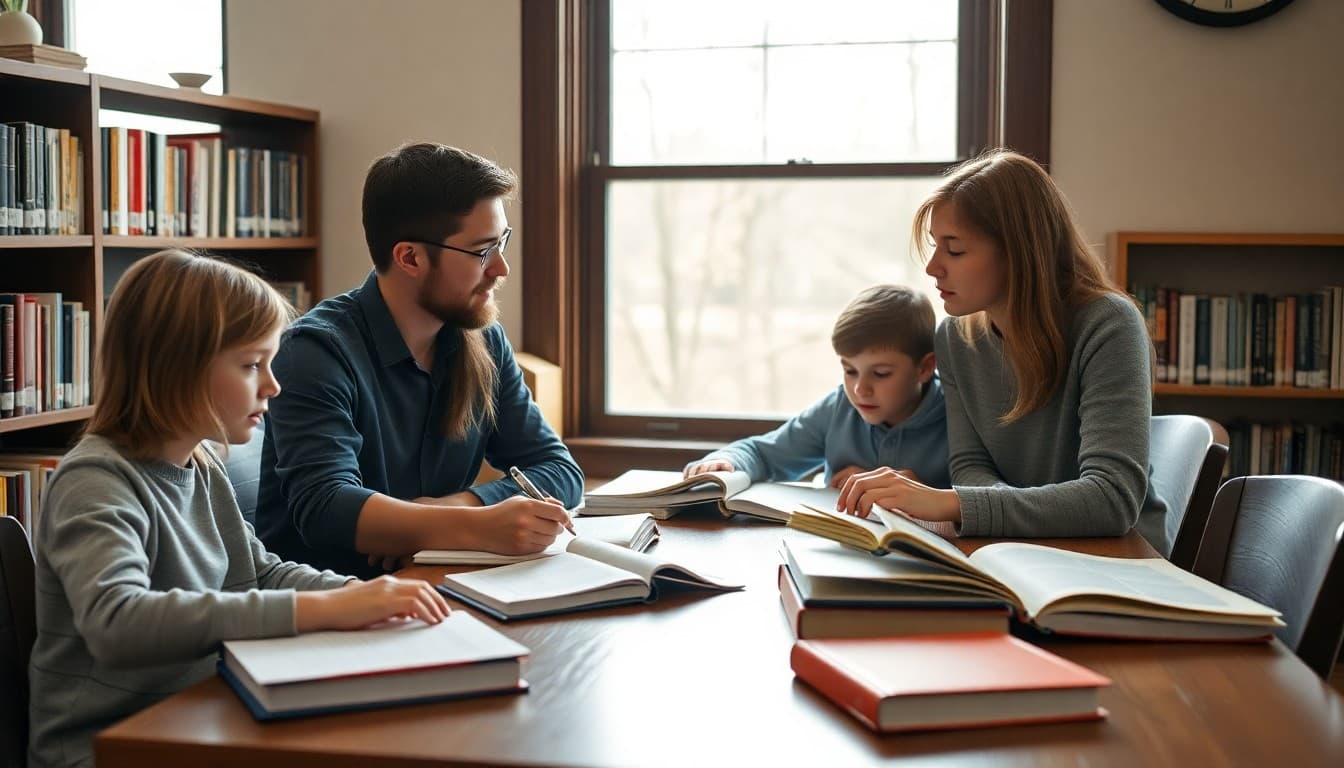
New York Homeschool Newsletter: Local Resources and Guide for Families
New York has the most detailed homeschool requirements in the country, but families who understand the system and build good documentation practices find it manageable. The IHIP, quarterly reports, and annual assessment create a demanding documentation rhythm that a newsletter habit directly supports. Build the documentation practice from day one, and the regulatory requirements become straightforward.
The IHIP and how it connects to your newsletter
The IHIP is an annual document that describes what your student will study and how progress will be assessed. Once approved, the IHIP becomes the framework your quarterly reports and annual assessment must address. Your newsletter, built around the subjects and learning objectives in the IHIP, creates a running documentation record that supports every subsequent reporting requirement.
When you write your IHIP, include enough specificity about curriculum and objectives that your newsletter entries clearly connect to what you described. Quarterly reports become much simpler when you can point to specific newsletter entries showing instruction in each IHIP subject area.
Quarterly reports and the newsletter archive
New York's quarterly reports require documentation of progress in each subject area. Families who maintain a consistent newsletter throughout the quarter find that the reports write themselves: the newsletter entries provide the evidence of instruction, and the quarterly report summarizes what those entries show.
The timing of your newsletters matters for this purpose. A newsletter sent every two to three weeks through the quarter means you have four to six entries to draw from when preparing each quarterly report. That is enough documentation to cover every subject area without requiring you to write anything new for the report itself.
New York City as an educational resource
For families in New York City or within reasonable travel distance, the educational resources available are extraordinary. The Metropolitan Museum of Art, the American Museum of Natural History, the New York Botanical Garden, the Brooklyn Botanic Garden, the Tenement Museum, the 9/11 Memorial Museum, and dozens of other institutions provide world-class educational programming.
New York City homeschool families can document institutional visits as part of their quarterly documentation in a way that demonstrates cross-curricular learning at the highest level. An afternoon at the Met covering Greek mythology, art history, and Egyptian archaeology is more valuable education than a textbook chapter on any of those topics.
Upstate New York's natural and historical curriculum
Upstate New York offers extraordinary natural and historical curriculum. The Finger Lakes region provides geology, viticulture, and natural history. The Adirondacks offer wilderness ecology and outdoor education. The Erie Canal corridor provides industrial history. Saratoga Battlefield preserves one of the most significant sites of the American Revolution. Niagara Falls provides geology and industrial history curriculum in one of the most dramatic natural settings in North America.
Annual assessment options
New York families can meet the annual assessment requirement through standardized testing or a written narrative assessment by a certified teacher. The narrative assessment route requires a certified teacher to review the student's portfolio and write a narrative evaluation. A newsletter archive provides the certified teacher with rich context for writing a thorough, accurate narrative.
Working with Daystage in New York
New York's documentation requirements make the newsletter habit more important here than in almost any other state. Daystage keeps your newsletter archive organized and accessible so that when quarterly report time arrives, you have everything you need without scrambling. The habit pays dividends four times a year in New York.
Get one newsletter idea every week.
Free. For teachers. No spam.
Frequently asked questions
What are New York's homeschool requirements?
New York has among the most detailed homeschool requirements in the country. Families must file an Individualized Home Instruction Plan (IHIP) with the local school district each year. New York requires quarterly reports documenting student progress, an annual assessment through standardized testing or a written narrative assessment, and minimum instructional hours.
What is the New York IHIP and what does it include?
The IHIP is an annual plan filed with the local school district that describes the curriculum, learning objectives, and assessment methods for each required subject. Required subjects at various grade levels include English, math, science, social studies, arts, health, and physical education, among others. The IHIP must be approved by the district superintendent.
What do New York quarterly reports require?
New York quarterly reports must document the student's progress in each subject area covered in the IHIP for that quarter. The reports are submitted to the local school district. A newsletter that consistently documents instruction across IHIP subjects throughout each quarter makes preparing quarterly reports considerably simpler.
What homeschool organizations support New York families?
Loving Education at Home (LEAH) serves faith-based New York families with legal resources and an annual conference. The New York Home Educators Network (NYPHEN) serves secular families. New York City has an exceptionally active homeschool community. Upstate New York has numerous regional co-ops and support groups.
How does Daystage help New York homeschool families?
New York families with quarterly report requirements benefit significantly from a newsletter that documents instruction throughout each quarter. Daystage keeps the newsletter archive organized by date and content, making quarterly report preparation a matter of organizing existing documentation rather than reconstructing what happened.

Adi Ackerman
Author
Adi Ackerman is a former classroom teacher and curriculum writer with 8 years in K-8 schools. She writes about school communication, parent engagement, and what actually works in real classrooms.
More for Homeschool
Ready to send your first newsletter?
3 newsletters free. No credit card. First one ready in under 5 minutes.
Get started free