

Homeschool Newsletter: Portfolio Review and Year-End Reflection
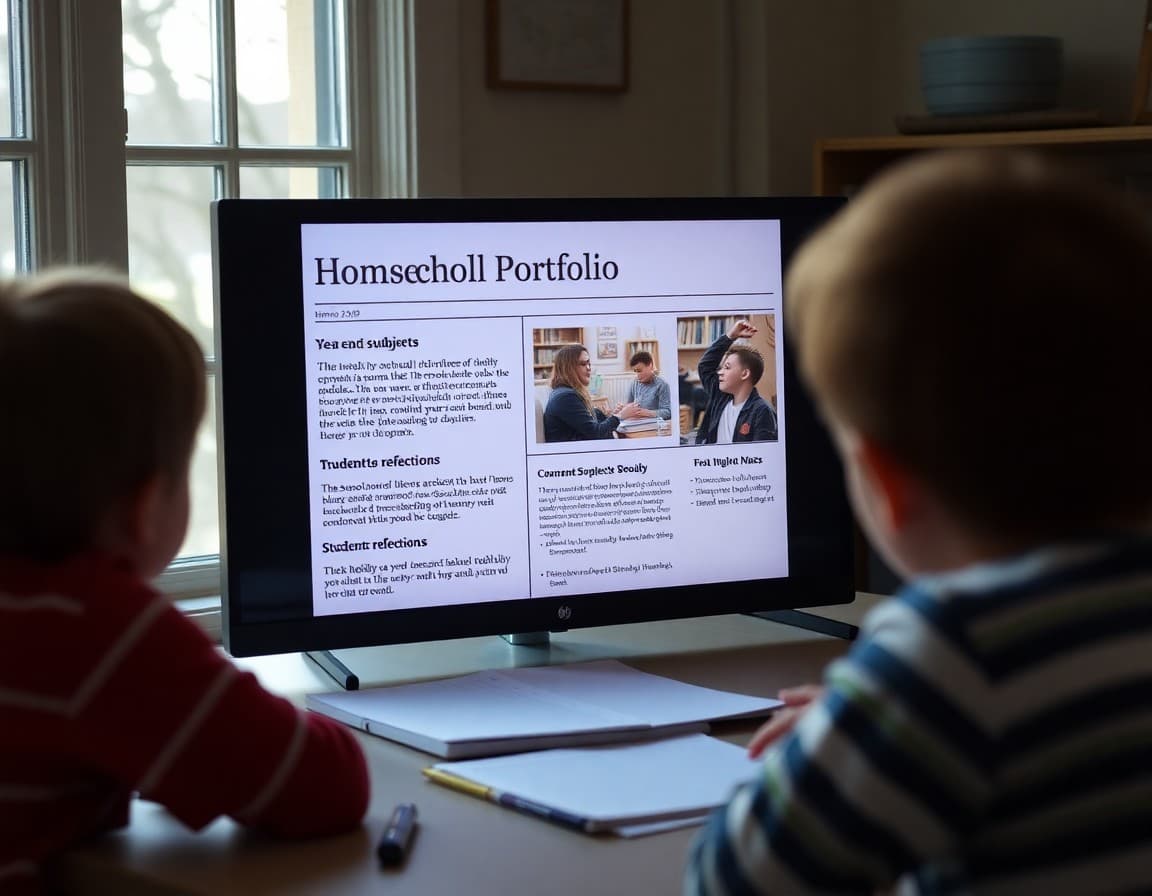
Portfolio review is one of the most meaningful moments in a homeschool year. It forces you to look honestly at what your students accomplished, what the curriculum produced, and where the program needs adjustment. A portfolio review newsletter turns that reflection into a communication that serves both your community and your own archive.
What the portfolio review actually evaluates
A formal portfolio review, whether for state compliance or your own program assessment, looks at student work samples across required subject areas and asks whether learning occurred at an appropriate level. The evaluator is not grading the curriculum or the teaching. They are looking for evidence that the student engaged with the material and produced work that shows understanding and growth.
The newsletter archive you bring to this review provides context that makes that judgment easier. A work sample in isolation is a data point. A work sample accompanied by months of newsletter entries showing the instruction that led to it tells a story of learning.
Preparing the review newsletter
Before writing the review newsletter, go back through your year of newsletters and identify the most significant moments in each subject area. These are the moments worth highlighting in the review: the breakthrough in reading comprehension, the science project that required independent research, the history essay that showed genuine analysis, the math concept that finally clicked.
Use these moments to frame your subject-by-subject review. Each section should cover what the student studied, what the most significant achievement was, and what challenge remains going into the next year.
Reporting evaluation results honestly
If your formal evaluation produced a written report or assessment, summarize it honestly in the newsletter. An evaluator's positive assessment is meaningful context for extended family. An evaluator's concern or recommendation is equally important to share, because it shows that your program responds to external feedback.
A newsletter entry like this is honest and useful: "Our evaluator noted that Clara's writing mechanics are developing well but her written expression lags behind her verbal comprehension. She has sophisticated ideas but does not yet translate them effectively to paper. We are adding a formal writing program next year to address this directly."
Student self-evaluation as a portfolio component
Including a student self-evaluation in the portfolio review newsletter is one of the most valuable practices a homeschool family can build. Ask each student to answer three questions: What did you learn this year that surprised you? What was hardest? What do you want to work on next year? Their answers, published in the newsletter, show metacognitive development that formal evaluations rarely capture.
Even a brief student response like: "I surprised myself with history. I thought I did not like it and now I want to be an archaeologist" is documentation of intellectual development that no test score conveys.
What changes next year based on the review
The most useful section of a portfolio review newsletter is the forward-looking section: what changes are you making based on what this year's review revealed? Curriculum adjustments, schedule changes, new approaches to difficult subjects, and plans to deepen areas of particular strength all belong here.
This section shows that your program is responsive and thoughtful. It connects the review backward to what happened this year and forward to what you are planning, creating a continuous narrative of educational development.
Closing the school year with Daystage
A portfolio review newsletter sent at the end of the school year, using Daystage to ensure it reaches your full subscriber list in a professional format, creates the annual milestone that anchors your newsletter archive. The archive of annual review newsletters, accumulated over multiple years, becomes one of the most valuable documents your family possesses.
Get one newsletter idea every week.
Free. For teachers. No spam.
Frequently asked questions
What should a homeschool portfolio review newsletter include?
A portfolio review newsletter covers what each student accomplished across major subject areas during the year, what the portfolio evaluation process looked like, how the evaluator assessed student progress, and what the results mean for the coming year. It also reflects honestly on what worked in the curriculum and what needs to change.
How does a newsletter archive support the formal portfolio review?
A year of newsletters provides the narrative context that makes portfolio work samples meaningful to an evaluator. When an evaluator can read through a school year of newsletters showing consistent instruction, the individual work samples they review have a framework. The newsletter archive is the story that the work samples illustrate.
Should the portfolio review newsletter be sent before or after the formal evaluation?
Typically after, so you can report the results. Some families send a pre-evaluation newsletter describing what the portfolio contains and how they have prepared, then follow with a post-evaluation newsletter reporting results and reflecting on the process.
What is the right tone for a portfolio review newsletter?
Honest and reflective. Report what the evaluator found, note where students performed strongly and where there is room for growth, and describe how the evaluation informs your plans for the coming year. Avoid promotional framing that only reports strengths. Readers who follow your family over time trust honest assessments.
How does Daystage help homeschool families with portfolio documentation?
Daystage provides the platform for building the newsletter archive that becomes your portfolio's narrative backbone. Families in states with portfolio review requirements find that a year of consistent Daystage newsletters makes the formal evaluation preparation significantly simpler.

Adi Ackerman
Author
Adi Ackerman is a former classroom teacher and curriculum writer with 8 years in K-8 schools. She writes about school communication, parent engagement, and what actually works in real classrooms.
More for Homeschool
Homeschool Assessment and Portfolio Newsletter: How to Communicate Student Progress Without Letter Grades
Homeschool · 6 min read
Homeschool Annual Report Newsletter: Sharing Progress with Family
Homeschool · 6 min read
Homeschool Newsletter: Celebrating Learning Milestones and Student Progress
Homeschool · 6 min read
Ready to send your first newsletter?
3 newsletters free. No credit card. First one ready in under 5 minutes.
Get started free