

Nevada Homeschool Newsletter: Local Resources and Guide for Families
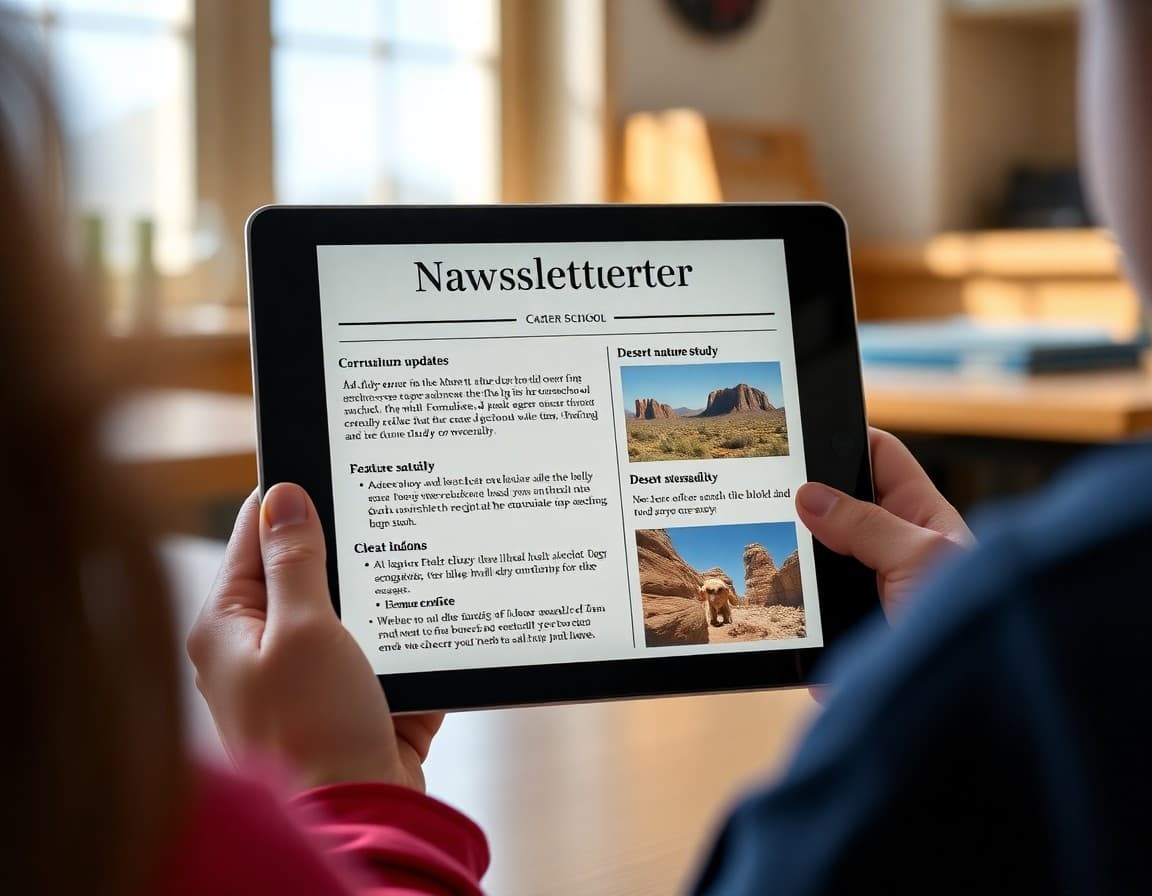
Nevada covers a lot of ground, from the neon glow of Las Vegas to the silence of the Great Basin desert to the snow-capped peaks of the Sierra Nevada. Homeschooling here means access to some of the most geologically dramatic landscapes in the country and a state framework that allows families to document and assess learning in several different ways. A newsletter captures the particular quality of a Nevada education.
Nevada's assessment requirement
Nevada's periodic assessment requirement means families need a documentation practice that builds toward assessment readiness throughout the year rather than scrambling at review time. A newsletter that notes what subjects were covered in each edition creates a running record that makes assessment preparation much simpler.
Families who choose the portfolio assessment route particularly benefit from a newsletter archive. The portfolio tells the assessor what the student has learned; the newsletters provide the context showing when, how, and why each subject was covered.
Great Basin Desert as geology curriculum
Nevada sits almost entirely within the Basin and Range Province, a geological region defined by fault-block mountains separated by flat valleys. This geology produces dramatic landscapes and mineral deposits that drove the state's mining history. The region's geology is accessible and visible in ways that make field study genuinely productive.
Great Basin National Park in eastern Nevada is one of the most undervisited national parks in the country but one of the most rewarding for science-focused families. The park contains Wheeler Peak, the Lehman Caves, and ancient bristlecone pine forests, some of which include individual trees over 4,000 years old. The pine forests are one of the most remarkable biology curriculum destinations in the West.
Nevada's mining and ghost town history
Nevada was built by silver. The Comstock Lode produced hundreds of millions of dollars in silver and transformed a desert territory into a state. The ghost towns scattered across Nevada's landscape are living history curriculum. Virginia City, Rhyolite, Berlin-Ichthyosaur State Park, and dozens of other former mining communities provide direct access to 19th-century industrial history.
A family that visits a Nevada ghost town, researches the mine that supported it, calculates what the silver was worth in today's dollars, and studies why the town was abandoned has covered history, economics, geology, and mathematics in a single field trip.
Hoover Dam and 20th-century engineering
Hoover Dam is one of the greatest engineering achievements of the 20th century. The dam's construction during the Great Depression, its engineering specifications, its role in water allocation across the Southwest, and its ongoing function as a major power source are all curriculum topics. The dam visitor center provides well-developed educational programming for school groups.
Las Vegas as a curriculum destination
Counterintuitively, Las Vegas offers some strong curriculum destinations. The Natural History Museum, the Nevada State Museum, the Springs Preserve, and the Mob Museum all provide educational programming. The Springs Preserve documents the natural spring system that originally made the Las Vegas Valley habitable and the environmental history of water in the desert.
Building a consistent newsletter in Nevada
Nevada families in Las Vegas and Reno have access to co-ops and group activities. Rural Nevada families may be more isolated but have access to field study destinations that Las Vegas families drive hours to reach. The newsletter bridges the geography of this large, sparsely populated state and connects learning to the specific landscapes where it happens.
Daystage makes sending newsletters fast and professional. For Nevada families preparing for periodic assessments, a consistent newsletter archive is one of the most practical documentation investments you can make.
Get one newsletter idea every week.
Free. For teachers. No spam.
Frequently asked questions
What are Nevada's homeschool requirements?
Nevada requires parents to file a notice of intent with their local school district. Students must receive 180 days of instruction in required subjects. Nevada requires assessment annually or every other year depending on the student's grade, with options including standardized testing, portfolio evaluation, or other approved methods.
What assessment options do Nevada homeschool families have?
Nevada allows standardized testing administered by a third party, portfolio assessment by a licensed Nevada teacher, or other methods approved by the school district. Families can choose the method that best fits their students' learning style and their program's strengths.
Are there homeschool co-ops in Nevada?
Nevada has active homeschool communities particularly in the Las Vegas and Reno-Sparks metro areas. Nevada Home Education Network (NHEN) provides statewide support. Las Vegas has numerous co-ops given its large population, while Reno and Carson City have smaller but active communities.
What Nevada-specific content works well in homeschool newsletters?
Nevada's Basin and Range geology, Great Basin desert ecology, the history of mining towns and ghost towns, Basin and Range National Monument, Great Basin National Park with its ancient bristlecone pines, Native American heritage from the Paiute and Shoshone peoples, the history of Hoover Dam, and Nevada's role in atomic testing history all provide rich curriculum content.
How does Daystage help Nevada homeschool families?
Nevada families subject to periodic assessment benefit from a newsletter archive that documents learning throughout the year. Daystage makes building that archive straightforward and keeps it organized for easy reference when assessment preparation begins.

Adi Ackerman
Author
Adi Ackerman is a former classroom teacher and curriculum writer with 8 years in K-8 schools. She writes about school communication, parent engagement, and what actually works in real classrooms.
More for Homeschool
Ready to send your first newsletter?
3 newsletters free. No credit card. First one ready in under 5 minutes.
Get started free