
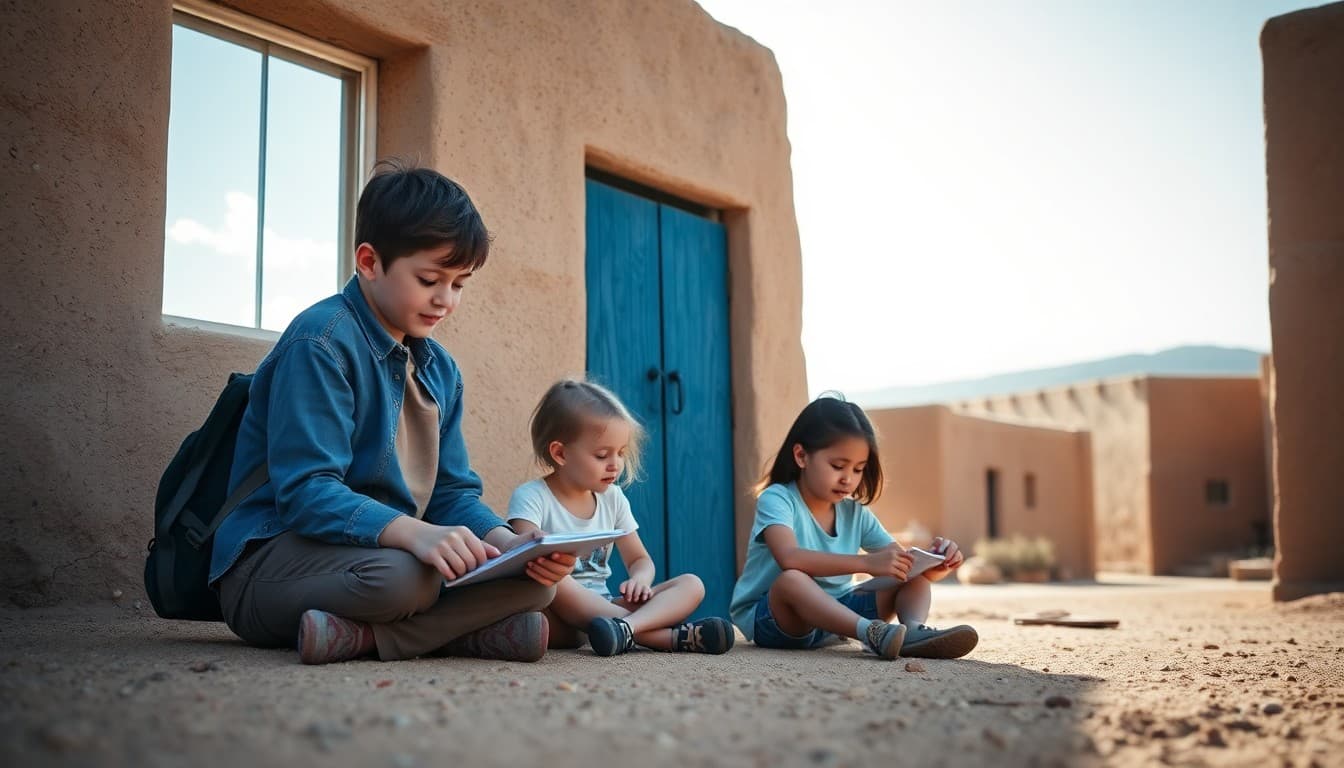
New Mexico Homeschool Newsletter: Local Resources and Guide for Families

New Mexico carries one of the deepest histories of any state in the country. Human habitation going back thousands of years, Spanish colonization beginning in 1598, the Pueblo Revolt of 1680, the development of the atomic bomb, and a living tri-cultural heritage of Native American, Hispanic, and Anglo communities all make New Mexico an extraordinary place to learn. The newsletter captures this education and documents it alongside the state's testing requirements.
New Mexico's notification and testing requirements
The annual notice to the local superintendent and required standardized testing create a clear accountability structure for New Mexico families. Building a newsletter habit that documents instruction throughout the year ensures that test preparation connects to actual learning rather than cramming before the test date.
A newsletter that notes what math concepts were covered, what reading and writing work was completed, and what science and social studies topics were addressed gives you a clear map of your curriculum when test preparation time arrives. Gaps in the newsletter record often indicate gaps in instruction worth addressing before testing.
Pueblo culture and history
New Mexico is home to nineteen Pueblo nations, each with distinct language, history, and cultural practices. The Pueblo people have maintained continuous residence in the region for over a thousand years, making New Mexico one of the places in the country where indigenous culture is most visibly alive. Taos Pueblo is a UNESCO World Heritage Site and one of the oldest continuously inhabited communities in North America.
Families who study Pueblo history and culture have access to living communities, archaeological sites like Chaco Culture National Historical Park, and the New Mexico Museum of Natural History and Science. Document these visits with enough specificity to show genuine engagement with the material.
White Sands and Carlsbad Caverns as geology curriculum
White Sands National Park is unlike any other landscape in the world. The gypsum sand dunes are among the largest in the world and the geology of the Tularosa Basin that contains them provides extraordinary earth science curriculum. Carlsbad Caverns is one of the most spectacular cave systems accessible to the public, and the evening bat flight, when hundreds of thousands of bats emerge from the cave at dusk, is one of the most remarkable natural history events in the country.
Los Alamos and the Manhattan Project
The Manhattan Project, which developed the first atomic bomb at Los Alamos during World War II, is one of the most significant scientific and historical events of the 20th century. The Bradbury Science Museum in Los Alamos and the Trinity Site in southern New Mexico provide curriculum access to this history. For families interested in physics, 20th-century history, and the ethics of scientific development, New Mexico offers resources found nowhere else.
The art communities of Santa Fe and Taos
Santa Fe has one of the most significant arts communities in the country. The Museum of International Folk Art, the New Mexico Museum of Art, the Georgia O'Keeffe Museum, and dozens of galleries provide arts curriculum in an unusually accessible form. O'Keeffe's connection to the New Mexico landscape gives families a direct connection between place and artistic vision.
Building the newsletter habit alongside New Mexico's culture
New Mexico's tri-cultural heritage means that a genuine education here engages with Spanish, indigenous, and American frontier cultures simultaneously. The newsletter that captures this engagement, alongside the required subject areas, tells the story of an education that is genuinely rooted in place. Daystage makes the sending simple so the time investment stays in the writing and the learning.
Get one newsletter idea every week.
Free. For teachers. No spam.
Frequently asked questions
What are New Mexico's homeschool requirements?
New Mexico requires parents to notify the local public school superintendent each year before beginning home instruction. New Mexico requires annual standardized testing for homeschool students, with results submitted to the local school district. Families must cover the same required subjects taught in public schools.
What testing options do New Mexico homeschool families have?
New Mexico allows families to choose from a list of approved standardized tests for their annual assessment. Tests must be administered according to standardized protocols, typically by a third-party administrator. Results are submitted to the local school district.
What homeschool groups are active in New Mexico?
New Mexico Christian Home Educators (NMCHE) provides resources and events for faith-based families. Various secular groups and co-ops operate in Albuquerque, Santa Fe, Las Cruces, and Taos. New Mexico's multicultural character has produced homeschool communities that reflect the state's diverse cultural heritage.
What New Mexico-specific content works well in homeschool newsletters?
New Mexico's Pueblo and Navajo cultural heritage, the history of Spanish colonization and the Pueblo Revolt, White Sands National Park geology, Carlsbad Caverns, the history of Los Alamos and the Manhattan Project, the art communities of Taos and Santa Fe, and the state's extraordinary archaeological sites all provide rich curriculum content.
How does Daystage help New Mexico homeschool families?
New Mexico families subject to annual standardized testing benefit from a newsletter archive that documents instruction across required subjects throughout the year. Daystage makes building and maintaining this archive simple and organized.

Adi Ackerman
Author
Adi Ackerman is a former classroom teacher and curriculum writer with 8 years in K-8 schools. She writes about school communication, parent engagement, and what actually works in real classrooms.
More for Homeschool
Ready to send your first newsletter?
3 newsletters free. No credit card. First one ready in under 5 minutes.
Get started free