
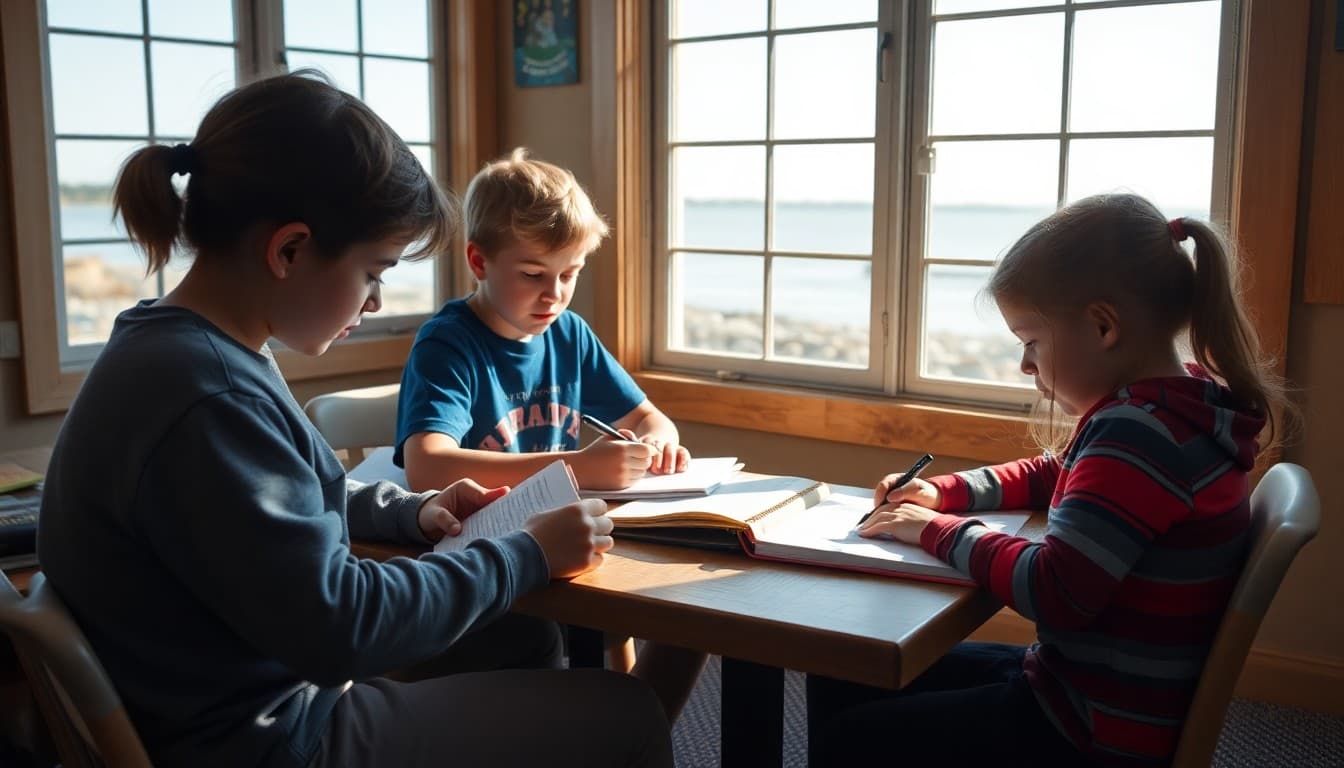
Michigan Homeschool Newsletter: Local Resources and Guide for Families

Michigan's homeschool law has some specific provisions related to teacher credentials that can be confusing, but most families navigate the requirements successfully. The state's large, active homeschool community provides strong support networks. The Great Lakes environment, the state's industrial heritage, and its natural diversity create an extraordinary setting for homeschool education.
Michigan's credential requirements and exemptions
Michigan requires instructing parents to meet one of four qualifications: hold a teaching certificate, have a bachelor's degree, be supervised by a certified teacher, or teach under religious freedom protections. The religious freedom provision is broad and covers families who homeschool for sincerely held religious reasons. Non-religious families without degrees who want to homeschool should consult with Michigan homeschool legal organizations to understand their options.
Once the credential question is settled, Michigan families have genuine freedom in curriculum and instruction. No state testing, no portfolio submission, no reporting obligations beyond the credential requirement.
The Great Lakes as science curriculum
Michigan borders four of the five Great Lakes, making freshwater ecosystem science one of the most accessible curriculum areas for the state's homeschool families. The Great Lakes contain 21 percent of the world's surface freshwater. Families near the lakes can study water quality, fish ecology, migratory bird populations along the flyway, dune formation along the western shoreline, and the engineering of the Soo Locks.
Sleeping Bear Dunes National Lakeshore, Pictured Rocks National Lakeshore in the Upper Peninsula, and Isle Royale National Park all provide extraordinary natural science field study opportunities. A family that visits Isle Royale to study wolf-moose predator-prey dynamics has science curriculum that is taught in universities.
The Upper Peninsula as a separate curriculum
Michigan's Upper Peninsula is geologically and culturally distinct from the Lower Peninsula. The copper and iron mining heritage, the Ojibwe cultural presence, the Pictured Rocks sandstone formations, Tahquamenon Falls, and the Keweenaw Peninsula's industrial history all provide extraordinary content for UP families. The Keweenaw National Historical Park documents the development of copper mining technology and its impact on American industry.
Automotive heritage and engineering education
Michigan is the birthplace of the American automotive industry, and the Henry Ford Museum and Greenfield Village in Dearborn is one of the finest American history and technology museums in the country. The collection spans transportation history, American industrial development, and the stories of inventors and entrepreneurs who shaped the country. For families interested in STEM and American history, this is a destination worth multiple visits.
Michigan co-ops and homeschool community
Michigan's homeschool community is large enough to support co-ops across many different approaches. Grand Rapids, Lansing, the Detroit metro area, and other communities have multiple options for families seeking co-op instruction in lab sciences, foreign languages, arts, and other subjects. The INCH conference is one of the largest homeschool events in the Midwest.
Building a newsletter that serves your Michigan education
Michigan families who document their education through a consistent newsletter build an archive that shows the full richness of a Great Lakes education. The combination of Great Lakes science, industrial heritage, and the genuinely distinct Upper Peninsula experience creates newsletter content that is interesting to read and valuable as a long-term record.
Daystage makes the sending process simple enough to maintain as a consistent habit across the full school year.
Get one newsletter idea every week.
Free. For teachers. No spam.
Frequently asked questions
What are Michigan's homeschool requirements?
Michigan allows families to homeschool under the private school statute. There is no registration with the state, no mandatory curriculum approval, and no testing requirement. However, instructing parents must hold a teaching certificate, have a bachelor's degree, be supervised by a certified teacher, or teach their own children as a matter of parental right under the state's religious freedom provisions.
What is the teacher certification or supervision requirement in Michigan?
Michigan's homeschool law has a complex provision requiring the teaching parent to be certified or hold a bachelor's degree, or to be supervised by a certified teacher. The religious freedom clause provides an exemption for families who homeschool for sincerely held religious reasons. Many Michigan families rely on the religious exemption; non-religious families should connect with legal organizations to understand their specific situation.
What homeschool organizations support Michigan families?
Michigan Homeschool Organization (MHO) and Information Network for Christian Homes (INCH) both serve Michigan families and host annual events. The Great Lakes area has strong co-op networks. Detroit metro, Grand Rapids, Lansing, and the Upper Peninsula all have active homeschool communities.
What Michigan-specific content works well in homeschool newsletters?
Michigan's Great Lakes geography, automotive and manufacturing history, Native American heritage from the Ojibwe and other nations, the copper and iron mining heritage of the Upper Peninsula, Edmund Fitzgerald history, the history of Motown music, and the state's extraordinary freshwater resources all provide strong curriculum content.
How does Daystage help Michigan homeschool families?
Daystage provides Michigan families with an easy way to build and send polished newsletters that document learning and communicate with their community. The newsletter archive provides documentation useful for any future supervision or oversight requirements.

Adi Ackerman
Author
Adi Ackerman is a former classroom teacher and curriculum writer with 8 years in K-8 schools. She writes about school communication, parent engagement, and what actually works in real classrooms.
More for Homeschool
Ready to send your first newsletter?
3 newsletters free. No credit card. First one ready in under 5 minutes.
Get started free