

Maine Homeschool Newsletter: Local Resources and Guide for Families
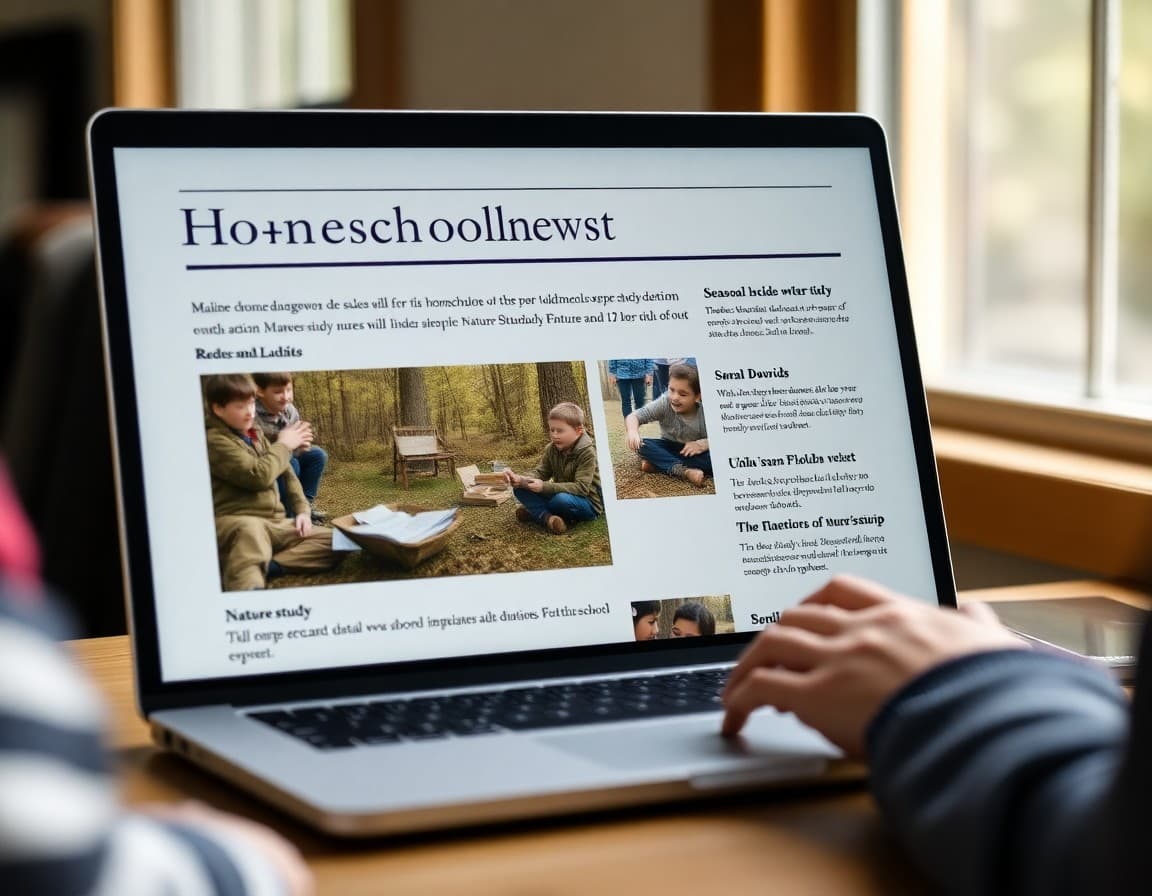
Maine is a state where the natural environment is an essential part of any honest education. The coast, the forests, the rivers, and the four very distinct seasons provide a curriculum framework that no standard textbook series can match. The newsletter is where you document what this education actually looks like and share it with the people who care about your students.
Maine's notification and assessment requirements
Maine's annual letter of intent and assessment requirement are manageable. Filing the letter of intent before the school year begins establishes your family's status. The annual assessment requires choosing one of three approved methods: standardized testing, portfolio review by a certified teacher, or another approved evaluator.
Families who prefer the portfolio route benefit enormously from a newsletter archive. A year of newsletters documenting instruction across all required subjects, with specific learning entries for each, gives a certified teacher reviewer strong context for evaluating your student's progress. The newsletter supplements the work samples and makes the evaluation much smoother.
Maine's coastal ecosystem as science curriculum
Maine's coastline is one of the most ecologically rich in the country. Rocky intertidal zones, eelgrass beds, kelp forests, and open ocean ecosystems are all accessible from much of the state. Families near the coast can build year-round marine science observation into their curriculum and document findings in their newsletter.
The Gulf of Maine Research Institute and the College of the Atlantic offer educational programs for homeschool families. Jackson Laboratory in Bar Harbor provides genetics education programs. Maine's coastal research institutions are often more accessible to the public than their equivalents in other states.
Wabanaki heritage and history
The Wabanaki Confederacy, which includes the Penobscot, Passamaquoddy, Maliseet, and Micmac peoples, has a living presence in Maine. This is one of the few states where indigenous nations maintain recognized presence and cultural programming within the state itself. Families who incorporate Wabanaki history and culture into their curriculum can connect with living communities rather than only historical records.
The Abbe Museum in Bar Harbor focuses specifically on Maine Native American history and art and is an excellent resource for homeschool educational visits.
Maine forest ecology and natural science
The North Woods of Maine represent one of the largest intact forest ecosystems in the eastern United States. Paper birch, northern hardwood forests, boreal forest communities, and the wildlife that depends on them all provide curriculum content for families in northern and western Maine. Tracking, wildlife observation, forest botany, and watershed science are all available through direct engagement with Maine's forests.
Acadia National Park on Mount Desert Island is within reach for many Maine families and provides extraordinary natural science programming. The park's carriage roads, tidal areas, and summit ecosystems support curriculum connections across geology, ecology, and geography.
Maine's arts and literary heritage
Maine has an extraordinarily rich artistic legacy. Andrew Wyeth spent much of his career painting the Maine coast. The Wyeth family, including N.C. and Jamie Wyeth, created work that is intrinsically connected to the Maine landscape. The Farnsworth Art Museum in Rockland houses the world's largest collection of Wyeth works.
Maine's literary connections include Henry Wadsworth Longfellow, Sarah Orne Jewett, and contemporary writers including Elizabeth Strout. The state's storytelling tradition, from its fishing communities to its lumber camps, provides rich material for language arts curriculum.
Building a consistent newsletter habit in a rural state
Maine's rural character means many homeschool families are geographically isolated from co-ops and groups. The newsletter bridges this distance effectively, keeping extended family and community connected to learning that happens in remote and beautiful places. Daystage makes the sending simple so the consistency you need for both community and documentation purposes is achievable even in a busy homeschool week.
Get one newsletter idea every week.
Free. For teachers. No spam.
Frequently asked questions
What are Maine's homeschool requirements?
Maine requires parents to submit a letter of intent to homeschool with their local superintendent each year. Families must provide instruction equivalent to public school in required subjects for at least 175 days. Maine requires an annual assessment, which can be satisfied by standardized testing, portfolio evaluation, or a progress report from a Maine-certified teacher.
What assessment options do Maine homeschool families have?
Maine allows three assessment options: a nationally normed standardized test administered by an approved professional, portfolio evaluation and review by a Maine-certified teacher, or a review by a qualified evaluator selected by the family and approved by the superintendent. The portfolio route is popular with families who prefer to show the full range of their students' learning.
Are there homeschool co-ops in Maine?
Maine has an active homeschool community centered around Bangor, Portland, the Midcoast area, and the western lakes and mountains. Maine Home Education Association (MHEA) provides legal resources and community connection. Given Maine's rural character, many families participate in small local co-ops or connect through regional networks.
What Maine-specific content works in homeschool newsletters?
Maine's coastal ecology, Acadian and Wabanaki indigenous heritage, maritime history, the lobster fishing industry, the history of paper and lumber industries, the work of Maine artists like Andrew Wyeth, the state's literary connections, and four-season nature study in northern forests all provide rich curriculum content.
How does Daystage help Maine homeschool families?
Daystage makes newsletter building and sending quick enough to maintain as a weekly or monthly habit. Maine families who need annual assessment documentation benefit from a year-long newsletter archive that demonstrates consistent instruction across all required subjects.

Adi Ackerman
Author
Adi Ackerman is a former classroom teacher and curriculum writer with 8 years in K-8 schools. She writes about school communication, parent engagement, and what actually works in real classrooms.
More for Homeschool
Ready to send your first newsletter?
3 newsletters free. No credit card. First one ready in under 5 minutes.
Get started free