
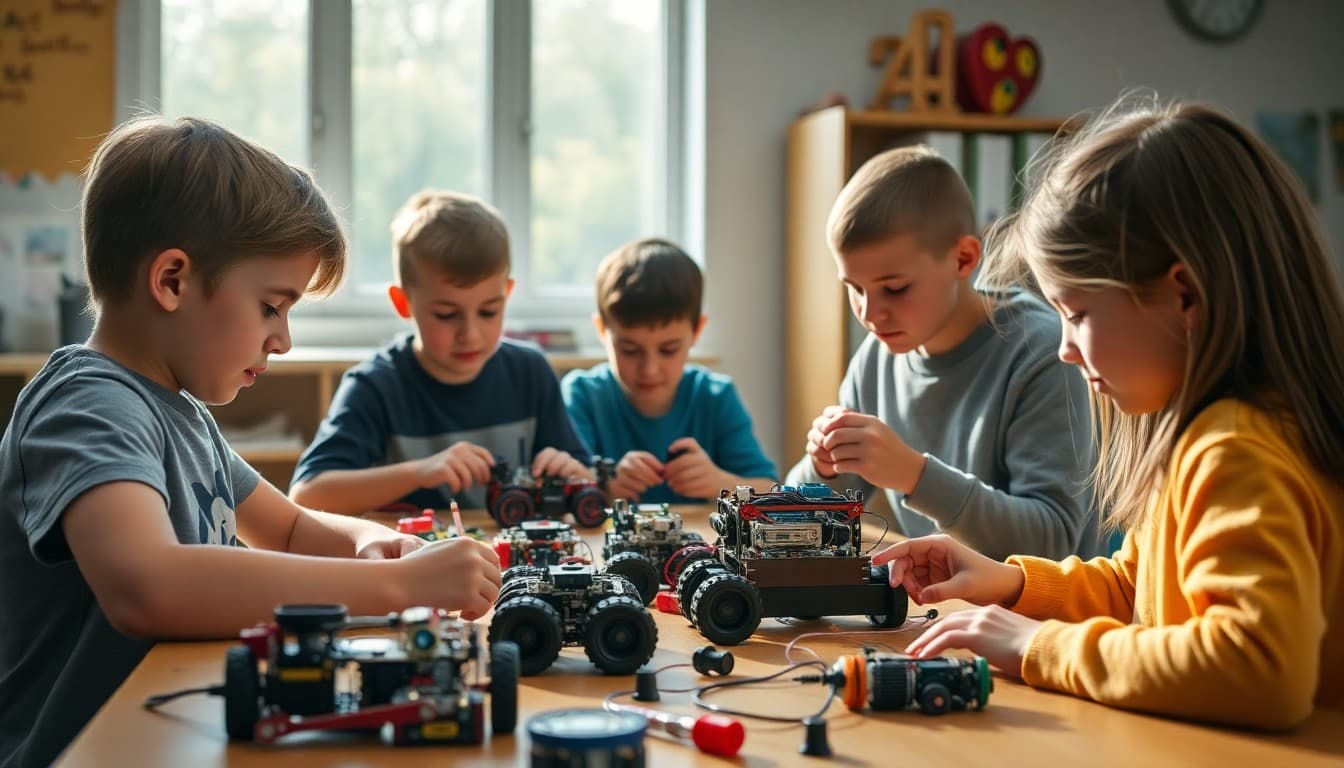
Homeschool STEM Club Newsletter: Science and Tech Projects
A homeschool STEM club does more than science projects. It builds problem-solving habits, introduces programming and engineering concepts, and gives students a taste of collaborative technical work that looks different from anything that happens in a traditional classroom. A newsletter for the club keeps families engaged with what their children are learning and creates accountability for the hands-on work between sessions.
Lead with the Current Project Challenge
Every STEM club meeting should have a defined challenge or project underway. The newsletter should open by naming that challenge and describing where the group is in the process. "We are in week two of our bridge-building challenge. Teams are currently in the design phase and will start building next week using the materials they specified in their design documents." This kind of status update tells families what to ask their child about and sets the context for any at-home work.
Explain the Engineering Design Process
Many parents are unfamiliar with the engineering design process: define the problem, research constraints, brainstorm solutions, build a prototype, test and evaluate, and iterate. When your newsletter describes STEM activities using this framework, it helps families understand that messiness and failure are part of the process, not signs that the club is disorganized. "Teams are in the test and evaluate phase this week. Several designs failed their first load test. That is expected and is part of how engineering actually works."
Communicate Materials Requirements with Lead Time
STEM projects require specific materials, and parents need time to gather them. Include a materials list for the next project in the newsletter at least two weeks before they are needed. Be specific about quantities and whether generic dollar store materials are acceptable or whether the project requires specific specifications. A note like "the cardboard tubes from paper towel rolls work fine for this bridge build, no need to buy anything" saves families time and money while keeping everyone prepared.
Cover Competition Prep Specifically
If your club participates in external competitions, the newsletter in the weeks leading up to the event should focus heavily on preparation. Include the competition's judging criteria, what your team's specific project or design is trying to accomplish, what each student is responsible for mastering before the event, and any practice presentations or dry runs scheduled. Families who understand the competition format can provide much better practice support at home than families who just know there is a "STEM thing" coming up.
Sample Newsletter Section
FIRST Lego League Prep - Week 4
Robot Game: Our robot consistently completes missions 1 and 2. We are debugging mission 3 this week. If your child wants to practice coding at home, the WeDo 2.0 app on the shared parent drive has the simulation environment.
Research Project: All three team members have their research sections ready. We are doing two practice presentations this week: Tuesday at the meeting and Friday on Zoom. Students should know their section well enough to present without notes by Friday. Run through it at home if possible.
Competition Day: Saturday, December 7. Arrive at Jefferson Middle School by 8:15am. Wear the team shirts. Bring a water bottle and snacks. Results announced at 2:30pm. Parking is in the north lot.
Highlight Student Contributions
STEM club often features students with very different strengths: some are natural coders, others are strong at building, others shine in the presentation and communication aspects of competitions. A newsletter that celebrates specific contributions from different students builds confidence and signals that the club values multiple kinds of intelligence. "Ethan's systematic debugging approach helped the team identify a sensor calibration issue that had been causing intermittent failures for two weeks" is more meaningful than a general "great work this week."
Share Resources for Home Exploration
STEM curiosity does not stay contained to club meetings. Include one or two resources per newsletter that students can explore at home: a free coding platform, a robotics YouTube channel, a math puzzle, or a hands-on experiment using household materials. These resources serve students who are hungry for more and give parents a structured way to encourage STEM interest without needing to be technical themselves.
Document the Learning Over Time
Each newsletter becomes part of the club's documentation record. Over a year, a library of STEM newsletters with project photos, challenge descriptions, and competition results creates compelling evidence of the depth and quality of the program. Daystage makes it easy to keep these newsletters organized and accessible for reference when families are documenting their student's extracurricular activities for portfolios, transcripts, or college applications.
Get one newsletter idea every week.
Free. For teachers. No spam.
Frequently asked questions
What should a homeschool STEM club newsletter include?
Cover the current project or challenge the group is working on, any upcoming competitions or showcases with dates and registration deadlines, materials families need to gather, specific skills being developed through each project, and highlights from recent builds or experiments. If your club participates in programs like FIRST Lego League or Science Olympiad, include competition schedules and any preparation tasks families can do at home.
How do I communicate about a STEM competition in a newsletter?
Start communicating about competitions at least six weeks before the event. Include the competition format, what your team is being judged on, what each student is responsible for preparing, and any travel logistics if the event is off-site. As the competition approaches, include a countdown and specific preparation checkpoints so families know exactly what needs to be done each week. After the competition, a recap newsletter with results and lessons learned closes the loop.
How do I handle mixed skill levels in a STEM club newsletter?
Acknowledge that STEM club members come with different backgrounds and learning speeds. Frame projects in terms of the challenge rather than the skill level required, and describe differentiated roles within group projects so families understand how each student contributes meaningfully regardless of their current technical level. A newsletter section that celebrates different kinds of contributions, not just the most technically impressive work, builds an inclusive club culture.
How do I explain STEM concepts to parents who are not technical in the newsletter?
Use plain language analogies and avoid unexplained jargon. 'We are learning to write loops in Scratch, which means telling the computer to repeat an instruction a certain number of times instead of typing it over and over' is accessible to any parent. When you explain the concepts behind the projects, parents can have more meaningful conversations with their children about what they are learning and provide better support at home.
What newsletter tool works best for a homeschool STEM club?
Daystage is a strong choice because STEM projects generate compelling visual content: robot builds, circuit diagrams, finished projects, and competition day photos. Including these images in the newsletter transforms a text update into something families actually read and share. The ability to add links to project tutorials or coding platforms also lets the newsletter serve as a resource hub that members reference between meetings.

Adi Ackerman
Author
Adi Ackerman is a former classroom teacher and curriculum writer with 8 years in K-8 schools. She writes about school communication, parent engagement, and what actually works in real classrooms.
More for Homeschool
Homeschool Co-op Newsletter Guide: Keeping Member Families Informed and Engaged
Homeschool · 6 min read
Homeschool Curriculum Newsletter: How to Share Your Curriculum Choices with Your Community
Homeschool · 5 min read
Homeschool Community Partnership Newsletter: Engaging Local Organizations and Resources
Homeschool · 5 min read
Ready to send your first newsletter?
3 newsletters free. No credit card. First one ready in under 5 minutes.
Get started free