
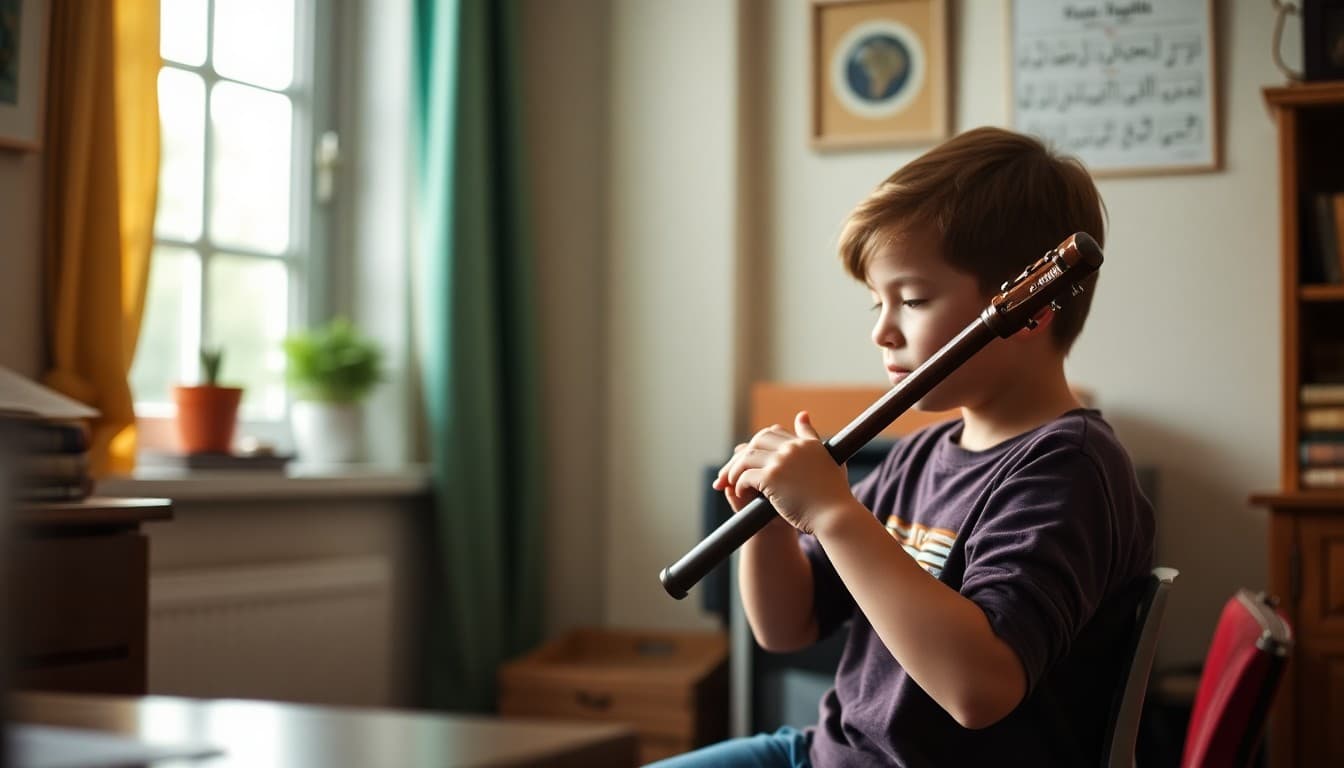
Homeschool Music Program Newsletter: Lessons and Performances
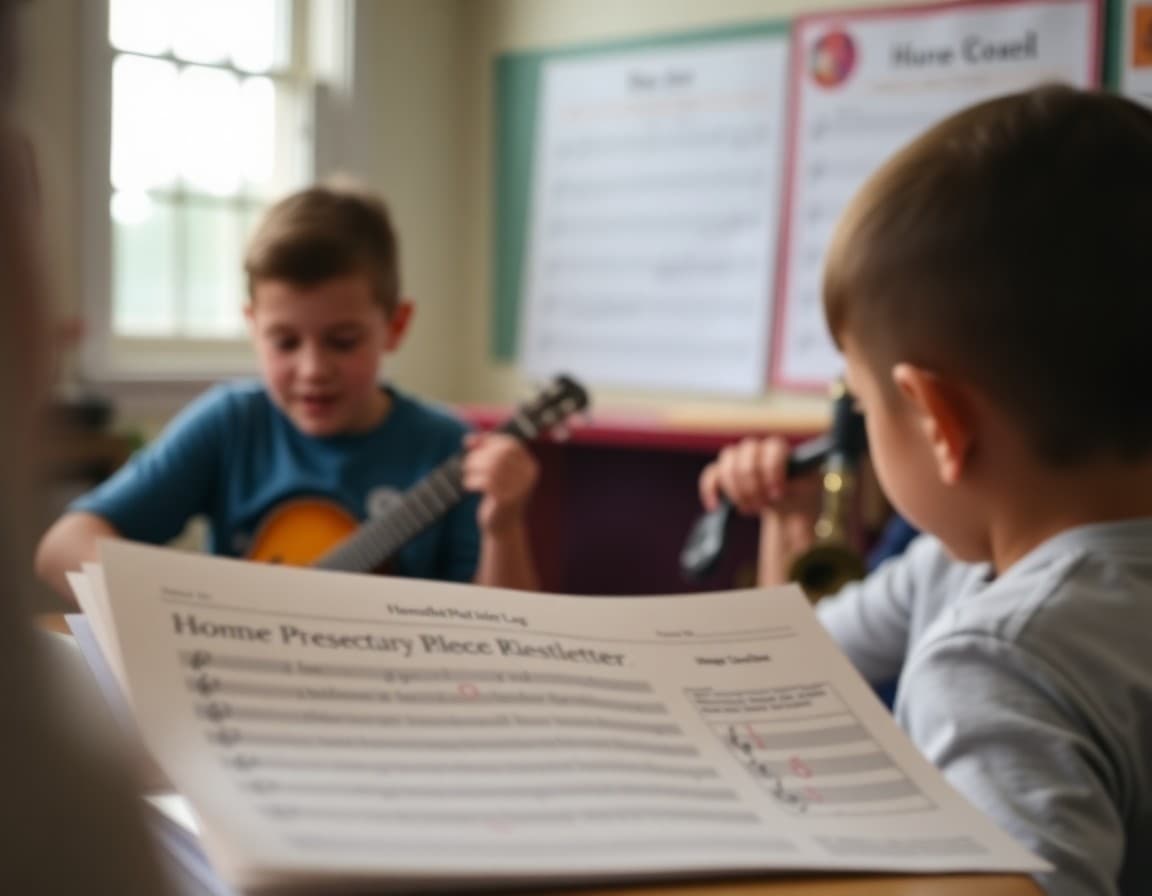
Music education in a homeschool setting depends more heavily on consistent home practice than almost any other subject. A student who takes a piano lesson once a week and practices only on lesson day makes very slow progress. The newsletter is one of the most effective tools for closing the gap between co-op lesson time and home practice.
Lead with the Practice Goal for the Week
The first thing a parent should see in a music newsletter is what their child is supposed to be practicing this week. Not an essay about music education philosophy. A clear, specific goal: "This week: practice Minuet in G hands separately, 10 minutes each day. Goal is to play the right hand from memory by Friday." Specific goals lead to specific practice. Vague newsletters lead to students noodling on their instrument until their parent tells them their time is up.
Describe the Current Pieces
For each piece a student is learning, include a brief description: the piece name, composer, what level it represents, and what the student is working on within that piece. "Fur Elise (simplified arrangement) - Beethoven. Working on evenness between hands in measures 5-8" tells a parent exactly what to listen for. If a reference recording is available on YouTube, include a link. Hearing what the piece should sound like motivates students enormously.
Include a Music Theory Connection
Even beginners learn music theory alongside performance. A brief theory note in each newsletter connects the practical work on the instrument to the underlying concepts. "This week we introduced quarter notes, half notes, and whole notes. Ask your child to clap the rhythm of their practice piece using these note values before they play it on the instrument." This gives parents a concrete way to integrate theory into practice time without needing to understand music notation themselves.
Build Toward the Recital from the Start
If your program includes a semester-end recital, announce it in the first newsletter of the term and mention it regularly. Students who know there is a performance coming practice differently than students who are learning pieces just for the sake of it. Include the date, time, venue, and what families should expect from the event. Six weeks out, ramp up the recital-specific communication with reminders about memorization requirements, dress code, and logistics.
Sample Newsletter Section
This Week's Practice Goals (Beginner Piano):
Piece: "Ode to Joy" simplified arrangement. 10 minutes daily. Focus: play the right hand melody smoothly from start to finish without stopping to correct mistakes. It is better to keep going and play the wrong note than to stop and restart from the beginning. Smooth recovery is a performance skill.
Theory: We introduced time signatures this week. Ask your child: what does the 4/4 at the beginning of the piece mean? (Answer: 4 beats per measure, quarter note gets one beat.)
Reference recording: Search "Ode to Joy Beethoven beginner piano" on YouTube to hear what the piece should sound like at performance speed.
Address Common Practice Struggles
Most parents overseeing music practice run into the same three or four problems: student rushes through pieces without fixing mistakes, student only practices their favorite section, student gives up and closes the piano after 5 minutes. A newsletter section addressing one common practice problem each month, with a specific strategy for fixing it, gives parents better tools than a general instruction to "practice more."
Celebrate Performances and Milestones
Students who passed a level, memorized their first piece, or performed at the recital deserve recognition in the newsletter. A short shout-out to students who reached a milestone, with their permission, builds positive momentum and acknowledges the real work that goes into musical progress. One or two photos from a recital performance, shared with permission, turn the newsletter into a keepsake families return to.
Communicate About Instrument Care
A music newsletter is the right place to remind families about basic instrument maintenance: tuning guitars before practice, cleaning piano keys, keeping instruments out of extreme temperatures, rosining bows. These reminders belong in the newsletter once or twice a semester because instrument damage or neglect is often the result of families not knowing what to do, not carelessness. Daystage makes it easy to include these practical care sections without breaking the visual flow of the newsletter.
Get one newsletter idea every week.
Free. For teachers. No spam.
Frequently asked questions
What should a homeschool music program newsletter include?
Cover current repertoire pieces students are working on, weekly practice goals in minutes per day, music theory concepts being introduced, any upcoming recital or performance dates with logistics, and tips for productive home practice. If you have students at multiple levels, organize sections by level or instrument so families can quickly find what applies to their child.
How do I communicate practice expectations in a newsletter without creating pressure?
Frame practice goals as ranges rather than fixed requirements. 'Beginners typically benefit from 10 to 15 minutes of focused daily practice' is less anxiety-producing than 'students must practice 20 minutes per day.' Include tips for making practice enjoyable, like practicing a piece they love at the end of every session or using a simple sticker chart for younger students. Emphasize that consistent short sessions outperform infrequent long ones.
How do I prepare families for a homeschool music recital through a newsletter?
Start communicating recital details at least six weeks before the event. Include what pieces students will perform, how to handle nerves, whether students should memorize or can use sheet music, dress code guidelines, and the logistics of the event including arrival time, seating, and whether photography is permitted. A week-before reminder with the full schedule eliminates most day-of confusion.
How can a music newsletter support parents who do not read music?
Many homeschool parents overseeing their child's music practice cannot read music themselves. Include tips specifically for non-musician parents, like how to tell if a student is practicing a piece correctly (does it sound like the recording?), how to encourage without critiquing, and how to recognize when a piece is ready to move on versus needs more polish. Parents who feel equipped to help are more consistent about enforcing practice time.
What newsletter tool works best for a homeschool music program?
Daystage works well for music newsletters because you can embed YouTube links to reference recordings, include clean formatted practice schedules, and add photos from recitals or group lessons. Families appreciate clicking directly through to a recording of the piece their child is learning to hear what it should sound like at performance tempo. Daystage handles these embedded links without any special setup.

Adi Ackerman
Author
Adi Ackerman is a former classroom teacher and curriculum writer with 8 years in K-8 schools. She writes about school communication, parent engagement, and what actually works in real classrooms.
More for Homeschool
Homeschool Co-op Newsletter Guide: Keeping Member Families Informed and Engaged
Homeschool · 6 min read
Homeschool Art Program Newsletter: Celebrating Creative Projects
Homeschool · 6 min read
Homeschool Curriculum Newsletter: How to Share Your Curriculum Choices with Your Community
Homeschool · 5 min read
Ready to send your first newsletter?
3 newsletters free. No credit card. First one ready in under 5 minutes.
Get started free