

Homeschool Language Arts Newsletter: Reading and Writing Progress
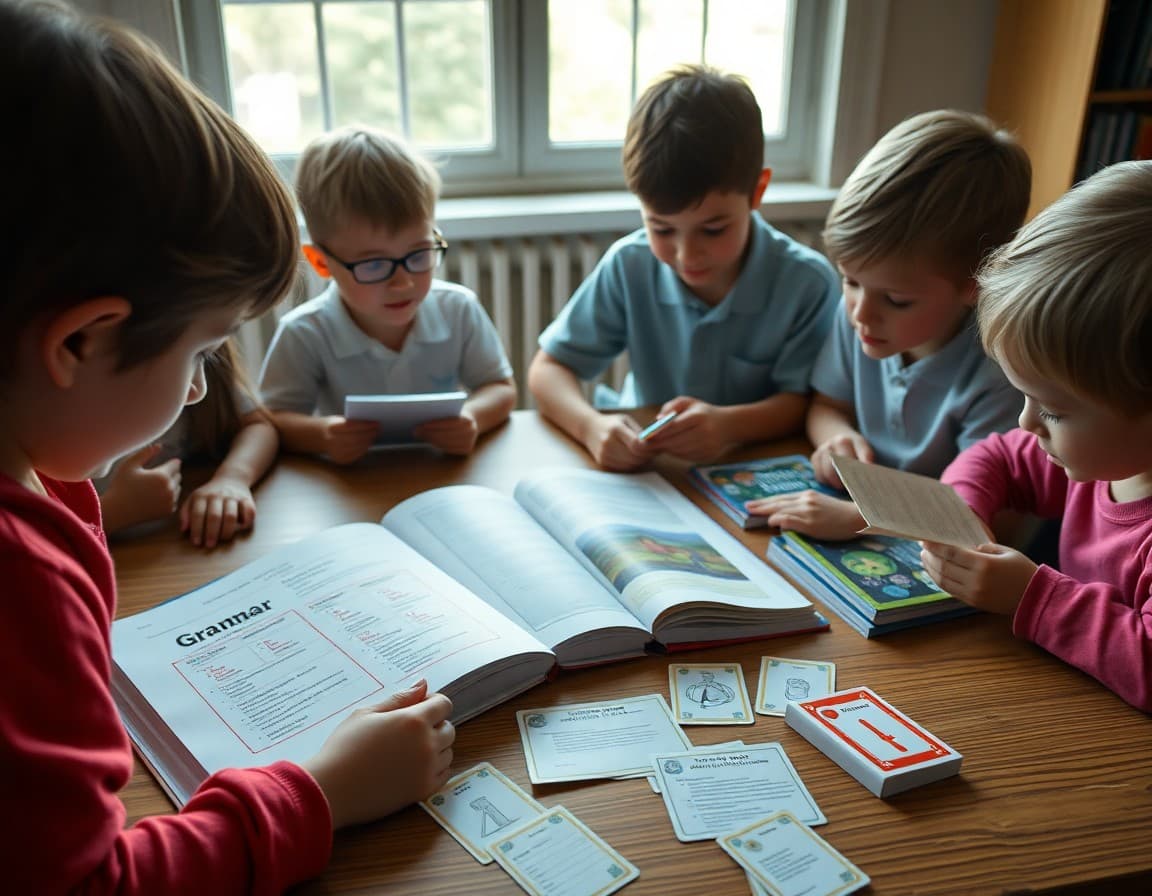
Language arts is the subject that appears most frequently in homeschool portfolios and assessment requirements because it underpins everything else. A student who reads well and writes clearly has an advantage in every other subject. A newsletter that keeps families informed about language arts progress gives parents the context to reinforce skills at home and notice when additional support might be needed.
Cover All Four Strands
Language arts instruction covers reading, writing, grammar, and vocabulary. A newsletter that only discusses reading leaves families without information about the other three strands. Organize the newsletter with a brief section for each. Keep each section to three or four sentences: what is being studied, where the student currently is in the sequence, and what families can do to reinforce it at home. Four short sections are more useful than one long section about reading that leaves grammar and writing unaddressed.
Name the Current Grammar Skill Specifically
Grammar instruction follows a scope and sequence, and parents who know exactly what skill is being covered can help with it. "We are working on comma placement in compound sentences this week. The rule is: when two independent clauses are joined by 'and', 'but', 'or', 'nor', 'for', 'yet', or 'so', put a comma before the coordinating conjunction." A clear rule, stated in plain language, gives parents a concrete standard to reference when reviewing their child's writing drafts.
Share the Current Reading with Brief Discussion Questions
A language arts newsletter can extend the learning beyond the co-op session by giving families discussion questions for the current reading. Include the book title and two or three open-ended questions families can use at dinner or during driving time. Good questions focus on character motivation, theme, and connection to personal experience: "Why do you think Scout started to see Boo Radley differently by the end of the book?" These conversations build comprehension and language skills naturally.
Include a Vocabulary List in Context
Ten vocabulary words per newsletter is enough. More than that and families rarely use the list. For each word, include it in a sentence from the current reading so students see how it functions in real prose. If the word has a common root, prefix, or suffix that connects it to related words, a one-line note about the etymology helps students build a vocabulary network rather than isolated definitions. "Inevitable comes from the Latin 'evitare', to avoid. Something that is inevitable cannot be avoided."
Sample Newsletter Section
Language Arts Update: Week of January 13
Reading: Currently reading "Tuck Everlasting" (chapters 1-8 this week). Discussion question for home: Winnie knows the Tucks' secret now. Why do you think she does not immediately tell her parents?
Writing: Students are working on their personal narrative drafts. Second drafts are due January 27. This week's focus: adding specific sensory details to at least two scenes in the narrative.
Grammar: Subordinating conjunctions (after, although, because, before, if, since, unless, until, when, while). This week's practice: writing three sentences for each conjunction. Students should identify the subordinate clause and the main clause in each sentence.
Vocabulary from this week's reading: Ramshackle (adj): in poor condition. "The Fosters' house looked ramshackle from the outside but was warm and clean inside." Melancholy (adj/n): a feeling of pensive sadness. Tentative (adj): not certain; done with hesitation.
Address Reading Volume
Many homeschool families underestimate how much reading their student should be doing. Research on vocabulary and fluency development consistently shows that students who read 20 to 30 minutes independently per day develop significantly stronger language skills than students who read only as assigned. A newsletter section that simply notes the recommended daily reading time and explains why it matters is one of the highest-impact additions you can make to a language arts newsletter.
Celebrate Writing Milestones
Writing improvement is slow and hard to see on a day-to-day basis. A newsletter that celebrates specific writing milestones makes the progress visible. "Three students turned in final drafts this week that used intentional sentence variety, which was the focus of our last two lessons. The improvement from their first drafts was significant." Celebrating improvement, not just final quality, motivates students who are working hard but not yet producing polished work.
Give Parents Concrete Support Options
Not every parent feels equipped to help with language arts at home. Include one practical tip per newsletter that any parent can use regardless of their own writing skills. Something like "asking your child to read a paragraph from their writing aloud is the fastest way to hear awkward sentences. Students almost always catch problems when they hear their own words spoken that they miss when they read silently." Simple, specific advice turns passive newsletter readers into active learning supporters. Daystage makes it easy to format these tips as visually distinct callout sections that stand out from the rest of the newsletter.
Get one newsletter idea every week.
Free. For teachers. No spam.
Frequently asked questions
What does a complete language arts newsletter cover?
A complete language arts newsletter addresses all four strands of the discipline: reading, writing, grammar, and vocabulary. Each strand deserves a brief update covering what is being studied and where the student is relative to expectations. If you have students at multiple levels in a co-op, organize updates by level or age group rather than by individual student to protect privacy while still giving families relevant information.
How do I explain grammar instruction in a newsletter to parents?
Use grade-level examples rather than technical terminology. Instead of 'we are covering adverbial clauses this week,' try 'we are practicing complex sentences where one part of the sentence explains when, where, how, or why the main action happened. Example: After she practiced every day for a month, she finally played the piece perfectly.' The example makes the concept concrete and gives parents a model they can look for in their child's writing.
How should reading comprehension updates appear in a newsletter?
Focus on the type of comprehension work rather than individual comprehension scores. 'This week we are working on inferencing, which means drawing conclusions from details the author does not state directly' tells parents what skill is being developed. Include one or two comprehension questions from the current reading so families can try the same skills at home with whatever their child is reading independently.
How do I share vocabulary lists in a newsletter without overwhelming families?
Limit vocabulary lists to eight to ten words per newsletter and include the words in context. Rather than a bare word list, show each word in a sentence from the current reading: 'Emma considered the proposition for several minutes before deciding.' Words encountered in context are learned faster than isolated vocabulary drills. Including a brief pronunciation guide for unusual words helps parents model correct usage at home.
What newsletter tool works best for a homeschool language arts program?
Daystage is a solid choice for language arts newsletters because text-based subjects benefit from clean, readable formatting. Grammar examples, writing excerpts, and vocabulary lists all need to be legible and well-organized. Daystage's templates make it easy to create consistent, professional newsletters that families are more likely to read carefully than a densely formatted email. The ability to include links to shared writing documents also lets families view student work samples without receiving large file attachments.

Adi Ackerman
Author
Adi Ackerman is a former classroom teacher and curriculum writer with 8 years in K-8 schools. She writes about school communication, parent engagement, and what actually works in real classrooms.
More for Homeschool
Ready to send your first newsletter?
3 newsletters free. No credit card. First one ready in under 5 minutes.
Get started free